
Canon EF 50mm f/1.8 STM
4.8Editor score
f/1.8 maximum aperture
Stepping motor AF
Lightweight and affordable
This guide compares the top camera lens for product photography to help you find the best lens for sharp details and professional results in your shoots.
Selecting the right optical glass is critical for capturing crisp product shots that convert browsers into buyers. A suitable lens ensures sharp focus, true color fidelity, and flattering depth of field for any item you photograph.
We evaluated ten high-performing lenses across focal lengths and mounts based on optical quality, autofocus speed, and build durability. Our comparisons highlight which models deliver the clarity and versatility needed for e-commerce and studio work.
Each selection includes detailed specs, real-world pros and cons, and tailored buying advice to match your budget and camera system. Keep in mind that prices fluctuate over time, so check current offers before purchasing your next lens.
4.8Editor score

4.8Editor score

The following table provides a quick side-by-side overview of all ten lenses. Use this reference to compare key specifications like focal range, stabilization, and compatibility before diving into detailed reviews.




This versatile zoom lens earns our Editor's Choice award for its consistent optical performance across the focal range. It boasts a 4.8 rating and delivers high image quality with a bright f/2.8 aperture that handles low-light product shoots effortlessly.
We may earn a commission when you buy through this link, at no additional cost to you.
The optical image stabilization provides up to 5 stops of shake correction, ensuring sharp handheld shots. Its high-speed Nano USM autofocus is smooth and quiet, perfect for video content alongside still photography of products.
While the price is steep and the build is heavier than prime lenses, the versatility justifies the investment for professionals needing one lens for multiple product types. It balances focal flexibility with pro-level image fidelity.
Buy this if you want the best all-in-one solution for Canon RF mirrorless cameras. It is ideal for studios and on-location shoots where lighting varies and quick composition changes are necessary.
The lens offers high image quality and a bright aperture, ensuring sharp details and clean rendering even in complex lighting scenarios.
With up to 5 stops of shake correction, you can capture sharp product images without a tripod in many situations.
We may earn a commission when you buy through this link, at no additional cost to you.
Rated 4.8 stars, this budget-friendly prime lens is perfect for photographers needing a versatile nifty fifty for product work. Its 50mm focal length and bright aperture make it a staple for sharp images at a fraction of the cost.
We may earn a commission when you buy through this link, at no additional cost to you.
The STM motor delivers near-silent continuous autofocus, making it suitable for video content creation. It also offers a minimum focusing distance that allows for decent close-up work on small items.
Although it lacks weather sealing and its APS-C crop is worth noting, the optical quality and speed make it a top value. It is ideal for beginners or those building a versatile kit on a budget.
Purchase this if you need a reliable lens for portraits or product shots without breaking the bank. It pairs well with Canon DSLR cameras for general photography tasks.
The maximum aperture of f/1.8 allows for beautiful background blur and excellent low-light performance during shoots.
The stepping motor ensures quiet AF, which is essential when recording product videos or interviews.
We may earn a commission when you buy through this link, at no additional cost to you.
The Sigma 135mm F1.8 is a handcrafted prime lens known for its exceptional optical quality and stunning compression effects. It features a dust and splash proof mount for reliable performance in various shooting conditions.
We may earn a commission when you buy through this link, at no additional cost to you.
Its large 1.8 aperture offers significant creative control over imagery and depth of field. Each unit is individually evaluated to ensure top-tier performance and consistency across the Global Vision line.
While the lens is quite heavy and fixed, the optical results are professional-grade. It is best for users who prioritize ultimate image quality over portability in their product photography setup.
Choose this if you want a premium portrait lens for isolated product details. It is ideal for studios where weight is less of a concern than optical perfection.
Handcrafted in Japan, this lens undergoes individual evaluation to ensure outstanding optical performance.
The large aperture allows for more creative control over imagery, especially in low-light settings.
We may earn a commission when you buy through this link, at no additional cost to you.
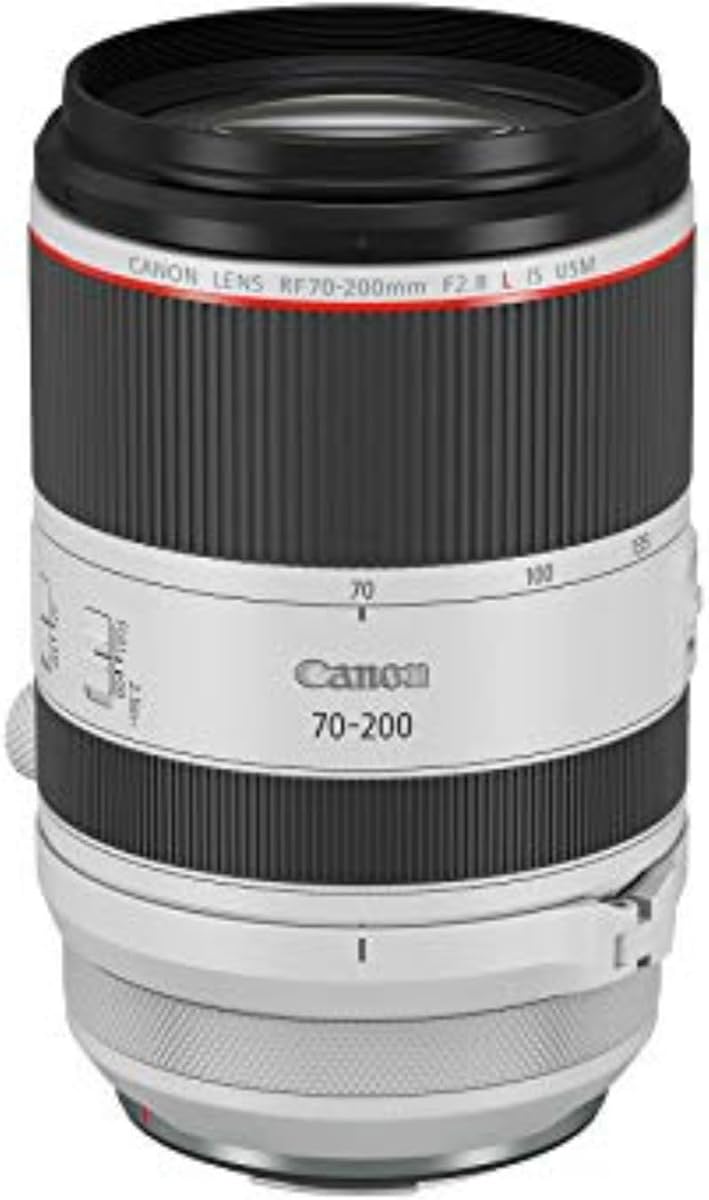
This telephoto zoom lens provides high image quality and a bright f/2.8 aperture in a compact RF design. It offers optical image stabilization with up to 5 stops of shake correction for steady shots.
We may earn a commission when you buy through this link, at no additional cost to you.
High-speed, smooth, and quiet autofocus is delivered via dual Nano USM motors. This ensures precise focusing even when shooting detailed product elements from a distance.
The main trade-off is the cost and the telephoto-only range, which may not suit wide product setups. However, for compressed perspectives, it is a top-tier choice for professional photographers.
Buy this if you need a high-quality telephoto for Canon mirrorless systems. It is ideal for isolating product details and achieving a clean background look.
The lens is compact and lightweight, making it easier to handle during longer shoots.
Up to 5 stops of shake correction help ensure sharp images even when handholding at 200mm.
We may earn a commission when you buy through this link, at no additional cost to you.
A legendary prime lens, the 200mm f/2.8L II offers a fixed focal length with exceptional clarity and a pleasing bokeh. It features a lens construction of 9 elements in 7 groups for reliable performance.
We may earn a commission when you buy through this link, at no additional cost to you.
At a weight of 1.7 lbs, it is relatively light for its reach, allowing comfortable shooting. The maximum aperture of 1:2.8 ensures bright viewfinder images and good low-light capability.
The lack of image stabilization and fixed focal length are the main constraints. But for controlled product shoots where stability is ensured, it delivers outstanding sharpness and value.
Buy this if you want a classic, sharp lens for DSLR users. It is ideal for detailed product shots where you can manage camera stability easily.
The lens construction ensures high resolution and color accuracy for professional photography results.
As an L-series lens, it offers durability and reliable weather resistance for regular use.
We may earn a commission when you buy through this link, at no additional cost to you.
This RF mount lens offers a compact and lightweight fixed 50mm focal length for EOS R series cameras. It features a large f/1.8 aperture suitable for low-light photography and creative background blur.
We may earn a commission when you buy through this link, at no additional cost to you.
A stepping motor provides smooth and quiet continuous AF during video recording. Optimized lens placement helps deliver outstanding color balance while minimizing ghosting and flare.
While it is limited to one focal length and has a plastic build, the optics are sharp and fast. It serves as an excellent entry point for RF users looking to shoot product images.
Buy this if you need a compact prime for Canon mirrorless cameras. It is ideal for portraits and close product work where size and weight matter.
The large f/1.8 aperture allows for better performance in dim settings and more creative blur.
Its design makes it easy to carry and use for long periods during photoshoots.
We may earn a commission when you buy through this link, at no additional cost to you.
This fully manual lens offers precise focus control and creative freedom for photographers who value artistic intent. It features superb image quality with dreamy background blur effects using 6 rounded blades.
We may earn a commission when you buy through this link, at no additional cost to you.
The hybrid aspherical lens technology reduces aberrations and glare effectively. Its internal focus mechanism ensures quiet operation and a smooth experience during shooting.
The main trade-off is the lack of autofocus, requiring manual adjustments. This is acceptable for static product work where exact focus is planned out before the shot.
Buy this if you want to experiment with manual focus for portraits or art products. It is ideal for photographers seeking an affordable and versatile lens.
Hybrid aspherical lens technology presents unparalleled clear image quality and reduces aberrations.
The rounded aperture blades help create pleasing background blur effects for portraits.
We may earn a commission when you buy through this link, at no additional cost to you.
This renewed telephoto zoom offers a 75-300mm range that allows for flexibility in framing distant products. It features an improved mechanism that makes zooming smoother for better handling.
We may earn a commission when you buy through this link, at no additional cost to you.
With an aperture range of f/4 to f/5.6, it is suitable for well-lit studio environments. The lens is relatively light at 16.8 ounces, making it easy to hold during shoots.
The variable aperture and older AF motor are limitations compared to modern lenses. However, for hobbyists on a tight budget, it provides decent reach and optical performance.
Buy this if you need a long zoom range without spending much. It is ideal for casual photographers exploring telephoto product work.
The 75-300mm range provides a wide diagonal angle of view for varied compositions.
Zooming is smoother thanks to an improved mechanism in the lens design.
We may earn a commission when you buy through this link, at no additional cost to you.
This kit includes a 15x Macro lens and a 0.45x Wide Angle lens for smartphones. It captures details and wider scenes without needing a professional DSLR or mirrorless system.
We may earn a commission when you buy through this link, at no additional cost to you.
The GlowClip rechargeable LED light provides warm continuous illumination which is superior to built-in flashes. It ensures better lighting in darker settings during product shots.
While the optical quality is not as high as dedicated lenses, it is useful for quick social media posts. The clip design is convenient but may struggle with heavy phones.
Buy this if you shoot product photos primarily with your phone. It is ideal for quick social media posts without needing a large camera kit.
The Clarus 15x Macro lens allows you to marvel at nearby subjects with precision focus.
The GlowClip LED light illuminates your subject instantly for better photo quality.
We may earn a commission when you buy through this link, at no additional cost to you.
This camera bundle includes a DSLR with a 24.1MP CMOS sensor and two lenses. It is built for beginner photographers seeking a complete system without separate lens purchases.
We may earn a commission when you buy through this link, at no additional cost to you.
It supports Wi-Fi and NFC for easy transfer. The included 18-55mm and 75-300mm lenses offer a broad range for general shooting including product work.
While the kit lenses are entry-level, the camera offers a webcam mode and Full HD video. It is an affordable way to start shooting product images professionally.
Buy this if you need a complete camera system from scratch. It is ideal for beginners starting product photography on a budget.
The kit includes the camera and two lenses for versatile shooting right out of the box.
Built-in Wi-Fi and NFC technology make sharing photos and controlling the camera easier.
We may earn a commission when you buy through this link, at no additional cost to you.
Choosing the right lens requires balancing focal length, aperture, and mount compatibility. This guide covers key factors to help you select the best tool for your product photography needs.
Focal length determines how much of the scene you capture and how the product appears. Prime lenses like 50mm offer simplicity while zooms like 24-70mm provide flexibility.
Select a focal length that matches your space and product size. Shorter lenses for wide views and longer ones for detail shots.
Aperture controls light intake and depth of field. Larger apertures like f/1.8 allow for blurred backgrounds and better low-light performance.
Prioritize a bright aperture if you shoot indoors without flash or want to isolate your product.
Ensure the lens matches your camera's mount system. RF lenses work with Canon EOS R series while EF lenses fit DSLRs.
Choose a lens compatible with your current or planned camera body to avoid adapters.
Optical image stabilization helps capture sharp images when handholding. It is vital for telephoto lenses or low-light situations.
Look for lenses with stabilization if you do not use a tripod regularly.
Durable builds with weather sealing protect against dust and moisture. Metal barrels usually indicate higher quality than plastic.
Invest in better build quality for professional longevity and reliability.
Modern autofocus systems ensure accurate and quiet focusing. Silent motors are essential for product videos.
Select lenses with fast and silent autofocus for smooth content creation.
Budget dictates whether you opt for kit lenses or pro glass. High-end lenses offer better optics but cost more.
Balance your financial limits with the optical quality required for your products.
Heavier lenses can cause fatigue during long shoots. Consider the physical weight if you move frequently.
Lighter lenses are preferred for on-location shoots or handheld work.
Always clean the lens glass with a soft microfiber cloth before shooting. Dust and fingerprints can degrade image quality and cause flare in bright lights.
Store your lens in a dry and padded case when not in use. Exposure to humidity can lead to mold growth on internal glass elements.
Check the focus ring and switches regularly to ensure smooth operation. Proper maintenance extends the life of your optical equipment significantly.
Focal lengths around 50mm to 100mm are ideal because they mimic the natural perspective of the human eye. These ranges minimize distortion while allowing for comfortable working distances during shoots.
Zoom lenses offer versatility for varying product sizes, while primes often deliver sharper images and larger apertures. Choose a zoom if you need one lens for many scenarios or a prime for maximum clarity.
Stabilization is crucial if you shoot handheld in low light. However, if you use a tripod for static product shots, it is less critical but still beneficial for video content.
For sharp product shots across the item, f/8 to f/11 is often recommended. For creative shots with blurred backgrounds, open up to f/2.8 or f/4 depending on the lens.
Yes, but adapters are often required. Canon RF mounts need native RF lenses or specific adapters to work with EF lenses on mirrorless bodies.
Use a soft microfiber cloth and lens cleaning fluid to remove dust and smudges. Avoid using tissues or clothing that might scratch the glass coatings on your lens.
Higher-priced lenses often provide better sharpness and low-light performance. Investing in quality glass can improve your results significantly compared to entry-level options.
Macro lenses are best for capturing intricate details of small items. Lenses with a 1:1 magnification ratio allow for extreme close-ups of textures and components.
The Canon RF24-70mm F2.8, Canon EF 50mm f/1.8, and Sigma 135mm F1.8 stand out as the top choices for their respective price points. Each delivers distinct benefits depending on your camera system and specific needs.
Prioritize optical quality and aperture based on your shooting environment. Versatility and build quality should guide your choice if you handle equipment frequently during work.
Remember to verify current pricing and availability before purchasing. The best deal today might differ from yesterday, so staying updated ensures you get the best value.