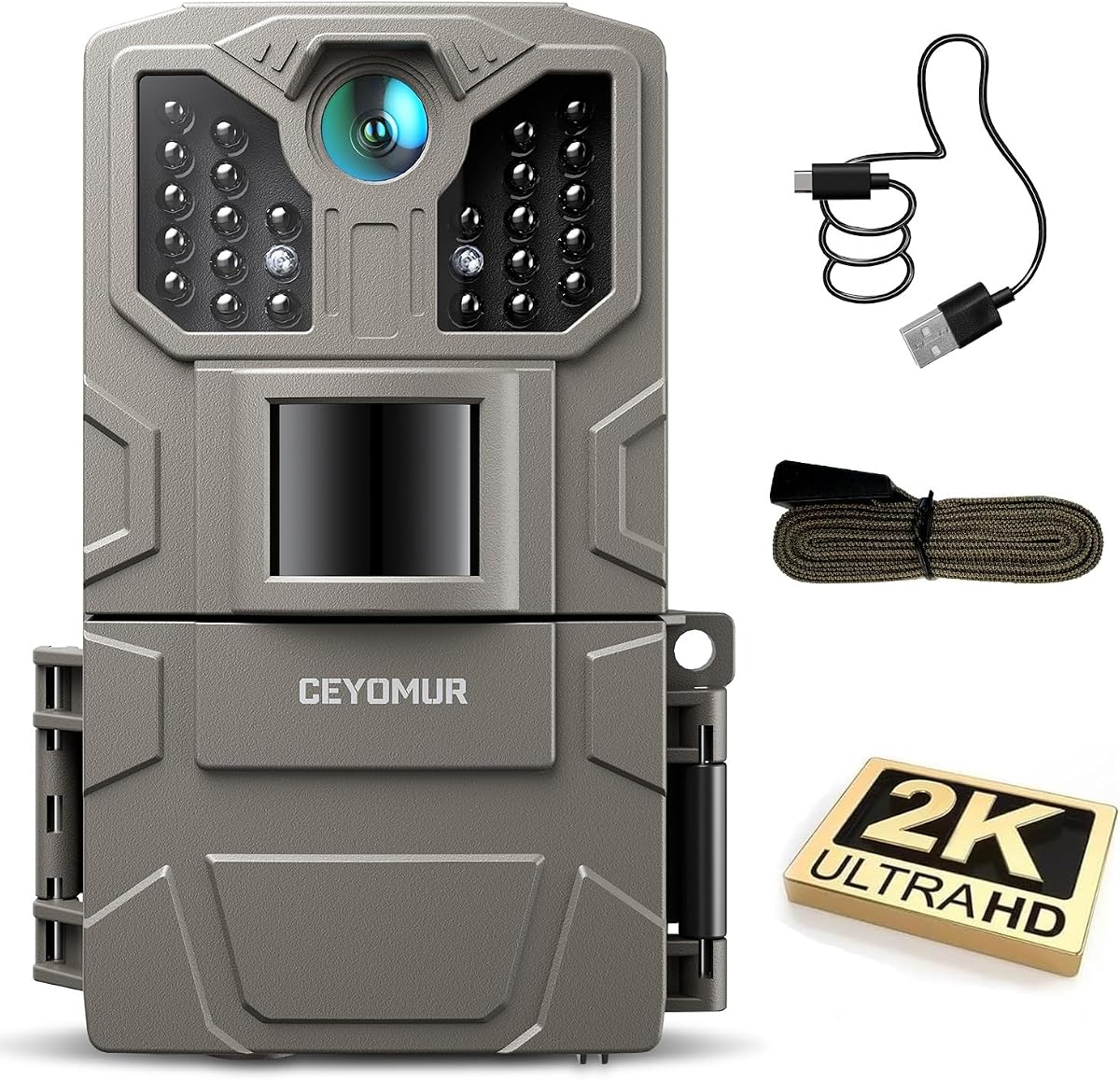
CEYOMUR Trail Camera
4.0Editor score
36MP photos and 2K video
Low power consumption design
Integrated side control layout
This guide compares the top battery life trail camera models for 2026, analyzing power efficiency, solar options, and standby duration to help you choose the
Finding a trail camera with exceptional battery life is crucial for consistent wildlife monitoring without frequent maintenance trips. Modern devices now offer diverse power solutions ranging from standard alkaline to rechargeable lithium and solar options.
We evaluated ten leading models based on their power efficiency, trigger speeds, night vision capabilities, and overall durability in harsh outdoor environments. Our analysis focuses on real-world performance metrics that matter most to hunters and landowners.
Each recommendation highlights specific strengths regarding energy consumption and operational longevity in the field. Please note that retail prices fluctuate regularly, so verify current costs before making your final purchasing decision today.
4.0Editor score

4.2Editor score

4.3Editor score
This comparison table breaks down key specifications and power features across all ten selected models to help you quickly identify the best fit for your specific monitoring needs and budget constraints.


The CEYOMUR Trail Camera offers a compelling entry point for those prioritizing affordability without sacrificing core functionality. It holds a solid 4.0 rating from users who appreciate its straightforward operation and reliable performance in various outdoor conditions.
We may earn a commission when you buy through this link, at no additional cost to you.
Its standout feature is the upgraded integrated design that places the lens screen and controls on one side for easier field setup. The powerful 850nm night vision produces bright sharp images that help identify animals clearly even in complete darkness without excessive noise.
Users should note that the camera requires separate purchases for batteries and memory cards which adds to the initial setup cost. However the low power consumption design ensures extended standby times that make frequent battery changes less necessary during long monitoring periods.
This model is ideal for beginners or those monitoring multiple locations on a tight budget. Its simple interface and reliable performance make it a practical tool for wildlife observation backyard security and general property monitoring needs.
The all-in-one side design eliminates the need to flip the camera open which speeds up installation and reduces wear on hinges.
Efficient power management helps extend the life of standard alkaline batteries reducing maintenance frequency in remote locations.
We may earn a commission when you buy through this link, at no additional cost to you.
The MAXDONE Solar Trail Camera stands out as the top choice for users seeking minimal maintenance through sustainable power. With a 4.2 rating it delivers consistent performance powered by a built-in solar panel and a large 6000mAh rechargeable battery.
We may earn a commission when you buy through this link, at no additional cost to you.
This model captures ultra-clear 64MP images and smooth 4K videos day and night thanks to its high-resolution sensors and efficient image processing. The WiFi and Bluetooth app control allows users to view download and share photos directly without removing the SD card.
While the app connection relies on a built-in hotspot rather than home Wi-Fi it simplifies setup in remote areas where network coverage is weak. The included 32GB TF card provides ample storage right out of the box for immediate use without extra accessories.
It is perfect for year-round wildlife monitoring where frequent battery changes are impractical. The IP66 waterproof rating ensures reliability in rain snow and heat making it a durable solution for long-term outdoor deployment and security use.
The high-efficiency solar panel combined with the large battery capacity offers truly maintenance-free operation for extended periods.
The free app interface simplifies data retrieval and settings adjustment without any recurring subscription fees or hidden costs.
We may earn a commission when you buy through this link, at no additional cost to you.
The Moultrie Edge 3 Cellular represents the pinnacle of connectivity and intelligent monitoring for serious hunters and landowners. It holds a 4.3 rating and delivers real-time deer activity and location intelligence via a nationwide 4G network connection.
We may earn a commission when you buy through this link, at no additional cost to you.
Its AI buck detection feature identifies mature bucks instantly and reduces false alerts which saves battery life and data usage. The Live Aim function lets users preview the camera view in real time for precise placement without guessing or multiple test runs.
While the service plans start at a monthly fee the convenience of remote management and instant alerts often justifies the cost for active properties. The device supports rechargeable lithium packs and solar panels further extending its operational life in remote locations.
This is the best choice for those who prioritize speed and intelligence in their monitoring setup. The ability to adjust settings and control feeders remotely adds a layer of convenience that transforms traditional scouting into a highly efficient operation.
The AI detection focuses on specific animal types to filter out wind movement and irrelevant activity for cleaner data.
Full app control allows you to monitor battery life and adjust settings without physically visiting the camera site.
We may earn a commission when you buy through this link, at no additional cost to you.
The WOSPORTS Trail Camera delivers sharp 64MP photos and smooth 4K videos without relying on cellular networks or Wi-Fi. With a 4.3 rating it is praised for its crisp daytime images and reliable night vision performance in various lighting conditions.
We may earn a commission when you buy through this link, at no additional cost to you.
Its 0.2s trigger speed ensures that fast-moving deer are captured cleanly without blur even at a distance. The 120-degree wide-angle detection covers a broad area which increases the likelihood of capturing significant activity events in your field of view.
Users appreciate the flexible power options that allow you to use standard AA batteries or connect a compatible solar panel for extended use. The included 2-inch color LCD screen makes it easy to preview photos and manage settings directly on the device.
This camera is ideal for users who want high-quality imagery without monthly service fees. Its waterproof design and simple setup make it a reliable tool for home security wildlife observation and property surveillance without complex technical requirements.
High-quality optical lenses ensure that both daytime and nighttime shots remain crisp and detailed for better identification.
The ability to switch between battery types or solar power helps extend monitoring duration in remote areas.
We may earn a commission when you buy through this link, at no additional cost to you.
The Meidase P70 Trail Camera is a strong contender for those needing high-resolution photos and fast trigger speeds. It holds a 4.4 rating and is praised for its ability to capture stunning detail day and night with minimal delay.
We may earn a commission when you buy through this link, at no additional cost to you.
Its bright 100ft no-glow night vision uses 940nm LEDs that remain invisible to animals so it does not spook them during nighttime monitoring. The lightning-fast 0.1s trigger speed ensures that quick movements are recorded accurately without missing critical details.
H.264 video compression technology helps create smaller file sizes which allows for more footage on a single SD card and faster playback. The solar-ready design means you can pair it with a compatible panel for non-stop operation in sunny areas.
This model is best suited for hunters who need reliable performance in the dark. The waterproof rating and durable construction ensure it can withstand harsh weather conditions while delivering consistent results throughout the hunting season.
The no-glow LEDs provide clear images without emitting visible light that could scare off shy wildlife.
Efficient video compression saves storage space and reduces download times when reviewing footage on other devices.
We may earn a commission when you buy through this link, at no additional cost to you.
The WOSPORTS Mini Trail Camera is designed for those who need a portable and easy-to-hide monitoring solution. With a 4.2 rating it delivers clear wildlife moments with 30MP photos and Full HD 1080P videos in various lighting conditions.
We may earn a commission when you buy through this link, at no additional cost to you.
Its compact camouflage body measures just over four inches on each side and weighs only 0.73 pounds which makes it easy to carry and conceal. The low-power design supports longer standby times that reduce the frequency of battery changes in the field.
Installation is straightforward with an adjustable mounting strap that allows quick placement on trees or fences. The simple interface means users can start monitoring quickly after inserting batteries and an SD card without extensive technical knowledge.
This model is perfect for garden monitoring bird watching and small property security where large cameras are impractical. Its stealthy appearance blends naturally into outdoor environments ensuring that wildlife remains unaware of the monitoring device.
The small size allows you to carry multiple cameras for different spots without adding significant weight to your pack.
Optimized energy usage helps extend battery life significantly compared to larger non-optimized models.
We may earn a commission when you buy through this link, at no additional cost to you.
The GardePro E5S offers a rugged and low-power solution for consistent wildlife viewing without connectivity distractions. It holds a 4.4 rating and captures ultra-sharp 64MP photos and smooth 1296P HD videos day and night effectively.
We may earn a commission when you buy through this link, at no additional cost to you.
Three PIR sensors enable a lightning-fast 0.1s trigger speed that ensures you never miss fast-moving wildlife or deer. The non-cellular operation minimizes power use and ensures fewer battery changes which is critical for long deployments in remote areas.
Its rugged weather-resistant design with an IP66 waterproof rating allows it to withstand harsh outdoor conditions without failure. Solar panel compatibility provides an eco-friendly option for continuous operation if you prefer renewable energy sources.
This camera is ideal for users who value reliability and simplicity over connectivity. The easy retrieval of the SD card makes reviewing footage straightforward without needing a phone or internet connection at the site.
Using three sensors reduces false triggers from wind or small animals and improves detection speed.
The low-power architecture ensures that battery life lasts longer between checks even with frequent activity.
We may earn a commission when you buy through this link, at no additional cost to you.
The WOSPORTS Mini 2 Pack provides a complete solution for covering multiple locations simultaneously with minimal setup. With a 4.2 rating it offers two cameras that capture clear wildlife details and Full HD 1080P videos reliably.
We may earn a commission when you buy through this link, at no additional cost to you.
Each camera comes with a 16GB SD card included which makes setup easier without needing to purchase additional accessories immediately. The low-power design helps extend standby time and reduces frequent battery changes during long-term monitoring efforts.
The fast trigger speed and sensitive PIR motion sensor ensure that passing animals are recorded with minimal delay. The camouflage appearance helps the cameras blend naturally into forests and gardens to avoid attracting attention from animals.
This kit is perfect for monitoring several entry points or paths on your property. The simple setup and reliable performance make it an excellent choice for beginners who need broad coverage without complex configuration.
Receiving two cameras with included memory cards offers a cost-effective way to start monitoring multiple areas.
Optimized battery usage allows for longer deployment periods between maintenance visits in the field.
We may earn a commission when you buy through this link, at no additional cost to you.
The WOSODA Mini Trail Camera 4 Pack offers a comprehensive solution for extensive property monitoring with a single purchase. With a 4.3 rating it delivers clear images and Full HD videos across four compact units designed for easy concealment.
We may earn a commission when you buy through this link, at no additional cost to you.
This kit includes four 16GB SD cards and sixteen AA batteries which saves you from buying essential accessories separately. The low power consumption means each camera needs only four batteries to achieve extended standby times under standard usage conditions.
The fast 0.3s trigger speed ensures precise and fast capturing of photos or videos even in the dark. Its stealthy appearance allows the cameras to blend into the natural environment avoiding detection by target animals or passersby.
This package is ideal for users who need to cover a wide area or track multiple trails efficiently. The simple setup and included accessories make it a turnkey solution for immediate deployment and reliable long-term use.
Having batteries and memory cards included removes the need for multiple trips to the store before deployment.
Compact design paired with low power usage maximizes battery life to reduce maintenance frequency.
We may earn a commission when you buy through this link, at no additional cost to you.
The GardePro E5S 2-Pack provides two high-resolution cameras for users needing robust coverage with minimal power consumption. With a 4.4 rating it captures ultra-sharp 64MP photos and smooth 1296P HD videos that deliver clear details.
We may earn a commission when you buy through this link, at no additional cost to you.
Each unit supports SD cards up to 512GB which allows for extensive storage without needing to swap cards frequently. The non-cellular operation ensures minimal power use and fewer battery changes which is vital for long-term remote deployments.
You can choose from motion detection time-lapse or hybrid modes to fit your specific tracking needs. The rugged weather-resistant design ensures reliable performance in harsh outdoor conditions without sacrificing image quality or speed.
This package is best suited for hunters and landowners who need to monitor multiple critical zones with high detail. The reliability of the E5S model makes it a strong investment for consistent and detailed wildlife observation over time.
Supporting massive SD cards reduces the frequency of SD card swaps in the field.
Flexible modes allow you to capture continuous time-lapse alongside triggered motion events efficiently.
We may earn a commission when you buy through this link, at no additional cost to you.
Selecting a trail camera with the right battery life requires understanding how different power systems impact long-term monitoring efficiency.
Most cameras use standard AA batteries but some offer rechargeable lithium packs or direct solar panels. Solar options reduce maintenance but depend on sunlight exposure while rechargeables offer a balance of capacity and convenience.
Choose a solar or lithium option if you monitor remote sites where changing batteries is difficult.
Fast trigger speeds like 0.1s ensure moving animals are captured without blur but they consume more power during high activity. Slower triggers save battery but may miss fast-moving subjects in dense brush.
Prioritize trigger speed if you need detailed shots of running deer during specific hunting seasons.
Higher resolution photos and longer video clips consume more memory and power than lower settings. 4K video and 64MP images provide better details but reduce the number of photos per battery charge.
Adjust settings to 1080p video or 12MP photos if battery longevity is your top priority.
Infrared LEDs used for night vision draw power continuously during low-light detection. Models with a larger range of 100ft use more energy than those with a 50ft range.
Select a camera with a range that matches your property size to avoid unnecessary energy drain.
Cellular cameras that send instant alerts consume significantly more power than non-cellular models that store data locally. Non-cellular models are better for long deployments where battery changes are infrequent.
Opt for non-cellular models if you need months of operation between visits to the site.
A camera with an IP66 rating withstands rain and dust which protects internal components from moisture that could drain batteries. Rugged shells also reduce the need for replacement due to physical damage.
Always check the waterproof rating to ensure your investment survives extreme outdoor conditions.
Larger memory cards allow for more footage before needing replacement but do not directly affect battery life. However frequent card retrieval can disturb the battery seal and drain power.
Use high-capacity cards to minimize the need for physical access to the device.
Cameras with efficient sleep modes shut down internal sensors when no motion is detected to save energy. These modes are crucial for extending battery life during periods of low animal activity.
Ensure the camera has configurable sleep settings to optimize standby consumption.
Mount the camera at least four feet off the ground facing north or south to avoid direct sunlight which can affect the battery and lens. Secure it tightly to a sturdy tree using the included strap to prevent theft or wind displacement.
Insert fresh alkaline or lithium batteries with the correct polarity and format the SD card before your first deployment. Check the camera settings to set the correct date and time so all captured photos are properly timestamped.
Visit the site periodically to check for battery drainage or lens obstructions like leaves or spider webs. Clean the lens with a soft dry cloth and ensure the solar panel is free of debris if using one.
A typical trail camera can last from three to twelve months on a single set of batteries depending on usage and temperature. High activity areas reduce this time while remote locations extend it significantly.
Rechargeable lithium batteries offer longer lifespans and consistent power but cost more upfront. They are ideal for frequent use but standard alkaline cells work well for occasional monitoring.
No most solar panels are designed for specific camera models. Ensure you purchase a compatible panel from the same manufacturer to avoid connection issues.
Yes video recording consumes significantly more power than taking still images. Limit video length or switch to photo-only mode to extend battery life.
Cold temperatures reduce battery efficiency and shorten life. Use lithium batteries which perform better in low temperatures to maintain reliability.
Many cameras show a low battery icon on the screen or via an app. Check the camera monthly to ensure you do not miss critical footage.
Lithium batteries are the best choice for winter hunting because they resist freezing and provide stable power in cold conditions compared to alkaline cells.
Yes cellular cameras transmit data which uses more energy than storing photos locally. Expect shorter battery life with cellular models.
We have highlighted ten top models ranging from budget-friendly options to high-performance cellular units. Each offers unique strengths in terms of power efficiency image quality and connectivity to suit different needs.
Prioritize models with rechargeable or solar power options if you plan to leave cameras unattended for long periods. Consider your specific hunting or monitoring goals before making a final selection.
Remember that retail prices fluctuate regularly so please check current costs and stock availability before purchasing any model.