
Professional 2/3-Way Stereo & 4-Way Mono Audio Crossover
4.3Editor score
Versatile stereo and mono modes
Balanced XLR inputs
Independent gain controls
This guide compares the top audiophile active crossover options for 2026, evaluating features, performance, and value to help you choose the ideal signal
Finding the right active crossover is essential for audiophiles seeking precise frequency separation and enhanced sound quality. These devices split audio signals into distinct bands, ensuring each speaker driver receives only the frequencies it can reproduce accurately. A well-chosen crossover minimizes distortion and maximizes clarity across your entire listening range.
We evaluated ten leading active crossover units based on their technical specifications, build quality, and user feedback. Our analysis covers analog and digital processing options, various channel configurations, and features like phase control and limiting. Each product offers unique advantages tailored to different audio systems and installation environments.
Each pick in this guide highlights key strengths, potential limitations, and ideal use cases for every model. Whether you need a compact unit for car audio or a robust processor for home theater, these options provide reliable performance. Prices and availability may change, so verify current details before making your final decision.
4.3Editor score

5.0Editor score
4.0Editor score
The following table provides a side-by-side comparison of all ten active crossover options reviewed in this guide. Each entry includes key specifications and direct links to product pages for further exploration and purchasing.



The Marchand XM66 stands out as a top-tier analog active crossover designed for audiophiles demanding precision. With a perfect rating of 5.0, it delivers fully analog signal processing that preserves audio integrity while offering clear digital frequency displays for ease of use.
We may earn a commission when you buy through this link, at no additional cost to you.
Its fully analog architecture ensures minimal signal degradation, while the 24dB/oct filter slopes provide sharp frequency separation. The 20Hz to 4000Hz range accommodates diverse speaker setups, and custom manufacturing in the USA guarantees high-quality construction and quick availability.
While the higher price point may deter budget-conscious buyers, the investment pays off in superior sound clarity and durability. The limited to-way configuration suits most stereo systems but may not meet complex multi-driver needs.
Ideal for home audio enthusiasts seeking uncompromising performance, the XM66 is a reliable choice for optimizing speaker systems. Its blend of analog warmth and modern convenience makes it a standout in any audio rack.
Fully analog processing maintains signal integrity without digital artifacts, ensuring natural sound reproduction across all frequencies.
Digital display and adjustable range allow exact tuning for optimal speaker integration and seamless blending.
We may earn a commission when you buy through this link, at no additional cost to you.
This professional crossover offers versatile 2/3-way stereo and 4-way mono modes, making it ideal for various audio applications. Rated 4.3, it balances affordability with features like balanced XLR inputs and independent gain controls for precise tuning.
We may earn a commission when you buy through this link, at no additional cost to you.
Its rugged chassis ensures reliable performance in live settings, while LED indicators simplify monitoring. Balanced XLR connections provide clean signal transfer over long distances, and independent phase invert controls help resolve polarity issues effectively.
While the feature set is impressive, the interface may overwhelm casual users needing quick setup. The need for technical expertise could be a barrier, but those willing to learn will appreciate the extensive control.
Best suited for DJs, installers, and audio professionals, this unit delivers exceptional value. Its flexibility and durability make it a practical choice for diverse PA systems requiring detailed signal management.
Multiple crossover configurations adapt to stereo or mono setups, ensuring optimal performance for different audio requirements.
Rugged construction and balanced XLR I/O ensure durability and noise-free operation in demanding environments.
We may earn a commission when you buy through this link, at no additional cost to you.
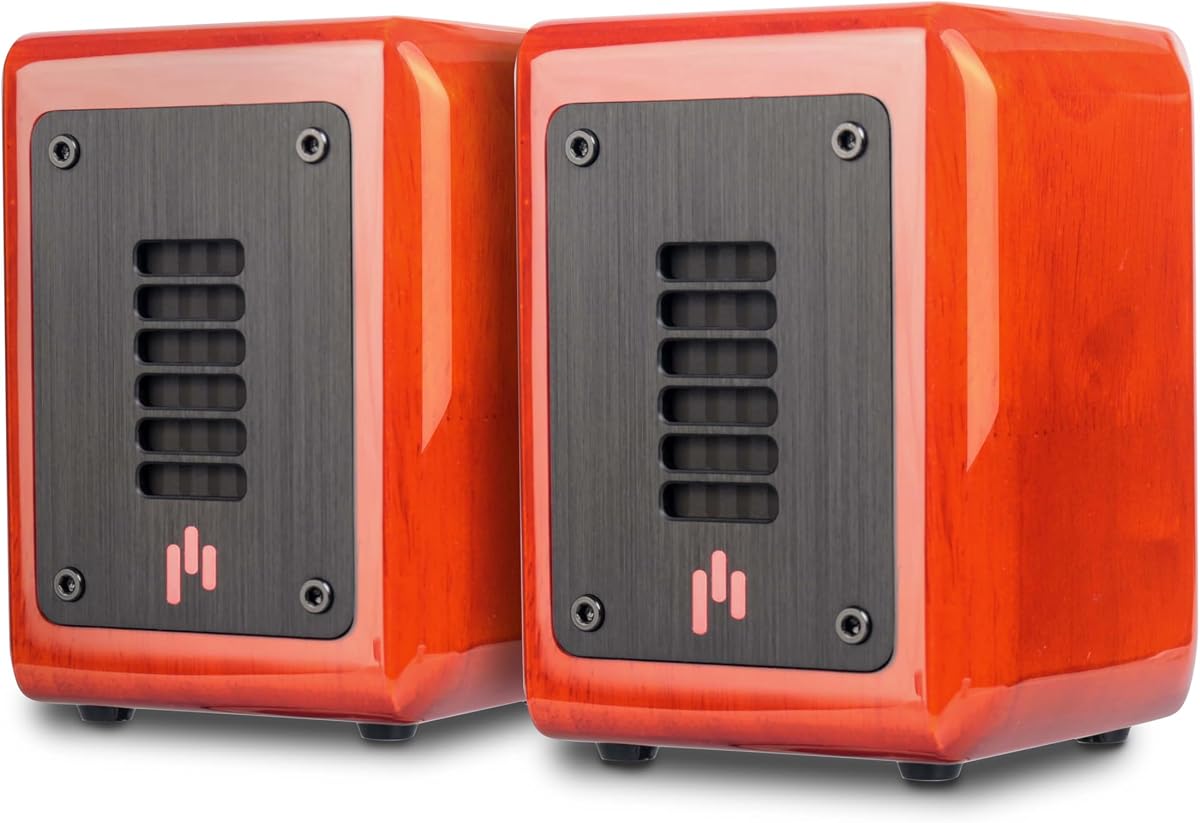
The Aperion Audio PST MKII super tweeters add high-end frequency response to home audio systems. With a 4.0 rating, they utilize planar ribbon technology to boost frequencies from 8kHz to 40kHz, enhancing detail without overwhelming main speakers.
We may earn a commission when you buy through this link, at no additional cost to you.
Designed for seamless integration, these tweeters employ a high-pass filter with five preset crossover points. Their delicate handling of high frequencies brings a new dynamic to the sound field, complementing existing speaker brands effectively.
Users should note they provide a subtle boost rather than high volume, and require compatible speaker efficiency levels. While not a full standalone crossover, their specialized role justifies the premium positioning for audiophiles.
Perfect for home theater enthusiasts seeking ultra-high-end detail, the PST MKII elevates listening experiences. Their elegant finish and performance make them a worthy upgrade for refined audio setups.
Planar ribbon drivers extend frequency response to 40kHz, revealing subtle nuances in complex audio recordings.
High-pass filters and preset points ensure smooth blending with existing speakers without disrupting balance.
We may earn a commission when you buy through this link, at no additional cost to you.
Rated 4.4, this crossover offers selectable operation modes for diverse PA and studio needs. Its design focuses on delivering cleaner sound by splitting signals efficiently and allowing independent control over each frequency band.
We may earn a commission when you buy through this link, at no additional cost to you.
Features like individual gain controls and phase reverse switches help resolve system issues. The dedicated low-cut filter protects subwoofers, and rugged construction ensures long-lasting durability. Support responds within 24 hours, adding confidence to the purchase.
The 110-Volt operation limits portability compared to universal power options. Some users may find the fixed voltage inconvenient for international travel, though it remains standard for domestic installations.
Ideal for home audio and small venue setups, this unit balances performance with usability. Its comprehensive feature set makes it a reliable choice for enhancing sound quality without excessive complexity.
Independent routing and gain controls allow precise tuning, ensuring each amplifier focuses power on relevant frequencies.
LED matrix and clear controls simplify mode selection and monitoring for straightforward setup and operation.
We may earn a commission when you buy through this link, at no additional cost to you.
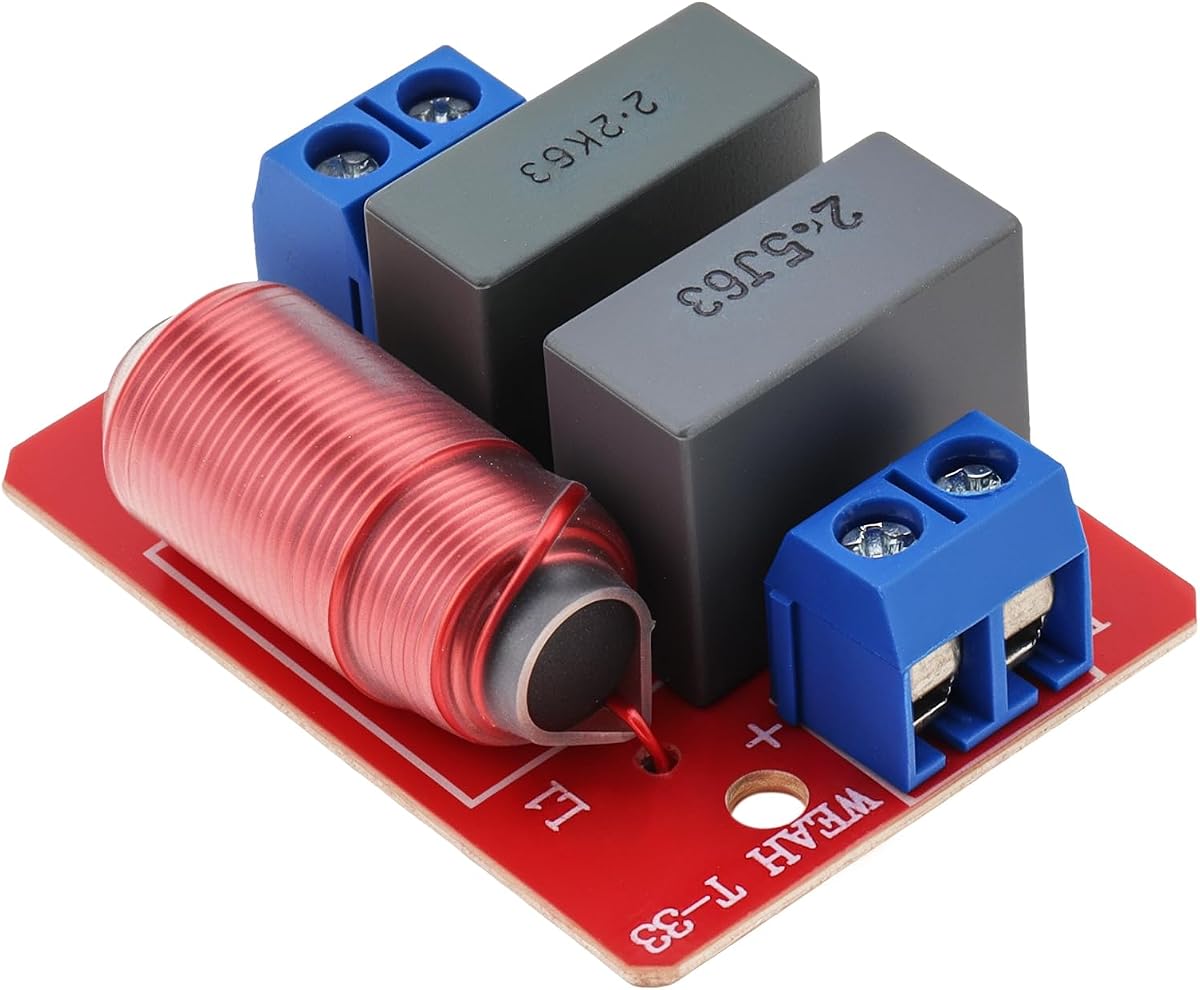
This compact 1-way crossover achieves a perfect 5.0 rating by delivering precise treble isolation for car and home HiFi speakers. Its 2200Hz to 20kHz range ensures pure high-frequency output while blocking lower interference effectively.
We may earn a commission when you buy through this link, at no additional cost to you.
Premium capacitors and a heavy-duty inductor minimize signal loss, preserving vocal nuances and reducing harshness. The flame retardant PCB with thick copper traces enhances durability, while pre-wired copper leads simplify installation for any user.
The limited frequency range means it works best as a dedicated tweeter component rather than a full system solution. Single channel operation suits specific upgrades but lacks versatility for complete system overhauls.
Ideal for upgrading existing systems with focused tweeter control, this crossover provides significant quality gains. Its user-friendly design and performance make it a top pick for affordable precision enhancement.
2200Hz to 20kHz range isolates treble perfectly, ensuring clear vocals without midrange interference.
Pre-wired leads and screw connectors allow quick setup without requiring technical expertise or soldering.
We may earn a commission when you buy through this link, at no additional cost to you.
Rated 4.2, the Autotek ATK2 is engineered to optimize vehicle sound systems with built-in crossovers and level adjustments. Its remote bass control and phase shift features allow users to fine-tune subwoofer output for precise integration.
We may earn a commission when you buy through this link, at no additional cost to you.
The processor helps adjust levels and frequencies to match sound requirements, enhancing overall audio experience. Its compact design fits easily into car setups, and the 180-degree phase shift resolves polarity issues effectively.
The 8.5-volt requirement may limit compatibility with some power sources, and controls are relatively basic compared to advanced units. However, these constraints are acceptable for straightforward car audio applications.
Best for car audio enthusiasts seeking enhanced control without complexity, this crossover simplifies tuning. Its remote functionality and optimization focus make it a practical addition to vehicle sound systems.
Included remote knob allows quick volume adjustments from the dashboard, offering convenience during drives.
Switchable phase shifts help align subwoofer output with front and rear signals for cohesive sound.
We may earn a commission when you buy through this link, at no additional cost to you.
With a 4.5 rating, this 6-way active crossover delivers advanced control for custom car audio installations. Its variable multiplier switch allows precise frequency adjustments, while separate inputs for front, rear, and subwoofer ensure efficient routing.
We may earn a commission when you buy through this link, at no additional cost to you.
Features like ground loop isolation reduce interference, and the non-fade low pass output maintains smooth transitions. Adjustable low pass gain and subwoofer bass boost further refine sound quality, supported by an impressive signal-to-noise ratio.
The unit is compact but requires careful planning for custom mounting. The complexity of six-way operation may challenge beginners, but enthusiasts will appreciate the depth of control it offers.
Perfect for custom car audio builds seeking precision and flexibility, this crossover excels in detailed tuning. Its remote controls and high-quality components ensure a dynamic and refined listening experience on the road.
Multiplier switch enables continuous crossover frequency adjustments for precise tuning to specific driver setups.
Ground loop isolation input circuit eliminates interference, ensuring superior clarity and minimal static.
We may earn a commission when you buy through this link, at no additional cost to you.
Rated 3.6, this 4-way crossover handles up to 400W, making it suitable for powerful home theater setups. Its 2-high and 2-low design ensures precise separation, while solderless terminals simplify installation without prior experience.
We may earn a commission when you buy through this link, at no additional cost to you.
The crossover features oxygen-free copper inductors and specialty capacitors to maintain circuit stability. A customizable tweeter routing switch allows tailoring to specific speaker preferences, and wide impedance compatibility ensures broad integration.
The rating suggests some users experienced inconsistencies with tuning or build quality. Fixed cutoff points may limit flexibility for specialized needs, but the overall performance remains solid for standard theater configurations.
Ideal for home theater enthusiasts seeking straightforward high-power handling, this crossover balances performance with ease of use. Its solderless design and robust construction make it a practical choice for dedicated audio rooms.
400W handling ensures drivers receive full power on relevant frequencies, reducing distortion and improving clarity.
10-pin solderless terminals allow instant connection, saving time and eliminating the need for tools.
We may earn a commission when you buy through this link, at no additional cost to you.
With a 4.5 rating, the Taramps Crx4 offers four channels of control in a compact package. Its customizable sound adjustments and bass boost make it ideal for refining car audio systems with ease.
We may earn a commission when you buy through this link, at no additional cost to you.
The processor works at 8 volts RMS, fitting well into standard vehicle electrical setups. At just 560 grams, its lightweight design allows flexible installation in tight spaces without compromising performance.
Limited documentation may challenge users unfamiliar with car audio electronics. Voltage requirements could restrict certain setups, but overall, its flexibility and size make it a strong contender for compact needs.
Best for compact car audio setups seeking versatility, this crossover simplifies tuning. Its customizable features and small footprint ensure it fits seamlessly into diverse vehicle installations.
Flexible controls allow tailoring frequency responses to match speaker characteristics and listener preferences.
Slim dimensions and lightweight build enable easy mounting in constrained spaces like door panels or dashboards.
We may earn a commission when you buy through this link, at no additional cost to you.
Rated 3.9, the Behringer Super-X Pro Cx3400 provides professional precision with flexible 2-way to 4-way modes. Its state-variable Linkwitz-Riley filters ensure flat summed amplitude response and zero phase difference across bands.
We may earn a commission when you buy through this link, at no additional cost to you.
Individual limiters protect drivers from damage, while switchable equalization accommodates constant directivity horns. Subsonic filters safeguard low-frequency drivers, and phase reverse switches resolve polarity issues systematically.
Complex controls may require time to master, and some users find the learning curve steep. However, those willing to invest effort will achieve precise, high-quality audio separation suitable for demanding applications.
Ideal for professional installations needing robust protection and precision, this crossover delivers reliability. Its flexible configuration and safety features make it a dependable tool for optimized sound systems.
24 dB/octave Linkwitz-Riley filters ensure accurate separation with flat response and no phase issues.
Switchable limiters and subsonic filters protect speakers from over-excursion and damaging low-frequency content.
We may earn a commission when you buy through this link, at no additional cost to you.
Selecting the right active crossover requires careful consideration of technical specifications, system compatibility, and intended use. This guide outlines key factors to help you make an informed decision.
The number of channels determines how many speaker drivers you can independently manage. Single-way options suit simple tweeter upgrades, while multi-way configurations support complex setups with multiple driver types. Choose based on your specific speaker layout and desired control level.
Ensure the unit supports the number of drivers in your system to maintain balanced audio distribution.
Filter type dictates how frequencies are separated. Linkwitz-Riley filters provide flat response summation, while Butterworth filters offer different roll-off characteristics. Slope strength, measured in dB per octave, affects how sharply frequencies are cut off between bands. Steeper slopes reduce overlap but may impact transient response.
Select filter types that align with your drivers characteristics to minimize phase issues and distortion.
Analog crossovers maintain signal purity without digital conversion artifacts, appealing to purists. Digital options offer programmable settings and greater flexibility for complex tuning. Consider your preference for signal chain simplicity versus customizable control when choosing.
Analog suits minimalists seeking natural sound, while digital benefits those needing advanced configuration options.
Balanced XLR connections reduce noise over long cable runs, essential for professional installations. RCA inputs are common in consumer gear but may lack noise rejection. Ensure inputs and outputs match your amplifier and source devices to maintain signal integrity throughout the chain.
Verify connector types match your existing equipment to avoid additional adapters or signal degradation.
Units require specific voltages like 12V for automotive or 110V for home setups. Ensure compatibility with your power source to avoid installation issues. Some models include universal power supplies for broader use, while others are fixed voltage. Consider portability needs for mobile applications.
Always check voltage compatibility to ensure stable operation and prevent potential damage to equipment.
Dimensions matter for tight spaces like vehicle dashboards or equipment racks. Compact units offer flexibility but may lack advanced controls. Look for mounting options like ISO holes or removable trim rings to simplify integration. Weight and build quality affect durability in mobile settings.
Measure available space before purchasing to ensure the unit fits comfortably within your designated area.
Features like remote bass control, phase inversion, and limiters enhance usability and protection. LED indicators simplify monitoring signal status, while preset crossover points save time. Evaluate which extras align with your workflow and system needs to maximize value.
Prioritize features that solve specific system challenges rather than unnecessary extras that complicate usage.
Durable construction ensures longevity, especially in touring or high-use environments. Reliable customer support adds peace of mind for troubleshooting and maintenance. Check reviews for build durability and manufacturer responsiveness to gauge overall reliability.
Invest in units with proven build quality and accessible support to maintain performance over time.
Start by reviewing your speaker system to determine the required number of crossover channels. Identify the frequency ranges for each driver type to set appropriate crossover points. Ensure all amplifier and source devices are powered off before connecting cables to prevent electrical spikes.
Connect input cables from your audio source to the crossover inputs, then route outputs to respective amplifier channels. Use balanced XLR cables where possible to maintain signal purity. Adjust crossover frequency settings according to manufacturer recommendations for optimal driver performance and system integration.
Regularly inspect connections for corrosion or loose wires, especially in automotive environments. Keep units in cool, dry locations to avoid heat damage. Update firmware on digital models if available and consult manuals for troubleshooting tips to maintain consistent performance and reliability.
Active crossovers split audio signals into precise frequency bands before amplification, ensuring each speaker driver receives only frequencies it can reproduce efficiently. This reduces distortion and improves clarity by preventing drivers from attempting to handle incompatible ranges.
Yes, active crossovers typically precede amplifiers in the signal chain and require separate power amplifiers for each channel. Unlike passive crossovers, they rely on line-level signals, necessitating dedicated amplification after frequency separation.
Choose based on your speaker configuration. A 2-way unit suits setups with tweeters and woofers, while a 3-way model adds midrange control for larger systems. Evaluate your driver count and desired frequency distribution to select the appropriate option.
Filter slope indicates how steeply frequencies are attenuated outside the passband. Steeper slopes like 24 dB per octave provide sharper separation between drivers, reducing overlap and potential interference for cleaner audio reproduction.
Yes, but you must ensure each speaker driver receives dedicated amplifier power since the active crossover does not manage impedance directly. This setup offers greater control but requires careful amplifier matching for optimal results.
Crossovers are durable components that rarely need replacement unless damaged. Inspect connections periodically and update settings as needed. High-quality units last many years with proper care and stable operating conditions.
We reviewed ten active crossover options ranging from budget-friendly units to premium solutions, each offering distinct advantages for diverse audio systems. The Marchand XM66 leads in pure analog performance, while models like the Professional 2/3-Way provide budget versatility.
Prioritize factors like channel configuration and input types that align with your existing equipment. Consider whether analog warmth or digital flexibility better suits your listening preferences before deciding.
Always verify current product details and availability before purchasing since specifications may change. Use the provided links to explore each model and ensure it meets your specific audio system requirements for optimal performance.