
LAFVIN R3 Camera Smart Robot Car
4.5Editor score
Affordable entry-level price
Wireless Wi-Fi control
Five intelligent operation modes
This guide compares the top Arduino robot kits for 2026, evaluating features like camera integration, sensor arrays, coding platforms, and build complexity to
Arduino robot kits offer an immersive way to learn engineering and coding through hands-on building. These sets combine motors, sensors, and microcontrollers into cohesive units that move and react to their environment. Selecting the right kit depends on your skill level and whether you prefer car, tank, or humanoid designs.
We evaluated ten leading kits based on build quality, programming flexibility, and educational value. Each product was analyzed for its sensor suite, control options, and expansion potential. Our comparisons highlight which sets deliver the most engaging STEM learning experiences for kids and adults alike.
Each pick below shows key specs, pros, cons, and detailed usage insights. We focus on real-world usability and long-term project potential. Please note that prices and availability change frequently, so check current listings before purchasing to ensure you get the best deal today.
4.5Editor score

4.5Editor score

4.3Editor score
The following table provides a side-by-side comparison of all ten selected kits. It highlights key specifications such as controller type, primary movement mechanism, sensor capabilities, and recommended age ranges to help you quickly identify the best fit for your specific project goals.


The ELEGOO UNO R3 Smart Robot Car Kit V4 stands out as a top choice for beginners and intermediate makers. It combines a robust UNO R3 controller with advanced features like an onboard camera for FPV streaming. This kit is designed to make coding and electronics accessible through clear, step-by-step instructions.
We may earn a commission when you buy through this link, at no additional cost to you.
Its standout quality is the integration of multiple interactive driving modes. You can switch between line tracking, obstacle avoidance, and remote control effortlessly. The ESP32-WROVER module enables wireless control and live video viewing, which adds a layer of realism to the project. The keyed connectors reduce wiring errors significantly.
Trade-offs include the dependency on a Wi-Fi network for the camera features and some assembly time. These are acceptable given the educational value and cost. The kit encourages experimentation with custom code, helping users grow their skills beyond the provided examples.
This kit is ideal for students or hobbyists wanting a comprehensive starter experience. It balances ease of use with advanced features effectively. We recommend it for anyone looking to dive into robotics without getting overwhelmed by complex wiring or coding environments.
The FPV camera allows users to see what the robot sees. This real-time visual feedback helps in understanding navigation logic and sensor integration deeply.
You can add more sensors or modules as you learn. The open architecture supports a wide range of expansions for future projects.
We may earn a commission when you buy through this link, at no additional cost to you.
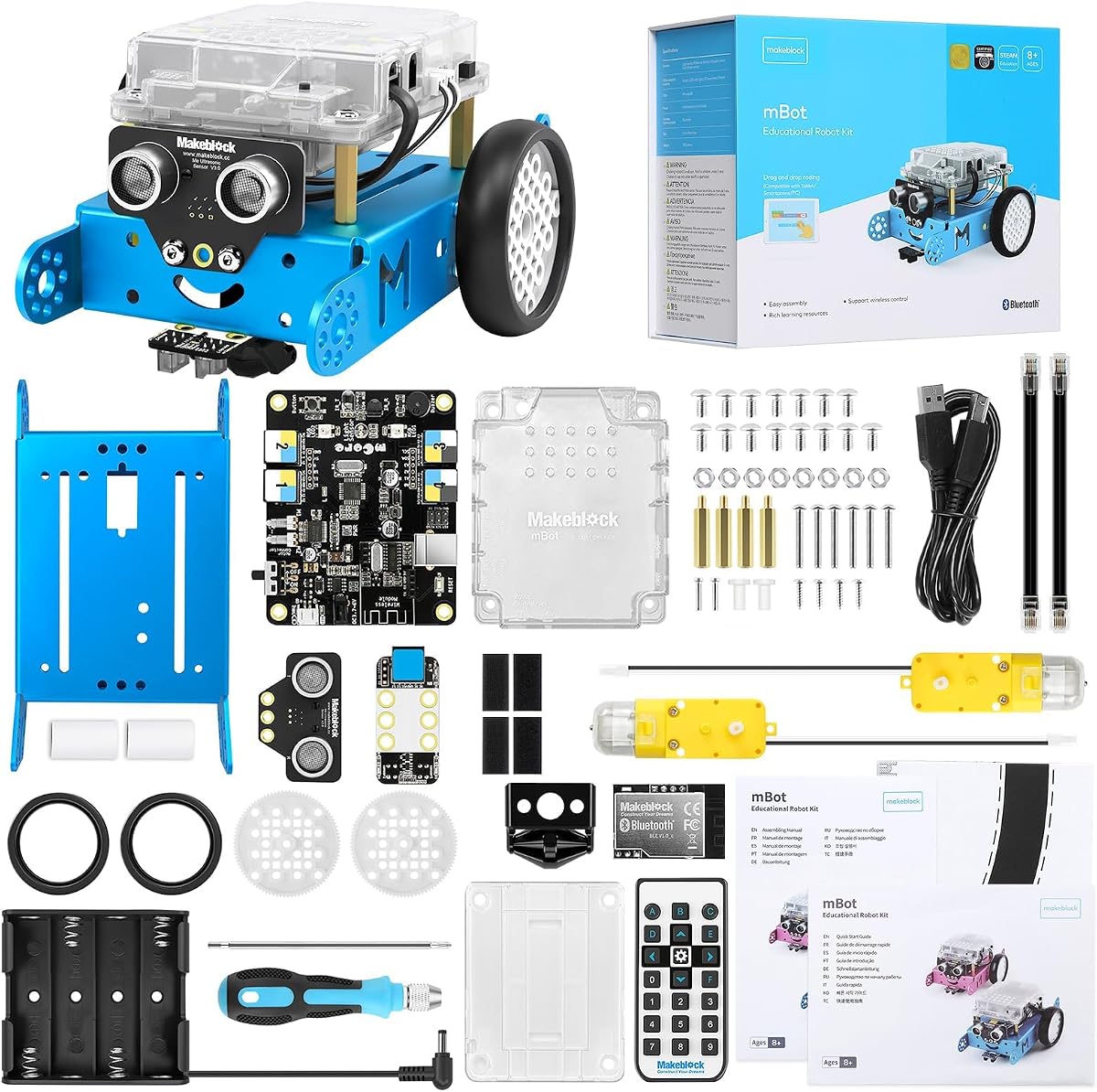
The Makeblock mBot is a classic entry-level robot designed to introduce kids to robotics. It features a simple build process that takes about fifteen minutes. The metal chassis adds durability, making it suitable for active play and educational settings.
We may earn a commission when you buy through this link, at no additional cost to you.
Its main strength lies in the mBlock software which supports both Scratch and Arduino modes. This transition path helps children grow from visual blocks to text-based coding gradually. The kit includes rich tutorials and coding cards to guide the learning process effectively.
Some minor downsides are that batteries for the robot and remote are not included. This is common but requires extra purchasing. Despite this, the robust build and clear educational focus make it a reliable choice for schools or homes.
This robot is perfect for younger kids starting their STEM journey. It is safe, durable, and easy to understand. We suggest it for parents looking for a straightforward, high-quality first robotics experience.
Moving from blocks to code is smooth with mBlock. The interface keeps learning fun while introducing complex concepts.
Metal parts ensure the robot survives rough handling. It withstands bumps and drops better than plastic alternatives.
We may earn a commission when you buy through this link, at no additional cost to you.
The Conqueror Robot Tank brings a rugged industrial feel to DIY robotics. Its stainless steel chassis and metal tracks allow it to traverse rougher surfaces. This kit is built for those who want a durable model that can handle outdoor or uneven indoor environments.
We may earn a commission when you buy through this link, at no additional cost to you.
Key strengths include the servo-mounted camera and five interactive modes. You can adjust the camera angle remotely to inspect the area from different perspectives. The tank tracks provide excellent traction, making it more versatile than wheeled car kits.
The trade-off is a higher price and a slightly heavier build. Assembly is more involved but rewarding. These factors are acceptable for users seeking a premium, durable experience that feels more like a real vehicle.
This kit is best for intermediate makers wanting a durable project. It suits classrooms needing robust gear or hobbyists preferring tanks. We recommend it if you want a strong, versatile robot for advanced exploration.
Tank tracks handle slopes and debris better than wheels. This expands where you can take your robot.
The servo camera tilts for better views. You can look up or down as you navigate obstacles.
We may earn a commission when you buy through this link, at no additional cost to you.
The Tumbller is a unique two-wheel robot that uses motion sensing to stay upright. It introduces complex physics concepts in a fun way. This kit is great for those interested in control systems and real-time motor adjustments.
We may earn a commission when you buy through this link, at no additional cost to you.
Strengths include six ways to play, including bounce mode and LED effects. The system uses an IMU to balance, which is a great way to learn about sensors. The guided build helps demystify the complex wiring involved.
The learning curve is steeper than standard car kits. Finding a flat surface for calibration is also important. These challenges are educational and rewarding. They offer a deep dive into engineering principles.
This kit suits students wanting a challenge beyond driving. It is excellent for science fairs or physics lessons. We recommend it for those ready to explore dynamic motion control.
Balancing requires understanding feedback loops. It turns abstract concepts into a tangible hands-on experience.
You can add lights or sounds easily. The reserved pins allow for extra fun features.
We may earn a commission when you buy through this link, at no additional cost to you.
ACEBOTT Smart Robot Car Kit features unique Mecanum wheels allowing full omnidirectional movement. This means it can move sideways or diagonally without turning. It offers a distinct driving experience compared to standard wheels. The kit is designed to be beginner-friendly with ESP32 control.
We may earn a commission when you buy through this link, at no additional cost to you.
Key strengths include 360-degree movement and multiple expansion packs. You can add cameras, arms, or solar panels. The app and IR remote make control intuitive. The tutorials are story-rich, helping users master programming systematically.
Mecanum wheels require flat surfaces to work best. The setup can be tricky on uneven floors. Despite this, the flexibility and add-ons offer great value. It is a versatile choice for various project types.
This kit is great for creative builders. It suits those wanting unique movement capabilities. We recommend it for anyone looking to try drifting or sliding motions.
Sideways and diagonal motion open new paths. You can navigate tight spaces without turning.
Add arms or solar panels easily. This keeps the project fresh and growing over time.
We may earn a commission when you buy through this link, at no additional cost to you.
The LAFVIN R3 offers high-end features like FPV video at a budget price. It is designed to cultivate hands-on skills through full self-assembly. The kit includes easy-to-connect interfaces to simplify wiring. It is a smart choice for those on a tight budget.
We may earn a commission when you buy through this link, at no additional cost to you.
Strengths include wireless transmission and five intelligent modes. You can control movement and camera angles via Wi-Fi. The open-source platform provides free resources for learning. It delivers solid performance for the price.
The build process is extensive which requires time. Materials are functional but not premium. These are acceptable trade-offs for the cost savings. It is a great value for beginners.
This kit is ideal for students on a budget. It offers a complete FPV experience affordably. We recommend it for anyone wanting wireless video control without high costs.
You get premium features without the high price. It is a great way to test your interest.
Access free code and tutorials. The community resources help you learn efficiently.
We may earn a commission when you buy through this link, at no additional cost to you.
This kit allows you to build a car, a tank, or an arm. The 5DOF robotic arm adds a new dimension to robotics. It can grab and lift objects. It combines a car base with a tank expansion for versatility.
We may earn a commission when you buy through this link, at no additional cost to you.
Strengths include rugged tracks and modular design. The upgraded drivetrain ensures stability on rough terrain. You can build multiple styles, keeping the learning fresh. It is perfect for teens interested in mechanical arms.
Some users report lower ratings due to complexity. Assembly is more involved than basic kits. These trade-offs are expected for advanced builds. It remains a strong educational tool.
This kit is best for older kids and teens. It suits those wanting mechanical complexity. We recommend it for projects needing object manipulation.
Learn how real arms lift objects. It teaches servo control and coordination.
Switch between car and tank easily. This expands project options significantly.
We may earn a commission when you buy through this link, at no additional cost to you.
SunFounder Ultimate Starter Kit is more than a robot; it is a full education system. It includes 192 items and 87 projects. The video courses guide you from basics to IoT. This is ideal for self-paced learning.
We may earn a commission when you buy through this link, at no additional cost to you.
Strengths include expert-designed courses and a vast component set. You can build sensors, LEDs, and cars. The curriculum is progressive, matching skill levels. It builds confidence through steady achievement.
The box is large and requires a computer for coding. This is manageable for most users. The sheer volume of parts might be overwhelming at first. But the support makes it worth it.
This kit is perfect for beginners needing guidance. It suits homeschooling or independent learning. We recommend it for those wanting a comprehensive course.
Video lessons explain every step clearly. It helps avoid confusion during setup.
Have everything you need for any project. You do not need to buy extras often.
We may earn a commission when you buy through this link, at no additional cost to you.
Makeblock mBot Ultimate is a top-tier set for serious makers. It uses industrial-grade aluminum for durability. You can build ten different models with it. The MegaPi board supports motors and sensors easily. It grows with your skills.
We may earn a commission when you buy through this link, at no additional cost to you.
Strengths include Python support and robust construction. You can connect Raspberry Pi for advanced vision. The build quality ensures longevity. It is designed for long-term project use.
The cost is high but justified for professionals. Battery management is manual. These factors are minor given the quality. It offers unmatched flexibility.
This kit is best for teens and adults. It suits those seeking pro-grade tools. We recommend it for serious robotics exploration.
Aluminum parts last longer. They resist wear from heavy use.
Python allows complex logic. It prepares you for real engineering.
We may earn a commission when you buy through this link, at no additional cost to you.
The Freenove Hexapod Kit lets you build a six-legged robot. It crawls and twists like an insect. This design is unique among car kits. Each leg has motors for independent control. It brings a different dynamic to robotics.
We may earn a commission when you buy through this link, at no additional cost to you.
Strengths include wireless control across platforms. The prewritten library helps you start quickly. It supports Windows and macOS easily. The guide is clear. It is a great STEM project.
Assembly takes time and batteries are excluded. These are standard but expected. The walking motion is fun but complex. It is a great choice for novelty.
This kit is best for animal motion fans. It suits teens wanting a unique build. We recommend it for those seeking something distinct.
Copy insect movement patterns. It is fascinating to watch a robot walk.
Works on multiple devices. You can control it from many systems.
We may earn a commission when you buy through this link, at no additional cost to you.
Choosing the right Arduino robot kit depends on several factors. Here we outline the key aspects to consider before you buy.
Check the recommended age range to ensure the build complexity matches the user. Younger kids need simple tools and fewer steps while teens can handle complex wiring and coding. This ensures safety and enjoyment.
Always select a kit that fits the builder's current maturity level to avoid frustration and ensure successful assembly.
Most kits use UNO R3 or ESP32 controllers. UNO is easier for beginners but ESP32 offers Wi-Fi features. Decide if you need wireless connectivity for camera control or remote viewing.
Choose the controller that matches your coding goals and desired connectivity features for your project.
Look for included sensors like ultrasonic and line trackers. These enable obstacle avoidance and navigation. Cameras add FPV capability for real-time viewing. Ensure the sensors match your learning goals.
Prioritize sensors that allow you to build the interactive features you want most.
Some kits come with rechargeable batteries while others need disposable cells. Rechargeable packs are cost-effective long term. Check battery life and how easy it is to recharge or replace.
Select a power solution that fits your usage patterns and budget to avoid running out of power often.
Materials range from plastic to metal or aluminum. Plastic is light and cheap. Metal is durable and heavy. Decide based on whether the robot will face rough play or quiet lab work.
Choose a material that balances durability and weight for your specific use case.
Kits with add-on packs let you grow your projects. Look for compatibility with arms or wheels. This keeps the kit useful as skills improve. Check available accessories before buying.
Ensure the kit supports future expansions to maximize its learning value over time.
Check if the kit supports Scratch or Arduino IDE. Some even support Python. Visual coding helps kids learn logic. Text coding offers more control. Pick the one matching your skills.
Select a coding platform that aligns with your experience level and desired learning outcomes.
Compare the price against included components. High-end kits cost more but last longer. Budget kits are good for testing interest. Consider the total value including manuals and support.
Balance your budget with the quality and features to get the best return on investment.
Always start by assembling the chassis and attaching motors securely. Follow the provided illustrations to ensure correct orientation. This prevents mechanical failure during movement.
Install the required batteries or charge the power pack fully. Connect the controller and upload the sample code to verify functionality. Test basic movements before advanced coding.
Store the robot in a dry place away from extreme temperatures. Keep sensors clean from dust to maintain accuracy. Regularly check wire connections to prevent loose contacts during use.
Most beginner kits like ELEGOO and ACEBOTT do not require soldering. They use connectors that snap into place. Advanced kits might have soldering options for durability but are not strictly necessary for basic function.
Yes, these kits are designed for STEM learning. They align with school curriculum goals. Many come with documentation suitable for grading or reporting. They are excellent for science fairs.
Most kits work with Windows, macOS, or Linux. You need a USB port for coding. Some apps work on tablets. Ensure your OS is up to date for best compatibility.
Yes, most brands sell spare motors or wheels online. Check the manufacturer website for specific spare parts. Common parts like screws are standard. Keep packaging for small components.
Build time varies from 30 minutes to 5 hours. Simpler kits are quick. Complex metal ones take longer. Follow the guide steps to estimate your specific time.
No, most kits include beginner tutorials. You start with blocks then move to code. Some use pre-written code. Prior knowledge helps but is not essential.
Many can move on patios or smooth grass. Avoid water or mud to protect electronics. Metal kits handle terrain better. Keep batteries charged for outdoor trips.
Most come with an IR remote. Some use app control via Wi-Fi. Check product specs for remote inclusions. Battery needs for remotes vary.
We reviewed ten top kits ranging from simple cars to complex arms. ELEGOO and Makeblock lead in quality and community support. Budget options like LAFVIN offer excellent value.
Prioritize kits that grow with your skills. Look for open-source code and expansion options. A good kit should challenge you but not overwhelm you with difficulty.
Check current prices and availability before buying. Deals change frequently so stay alert. Pick the kit that best fits your specific project goals and learning style.