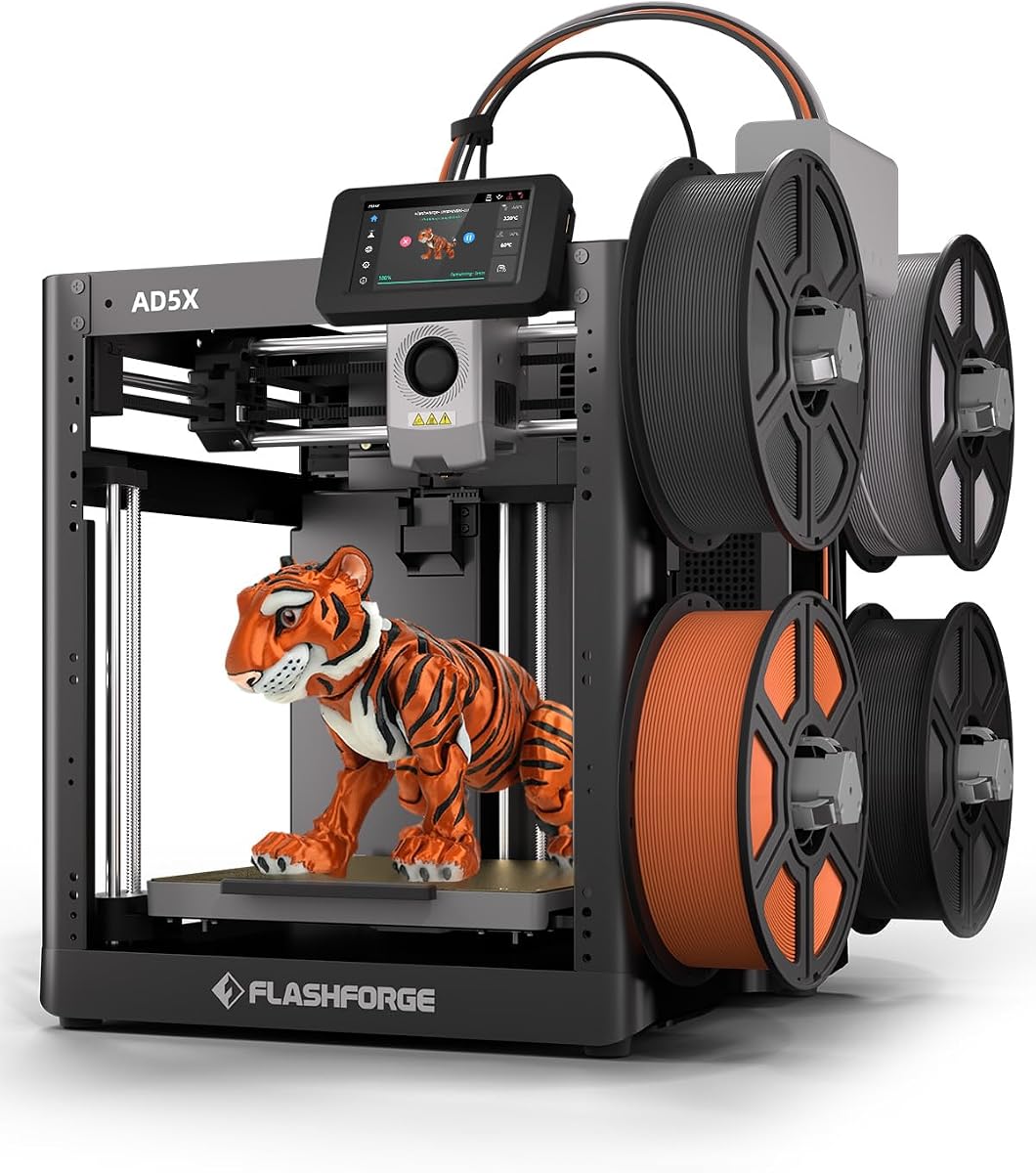
FLASHFORGE AD5X Multi-Color 3D Printer
3.9Editor score
CoreXY 600mm/s high-speed
Vivid multi-color printing support
300C direct drive extruder
1-click auto leveling feature
Discover the top 3D printer for fast printing speed models ranked by velocity and accuracy. Compare CoreXY speed, auto leveling, and multi-color options for
Finding the right 3D printer for fast printing speed can transform your workflow from sluggish to streamlined. Modern machines now reach speeds exceeding six hundred millimeters per second without sacrificing detail or layer adhesion.
We compared ten leading models based on acceleration rates, motion systems, calibration tools, and material versatility. Each entry delivers rapid production while maintaining reliability for hobbyists and professionals alike.
Every pick highlights unique strengths like multi-color support, enclosed chambers, or direct drive extruders. Prices fluctuate regularly so check current listings before committing to a specific machine for your needs.
3.9Editor score

4.5Editor score

4.5Editor score
This side-by-side comparison evaluates ten high-speed 3D printers based on motion systems, acceleration, nozzle temperature, and multi-color capabilities to help you choose the fastest reliable machine.



The Bambu Lab P1S stands out as a top contender for fast printing speed with its robust enclosed design. It delivers reliable results at high velocities making it ideal for rapid prototyping and batch production. Its rating reflects consistent performance across various filament types and complex geometries.
We may earn a commission when you buy through this link, at no additional cost to you.
This machine reaches speeds up to 500mm/s with an acceleration of 20000mm/s2 ensuring that prints finish quickly without sacrificing dimensional accuracy. The fully enclosed body protects against drafts improving success rates with engineering-grade materials like ABS and ASA. Users benefit from automatic bed leveling which removes the guesswork from setup.
While the P1S excels in speed and reliability multi-color printing requires purchasing the AMS accessory separately. This adds to the total cost but remains optional depending on project needs. The learning curve is minimal for newcomers due to its user-friendly interface and pre-configured settings.
Professionals and serious hobbyists seeking a fast reliable workhorse should consider the P1S. It balances performance ease of use and build quality effectively. Its ability to handle advanced filaments while maintaining high throughput makes it a versatile choice for modern makers.
The P1S offers impressive acceleration that minimizes idle time between moves reducing total print duration significantly. Even at max speed the vibration compensation system maintains clean surface finishes on vertical walls. This balance of power and precision sets it apart from many competitors in the same category.
Achieves up to 500mm/s speed with 20000mm/s2 acceleration for rapid production runs.
Fully enclosed body improves print performance for advanced filaments and maintains stable temperature.
We may earn a commission when you buy through this link, at no additional cost to you.
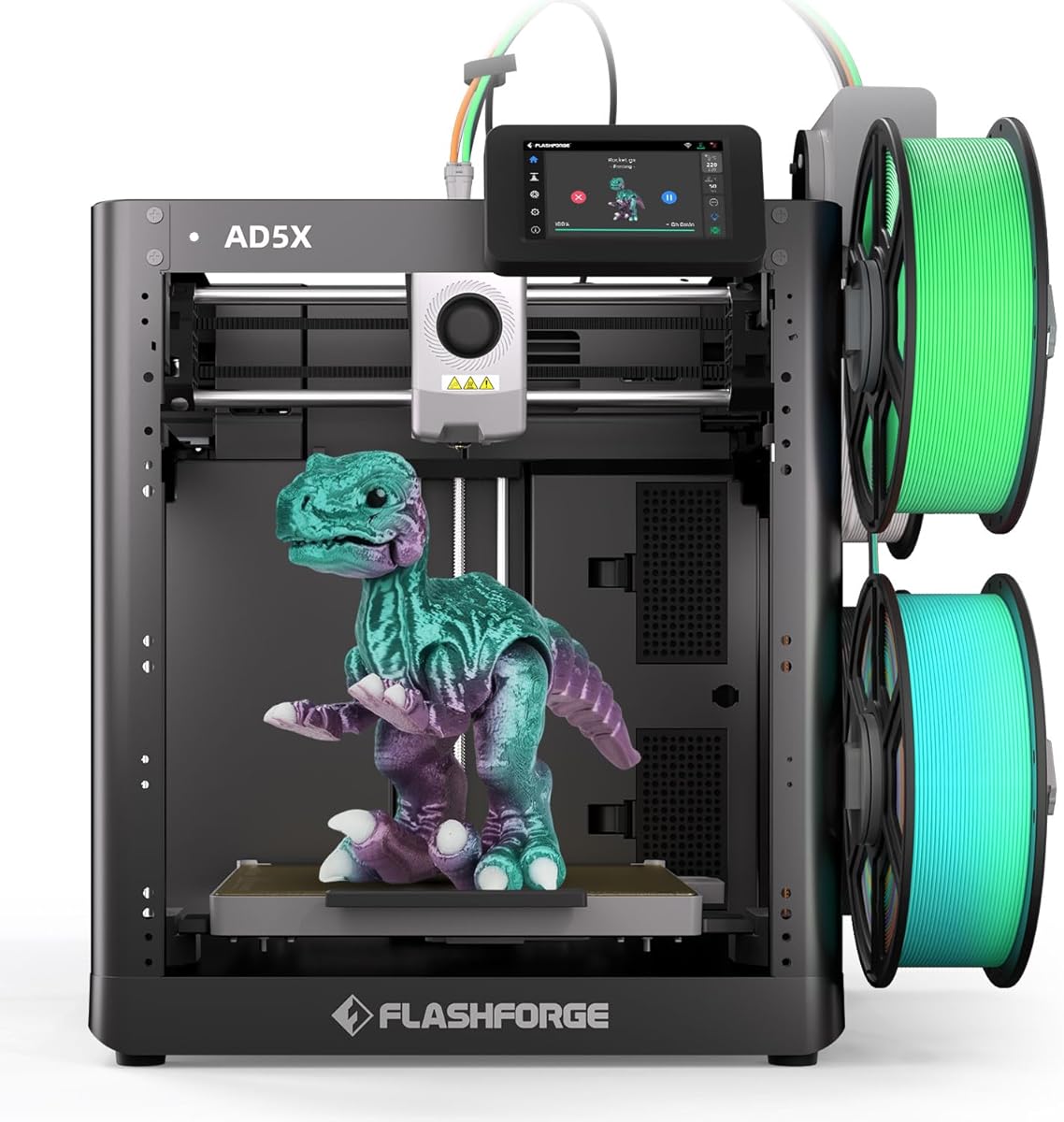
The FLASHFORGE AD5X delivers exceptional value with a CoreXY motion system capable of reaching 600mm/s. Its multi-color capabilities allow users to create vibrant prints without manual filament swaps. This model appeals to budget-conscious buyers needing speed and creative flexibility.
We may earn a commission when you buy through this link, at no additional cost to you.
Equipped with a 300C direct drive extruder this printer supports a wide range of materials including high-temperature filaments. The 1-Click Auto Leveling feature simplifies setup ensuring consistent first layers every time. Users can also upgrade nozzle sizes from 0.25mm to 0.8mm for different detail levels.
The compact build volume of 220x220x220mm may limit large single-piece projects. However for rapid prototyping or small batch runs it remains highly efficient. The dual-channel cooling fan and vibration compensation system help maintain quality despite the high speeds.
Ideal for schools makerspaces or hobbyists wanting color variety without expensive add-ons. The mobile app support adds convenience for remote monitoring and control. Overall it offers a compelling mix of speed features and affordability.
Its acceleration of 20000mm/s2 paired with stable design boosts both efficiency and print quality. The system handles unexpected power loss via resume printing which is vital for long runs. Filament feeding and retraction are automated reducing user intervention during prints.
Supports up to 4 colors simultaneously giving you endless creative possibilities.
Supports four nozzle sizes from 0.25mm to 0.8mm for full creative control.
We may earn a commission when you buy through this link, at no additional cost to you.
The Snapmaker U1 redefines multi-material printing with its 4-toolhead system and 5-second tool changer. It eliminates purging waste and speeds up color changes dramatically. This makes it a premium choice for complex functional parts requiring varied materials.
We may earn a commission when you buy through this link, at no additional cost to you.
Its CoreXY motion system allows speeds up to 500mm/s while maintaining accuracy across the 270x270x270mm build volume. Independent toolheads mean filaments are preloaded and preheated allowing seamless switching. This reduces waste by up to 5X compared to traditional methods.
Advanced calibration features like automatic toolhead offset and vibration compensation ensure dimensionally accurate prints. The open-source slicing software provides flexibility for power users. AI monitoring helps detect failures early saving time and materials.
Best for professionals needing robust parts or artistic models with different hardness levels. It handles materials like PLA ABS and TPU with ease. The touchscreen interface simplifies operation for both beginners and experts.
The rigid carbon fiber X-axis rails support high speeds without compromising stability. Preloaded filaments stay ready reducing idle time during tool swaps. This system transforms multi-color printing into a reliable efficient process for serious makers.
Powerful 4-toolhead system reduces tool change time from two minutes to just five seconds.
Reduces filament waste by up to 5X enabling faster multi-material printing.
We may earn a commission when you buy through this link, at no additional cost to you.
The Bambu Lab P2S Combo combines a high-speed printer with the AMS 2 Pro for seamless multi-color workflow. It prints up to 600mm/s while maintaining sharp corners and smooth layers. This combo is designed for professionals needing reliability and efficiency.
We may earn a commission when you buy through this link, at no additional cost to you.
Setup is quick taking just 15 minutes from unboxing to first print. AI failure detection and quick-swap nozzles minimize downtime. The AMS 2 Pro dries filament at up to 65C ensuring materials are always ready for flawless prints.
Adaptive airflow automatically balances cooling and heat retention for overhangs and engineering materials. A carbon filter keeps air clean making it suitable for shared workspaces. The workflow is unified across Bambu Studio Handy apps.
It suits those who need consistent high-quality prints with minimal maintenance. The servo extruder and flowrate compensation ensure smooth extrusion. While expensive the included AMS justifies the cost for complex projects.
The system supports over one million models on MakerWorld for instant inspiration. Calibration happens automatically so users focus on creativity. Its precision at high speeds makes it a top tier option.
Prints up to 600mm/s while maintaining exceptional accuracy with servo extruder.
AMS 2 Pro enables seamless multi-color printing with built-in drying.
We may earn a commission when you buy through this link, at no additional cost to you.
The Anycubic Kobra X offers native 4-color printing reducing purge waste and travel path by 81%. It reaches speeds up to 600mm/s completing Benchy prints in roughly 14 minutes. Setup is fast with LeviQ 3.0 auto leveling ensuring flawless first layers.
We may earn a commission when you buy through this link, at no additional cost to you.
Hardened steel nozzle and vibration compensation guarantee smooth layers even at high velocity. The large model library provides over 10,000 designs. Smart AI monitoring detects failures like spaghetti or foreign objects in real time.
Dual-band Wi-Fi supports stable remote control via the Anycubic App. It supports mixed printing of rigid and flexible filaments like TPU and PETG. The top-mount spool holder saves desktop space.
Ideal for home schools and makerspaces needing multi-color without complex mods. The 260mm build volume accommodates medium-sized models. Filament is not included but the system is ready to print out of the box.
LeviQ 3.0 uses a 49-point calibration for precise bed flatness. This ensures every layer adheres properly without manual tweaks. The combination of speed native color and AI makes it versatile.
Reduces filament and travel path by 81% for 2X speed and lower costs.
AI detection for spaghetti and foreign objects prevents failed prints.
We may earn a commission when you buy through this link, at no additional cost to you.
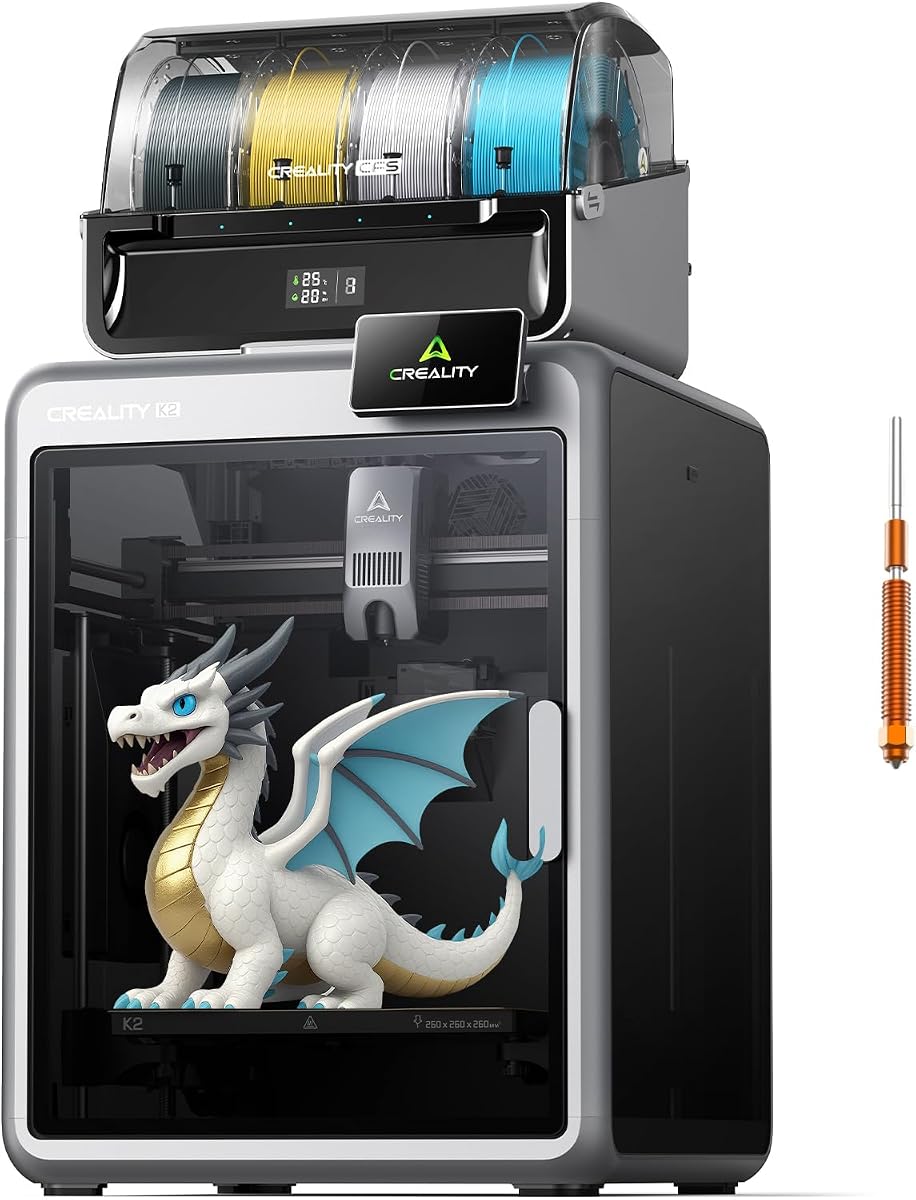
The Creality K2 Combo delivers next-gen multicolor printing with expandable CFS units supporting up to 16 colors. It prints up to 600mm/s using a robust direct drive system. Smart filament features like auto relay and RFID keep materials dry and reliable.
We may earn a commission when you buy through this link, at no additional cost to you.
Precision is maintained through an aluminum frame steel X-axis rail and dual Z-axis. This ensures smooth layer consistency with zero wobble. Silent mode and balanced fans create a quiet workspace ideal for offices.
It handles engineering-grade filaments with a 40mm3/s high-flow hotend and hardened steel nozzle. An AI camera tracks progress detects failures and records time-lapses. Air purification filters VOCs for a safer environment.
This machine fits creators wanting vibrant colors without post-processing. Pre-assembly makes setup effortless for beginners. The combination of speed smart filament handling and stability is impressive.
Local storage and Wi-Fi connectivity enhance workflow convenience. The smart filament system identifies and dries materials automatically. This reduces human error and improves print consistency across varied materials.
Supports up to 16 vibrant colors with automatic wire switching.
Auto identification and dry storage keep materials ready for reliable prints.
We may earn a commission when you buy through this link, at no additional cost to you.
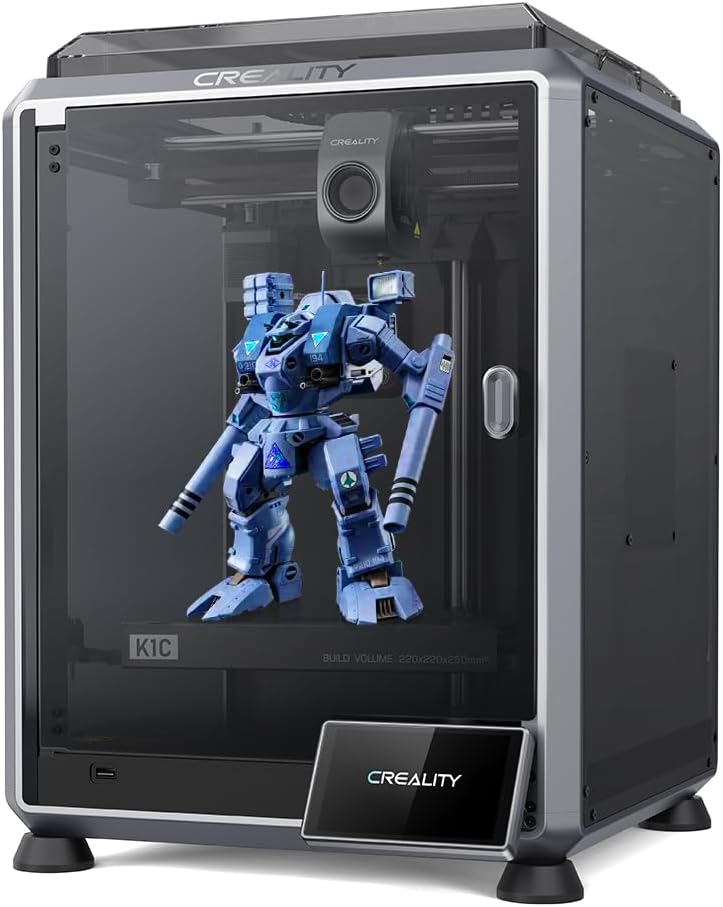
The Creality K1C excels with 600mm/s speed and support for carbon fiber filaments. Its clog-free direct extruder grips tightly to prevent slack. Auto calibration including leveling and input shaping saves time on setup.
We may earn a commission when you buy through this link, at no additional cost to you.
An upgraded cooling structure includes hotend part and auxiliary fans for consistent quality. Smart AI recognizes spaghetti failures debris and provides real-time monitoring. The direct extruder supports 300C printing with a durable copper nozzle.
Setup takes about three minutes from unboxing to power on. This plug-and-play design helps new users start quickly. The boot-up guide simplifies operations similar to a smartphone.
It suits makers needing speed and durable material support. The AI camera supports time-lapse recording. Auto Z offset and leveling ensure reliable first layers without manual paper tests.
Hardened nozzle and titanium heatbreak block heat creep effectively. Fans refine texture and reduce warping on overhangs. This makes it a solid choice for functional parts.
Equips 600mm/s speed and auto calibration saving time largely.
AI Camera recognizes spaghetti and debris supporting real-time monitoring.
We may earn a commission when you buy through this link, at no additional cost to you.
The FLASHFORGE AD5X Multi-Material offers 600mm/s speed with full-color 4-print support. Its Intelligent Filament System allows simultaneous printing in different colors and materials. Auto leveling ensures consistent first layers every time.
We may earn a commission when you buy through this link, at no additional cost to you.
A CoreXY structure with vibration compensation reduces errors from mechanical shifts. The design saves space with side-by-side filament spools. It supports a wide range of materials from PLA to carbon fiber blends.
Full-auto calibration measures multiple points on the bed for precise distance. This ensures even adhesion for flawless prints. The system combines speed with reliable control over output.
It is ideal for creative projects needing vibrant colors quickly. Filament backup can prevent interruptions during long prints. The modular design adds flexibility for various workspace needs.
Vibration suppression algorithms minimize layer shifts at high velocity. This maintains dimensional accuracy even at top speeds. Compact form factor fits well in smaller workspaces.
Intelligent Filament System allows printing in multiple colors and materials simultaneously.
Compact design saves space with side-by-side filament arrangement.
We may earn a commission when you buy through this link, at no additional cost to you.
The Creality K2 Combo supports up to 16 colors with CFS units for multicolor printing. It reaches 600mm/s speed with a pre-assembled design for quick use. Step-servo motors dynamically adjust torque for precision and quiet operation.
We may earn a commission when you buy through this link, at no additional cost to you.
Auto leveling targets only the print area for speed and accuracy. An AI camera monitors for failures in real time. Silent mode keeps noise levels comparable to typing on a laptop.
Unboxing leads directly to screen setup for immediate printing. It handles multiple materials including PLA PETG and ABS. The sturdy frame ensures stability at high speeds.
Perfect for users wanting multicolor without extensive manual tuning. Pre-assembly reduces setup time significantly. The balance of speed silence and accuracy meets professional needs.
Dynamic fans and balanced motors reduce buzzing noises. Sensor probes relevant bed areas only for faster calibration. This ensures efficient workflows for rapid prototyping.
Hook up to four CFS units to print in 16 colors effortlessly.
Leveling sensor probes only target area for faster precise calibration.
We may earn a commission when you buy through this link, at no additional cost to you.
The Bambu Lab A1 offers blazing-fast printing with acceleration of 10,000mm/s2. It maintains exceptional accuracy for beginners and kids. Full-auto calibration handles offset leveling and flow compensation effortlessly.
We may earn a commission when you buy through this link, at no additional cost to you.
Active flow rate compensation ensures smooth extrusion by adjusting in real time. The simplified touchscreen and auto canceling make it user-friendly. AMS lite enables vibrant multi-color printing for creative projects.
Its open design suits PLA PETG and TPU without temperature issues. Noise canceling allows focus on work without distraction. Setup is minimal making it ready in minutes.
It is perfect for education and home use needing reliable speed. The 1-Clip nozzle swap simplifies maintenance. Consistent performance makes it a trusted starter machine.
Flow compensation ensures flawless prints without manual adjustments. Motor noise canceling creates a quiet workspace. This balance of speed and ease makes it ideal for novices.
Acceleration of 10,000mm/s2 delivers blazing-fast printing with accuracy.
Motor noise canceling provides a quiet environment for focus.
We may earn a commission when you buy through this link, at no additional cost to you.
Selecting the right high-speed 3D printer involves evaluating several key factors that impact performance ease of use and cost effectiveness for your specific needs.
CoreXY and bed-slinger systems impact speed limits and accuracy. CoreXY structures move both motors on the frame reducing vibration for stable high speeds.
Look for rigid aluminum frames and carbon rails to maintain precision at over 600mm/s speeds.
Acceleration determines how quickly the printer reaches top speed. Higher values reduce total print time significantly for small to medium models.
Models with 20000mm/s2 acceleration will finish tasks faster than slower variants.
Direct drive extruders grip filament better at high speeds and support flexible materials like TPU.
Ensure the extruder handles temperatures up to 300C for advanced engineering filaments.
Larger build volumes allow bigger single prints but may cost more. Standard sizes range from 220mm to 260mm cubes.
Choose based on your largest required project size to avoid assembly needs.
Auto bed leveling and input shaping minimize manual setup time and failures.
Look for systems that calibrate automatically before each print for consistent results.
Multi-color systems like AMS or tool changers enable complex designs without manual swaps.
Ensure the system matches your desired filament count and color complexity.
Enclosed designs maintain stable temperatures for ABS and ASA while protecting from dust.
Open frame models work well for PLA but may struggle with high-temperature materials.
Wi-Fi remote monitoring and app control allow management while away from the machine.
Ensure stable network support for real-time camera monitoring and file uploads.
Always check nozzle tightness and bed adhesion before starting a print run to prevent failures.
Keep filaments dry in sealed containers to ensure consistent flow during high-speed extrusion.
Perform regular calibration checks and clean the bed every ten prints for reliable results.
Most modern high-speed printers reach between 500mm/s and 600mm/s. Acceleration of 20000mm/s2 allows rapid starts and stops reducing total print time significantly.
Balance matters. High speeds reduce time but require rigid frames and good calibration to maintain detail. Look for printers with vibration compensation to ensure quality at max speeds.
Enclosures help with ABS and ASA but are optional for PLA. They maintain consistent temperatures to prevent warping during long high-speed prints.
PLA PETG TPU and ABS are common. Ensure your extruder reaches 300C for specialized materials like PC and nylon.
Clean the nozzle and bed regularly lubricate rails monthly check belts and screws. Calibrate after every twenty prints for consistent quality.
Yes systems with AMS or toolheads enable multi-color. Ensure the tool changer is fast enough to match your print speed.
For fine details reduce speed to 200mm/s. This ensures layers are precise without losing accuracy due to motion blur.
We reviewed ten top performers ranging from budget-friendly models to premium systems offering high-speed precision.
Prioritize motion system stability acceleration and filament support to ensure reliable results over time.
Check current market prices and availability before purchasing to secure the best deal for your budget.