
Bambu Lab A1
4.7Editor score
High-speed precision printing
Full-auto calibration
Multi-color capable with AMS
DnD miniatures require incredible detail to bring your campaigns to life. Finding the right 3D Printer for Dnd Miniatures means balancing speed with the precision needed for tiny features like facial expressions and armor etchings.
We compared ten top models based on resolution, build volume, and ease of use. Our analysis focuses on machines that deliver consistent results for hobbyists ranging from beginners to professional model painters.
Each pick highlights specific strengths like multi-color printing or resin clarity. Prices and availability change frequently, so verify details before buying to ensure you get the best value for your crafting needs.
4.7Editor score

4.4Editor score

4.5Editor score
As an Amazon Associate we earn from qualifying purchases.
This side-by-side comparison highlights key specifications for all ten models to help you decide which machine fits your specific tabletop gaming and miniature painting workflow.






The Bambu Lab A1 stands out as a top performer for DnD miniatures due to its high-speed precision and ease of use. With an acceleration of 10,000 mm/s², it delivers quick results while maintaining the detail needed for small figures.
We may earn a commission when you buy through this link, at no additional cost to you.
Its full-auto calibration ensures that every print starts correctly without manual tweaking, which is crucial for consistent miniature production. The active flow rate compensation keeps layers smooth, reducing artifacts that can ruin delicate textures.
While it requires purchasing the AMS lite separately for multi-color printing, the system is reliable and accessible. The quiet operation and simple interface make it suitable for home environments where noise might be an issue.
This printer is ideal for hobbyists who want professional quality without complex setup. It balances speed and precision perfectly for tabletop gaming enthusiasts looking to print custom heroes and monsters.
The high acceleration allows rapid printing without sacrificing the fine details required for facial features on miniatures.
Automatic calibration removes the guesswork from bed leveling, ensuring successful prints from the very first run.
We may earn a commission when you buy through this link, at no additional cost to you.
The Bambu Lab P2S Combo offers a complete solution for advanced users wanting multi-color prints without extra accessories. Its high-speed precision and included AMS 2 Pro make it a powerful tool for detailed miniature projects.
We may earn a commission when you buy through this link, at no additional cost to you.
With the AMS 2 Pro featuring built-in filament drying, you ensure material consistency which is vital for quality prints. The smart airflow system adjusts cooling to suit different materials, ensuring overhangs remain crisp on complex models.
The P2S does not support multi-color printing on its own, but the combo version solves this elegantly. It supports engineering-grade materials and offers seamless workflow integration with Bambu Studio for design to finish.
Investing in this machine suits serious hobbyists needing reliability and advanced features. It eliminates manual swapping and drying hassles, letting you focus on creating vibrant tabletop heroes quickly and efficiently.
The included AMS 2 Pro handles multiple spools and filament drying, saving time on material preparation.
Active airflow management maintains chamber temperatures for challenging materials like ASA and ABS.
We may earn a commission when you buy through this link, at no additional cost to you.
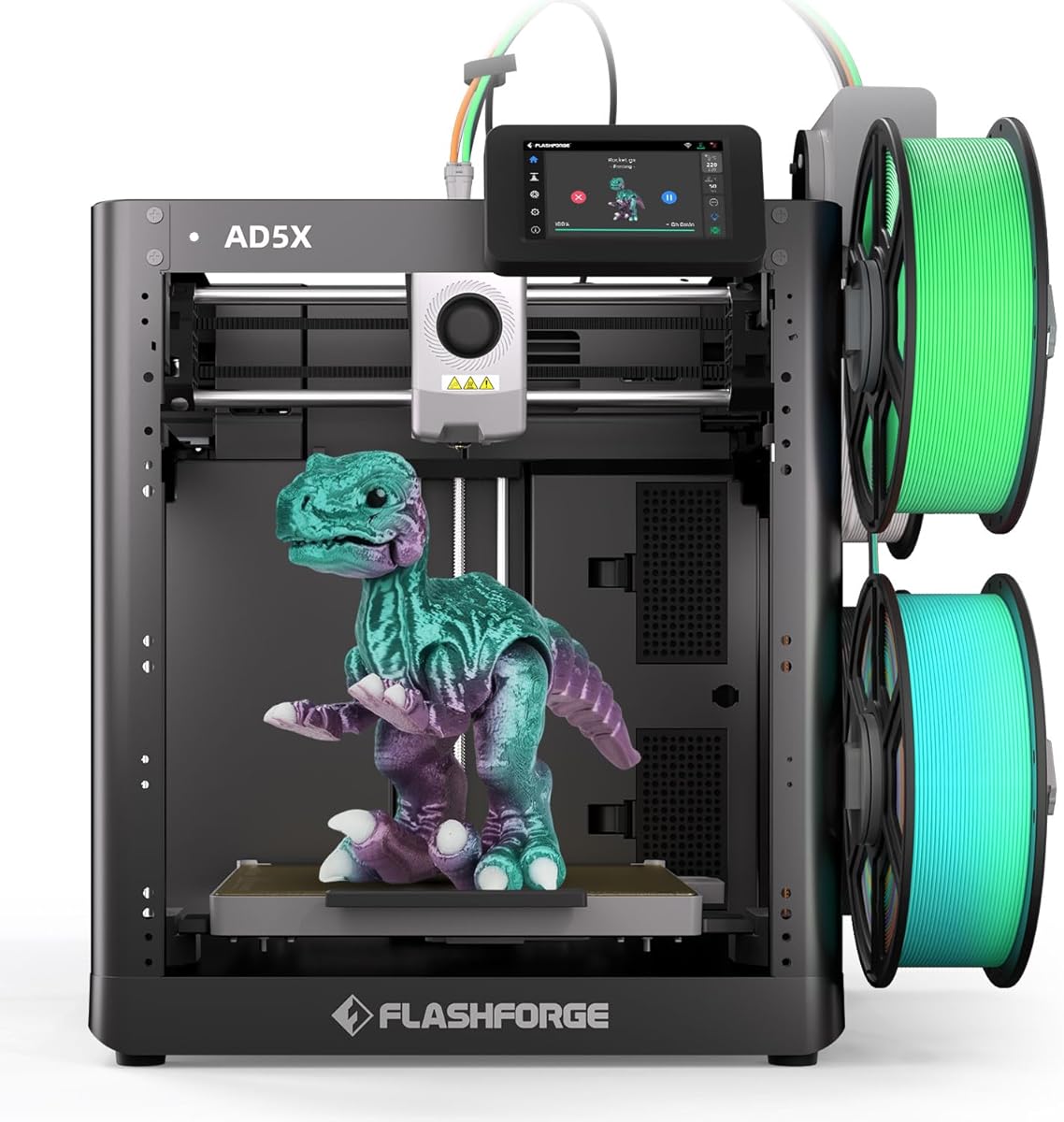
The FLASHFORGE AD5X brings vibrant multi-color capabilities to tabletop gaming enthusiasts at an accessible price point. With up to four colors simultaneous and high speeds, it creates visually striking models efficiently.
We may earn a commission when you buy through this link, at no additional cost to you.
The Intelligent Filament System ensures seamless management and reduces downtime by automatically detecting and refilling. This reliability is key for long print jobs where interruptions can ruin the entire piece.
While it features a Core XY structure for stability and a 300C nozzle for versatile materials, users note some noise during operation. The large volume handles multiple figures or large props at once.
This model is best for those wanting speed and color variety without high costs. Its versatile capabilities make it a strong contender for creating dynamic scenes and detailed miniatures.
The all-metal Core XY design minimizes vibrations for smoother surfaces on detailed figurines.
IFS automation keeps projects running by managing refills without user intervention.
We may earn a commission when you buy through this link, at no additional cost to you.
The phrozen Sonic Mini 8K S is the ultimate choice for those prioritizing detail over speed. Its 22 micron resolution captures every nuance of facial expressions and armor designs better than most printers.
We may earn a commission when you buy through this link, at no additional cost to you.
Designed for beginners, it offers an attractive value and user-friendly features like auto calibration. The 7.1 inch monochrome LCD ensures durability and consistent exposure for reliable results every time.
While resin printing requires post-processing like washing and curing, the quality of the final miniature is unmatched. The compact size fits easily on any desk, making it accessible for home crafters.
Choose this printer if you need flawless textures for painting and miniature work. It delivers museum-quality results that bring your tabletop characters to life with incredible realism.
The 22 micron XY resolution allows for crisp edges on tiny features like eyes and fabric folds.
Beginner friendly features and compact dimensions make it easy to start printing without a dedicated room.
We may earn a commission when you buy through this link, at no additional cost to you.
The Bambu Lab P1S offers a reliable enclosed design for high-quality prints. Its speed and automatic features make it suitable for consistent production of tabletop miniatures without much fuss.
We may earn a commission when you buy through this link, at no additional cost to you.
With up to 500mm/s speeds and 20000 mm/s² acceleration, it delivers fast turnaround times. The enclosed body improves performance for advanced filaments, ensuring better layer adhesion and reduced warping.
While AMS is required for multi-color, the printer itself is ready to use with standard filaments. Auto leveling ensures perfect first layers, which is critical for detailed models standing on a base.
This printer is perfect for users needing speed and reliability in a compact form. It balances professional performance with ease of use for dedicated hobbyists.
The fully enclosed body maintains temperature for consistent prints with varied filament types.
Setup takes 15 minutes, getting you to your first print faster than most competitors.
We may earn a commission when you buy through this link, at no additional cost to you.
The FLASHFORGE Adventurer 5M Pro features a unique tool-free nozzle change system that saves time. With a max speed of 600mm/s and CoreXY structure, it ensures precision even at high velocities.
We may earn a commission when you buy through this link, at no additional cost to you.
Its built-in camera and mobile control allow monitoring prints remotely. The dual filtration system keeps the environment clean, which is useful for indoor setups where odor control matters.
The 3-second quick-swap nozzle mechanism allows changing sizes effortlessly for different layer heights. This flexibility is helpful for balancing speed on bulk parts and detail on faces.
This model suits hobbyists needing flexibility and clean operation. It offers robust features for maintenance and control making it practical for frequent use.
The dual filtration system ensures clean air during prints, ideal for shared living spaces.
Built-in camera and mobile app let you check progress without disturbing the print.
We may earn a commission when you buy through this link, at no additional cost to you.
The FLASHFORGE AD5X Multi-Material version builds on the original with enhanced control features. It supports four colors simultaneously and includes a filament backup system to prevent print failure.
We may earn a commission when you buy through this link, at no additional cost to you.
Full-auto calibration and vibration compensation ensure consistent results on delicate surfaces. The compact design saves space while offering versatile printing capabilities for various model types.
With IFS allowing multiple materials like TPU and PLA, you can mix rigid and flexible parts easily. This is useful for articulated miniatures needing different textures for armor and fabric.
Choose this if you need versatile printing options in a small footprint. It is well-suited for creators needing both color variety and structural flexibility.
Filament backup features prevent wasted time on failed prints due to empty spools.
Modular design keeps the footprint small while supporting four spools side-by-side.
We may earn a commission when you buy through this link, at no additional cost to you.
The Bambu Lab A1 Mini Combo brings the features of its larger siblings to a compact size. With AMS lite included, you get reliable multi-color printing right out of the box.
We may earn a commission when you buy through this link, at no additional cost to you.
Its high-speed precision ensures detailed miniatures are printed quickly. The setup time is just 20 minutes thanks to the pre-assembled design, getting you started faster than most.
The build volume is small, which limits large prints, but it is perfect for individual hero figures or small batches. The quiet motor noise allows printing during work or school hours.
This is the ideal entry point for tabletop gaming enthusiasts wanting quality without high costs. It delivers exceptional detail and multi-color capability for a budget-friendly price.
The combo includes AMS lite, saving money compared to buying color features separately.
Low noise and small size make it perfect for shared living spaces.
We may earn a commission when you buy through this link, at no additional cost to you.
The Snapmaker U1 offers a unique 4-toolhead system that enables true multi-material printing. With a 5-second tool changer, it swaps heads instead of filaments, reducing waste significantly.
We may earn a commission when you buy through this link, at no additional cost to you.
It combines rigid and flexible materials and engineering materials in a single print. This allows for articulated models and functional parts with varying properties like hardness and strength.
While the price is high, the productivity gains are substantial for serious hobbyists. The robust locking mechanism is tested for over 1 million swaps, ensuring reliability during long sessions.
Choose this for advanced workflows needing mixed materials. It is ideal for prototyping functional game tokens and high-end models with complex requirements.
Switch between hard and soft materials without manual intervention for unique model textures.
The tool changer reduces idle time between color or material changes significantly.
We may earn a commission when you buy through this link, at no additional cost to you.
The Anycubic Kobra X features native 4-color support built directly into the design. This eliminates external mess and allows easy expansion to 19 colors with extra units.
We may earn a commission when you buy through this link, at no additional cost to you.
It reduces material travel paths by over 80%, speeding up the process and saving costs. The LeviQ 3.0 leveling system ensures perfect bed flatness for flawless first layers.
AI monitoring detects foreign objects and spaghetti issues, preventing failures. The large print size and extensive model library offer plenty of flexibility for custom DnD assets.
This printer suits those needing reliable color integration without complexity. It is a strong contender for home use with its smart features and large build area.
Expand to 19 colors easily, offering vast palette options for detailed models.
AI monitoring protects prints by detecting issues early to save materials and time.
We may earn a commission when you buy through this link, at no additional cost to you.
Selecting the right machine involves considering resolution, material type, and color options to match your painting and gameplay needs.
For miniatures, resolution is critical. Resin printers like the phrozen Sonic Mini 8K S offer micron-level detail that FDM printers struggle to match. Look for machines that capture fine details like eyes and hair.
Higher resolution ensures your figures look professional when painted. Prioritize XY resolution under 50 microns for the best visual quality on tabletop characters.
If you produce many figures, speed matters. FDM models like the Bambu Lab A1 or FLASHFORGE AD5X can print faster than resin printers. Faster turnaround allows quicker campaign preparation.
Balance speed with quality. High acceleration features help maintain accuracy even at rapid speeds so you do not sacrifice detail for time.
Multi-color printing saves painting time. Models with AMS or IFS systems allow vibrant designs without post-print painting. Check if multi-color is included or requires extra accessories.
Ensure the system supports reliable color changes. Automated filament management prevents errors and keeps your printing process smooth during complex runs.
Different materials suit different needs. PLA is standard for miniatures but TPU is better for flexible props. Ensure your printer supports the material you plan to use for your projects.
Advanced printers handle engineering materials. If you need durable parts like dice or tokens, check nozzle temperature and chamber stability for those materials.
The build area determines how many figures you can print at once. Larger volumes save time for batches. Consider the size of your workspace when choosing a machine.
Smaller volumes are sufficient for single heroes. Ensure the build height is enough to print tall figures without supports that damage detail.
Beginners benefit from auto-leveling and calibration. Features like one-click printing reduce setup time. Look for friendly interfaces and reliable software support.
Reliability is key. Automated systems ensure every print starts correctly, minimizing failed batches and frustration.
Good slicing software is essential. Check if the printer supports open-source slicers or has proprietary apps. Remote monitoring via Wi-Fi helps track long jobs.
Connectivity allows you to manage prints remotely. Features like camera access help verify progress without opening the machine.
Prices range widely depending on features. Entry-level models are affordable but lack advanced functions. Determine which features justify the cost for your specific workflow.
Consider long-term costs like filament and maintenance. A slightly more expensive machine might save money on wasted material due to errors.
Start by leveling the bed properly. Use the auto-calibration feature if available, but verify the first layer adherence before leaving it unattended.
Keep the machine clean and dry. Dust can affect print quality. For resin printers, store resin in a cool dark place and clean the tank regularly.
Maintain nozzles and beds. Clean residue after prints and check for wear. This ensures consistent extrusion and prevents clogs during detailed jobs.
Resin printers offer the highest detail for miniatures, making them ideal for tabletop figures. FDM printers are faster and cleaner but may lack fine resolution for tiny features.
Not necessarily, as many players paint their figures manually. However, multi-color capabilities can speed up the process for base details or specific effects without manual work.
Depending on the printer and model size, a single miniature can take from 1 hour on resin machines to several hours on FDM printers. Batch printing improves overall efficiency.
Most miniatures fit within a 220mm x 220mm x 220mm build volume. Larger volumes allow printing entire armies at once, saving significant time for large campaigns.
FDM printers are generally easier for beginners due to less messy post-processing. Resin printers offer better detail but require handling chemicals and washing the parts.
Regularly clean the print bed and check nozzles for wear. Keep firmware updated and calibrate the printer periodically to ensure consistent layer heights and adhesion.
Choosing the right printer depends on your balance of detail speed and budget. The phrozen Sonic Mini 8K S offers unmatched detail while the Bambu Lab A1 provides speed and ease of use.
Prioritize the features that match your workflow. If you need multi-color, look for integrated systems. If detail is key, resin printers will serve you best for tabletop art.
Always check current prices and availability before buying. Technology evolves quickly, and these models represent today's best options for bringing your DnD heroes to life.