
BN-LINK U47 Indoor Mini
4.4Editor score
Simple pin settings for on off
Compatible with LED and CFL bulbs
Includes two timers in one pack
This comprehensive guide compares the top automatic light timer models for home security and energy savings, evaluating mechanical and digital options for
Finding the right automatic light timer can transform how you manage your home lighting and security. These devices offer convenience by ensuring lights turn on and off at set times without manual intervention. Whether you need simple mechanical dials or advanced digital programming, there is a solution for every household.
We have analyzed ten leading automatic light timer models available this month. Our comparison focuses on ease of use, scheduling flexibility, durability, and compatibility with different bulb types. Each product was selected based on user ratings and reliable performance records to ensure you make an informed choice.
Each pick in this list highlights specific strengths such as budget-friendliness or smart home integration. We also include a detailed buying guide to help you select the best fit for your outlets and appliances. Please note that product availability and pricing may change frequently online.
4.4Editor score
4.6Editor score

4.4Editor score
The following table provides a side-by-side comparison of all ten selected automatic light timer models. It highlights key specifications and capabilities to help you quickly identify the right device for your specific lighting needs.


The BN-LINK U47 Indoor Mini is a classic choice for those seeking simplicity and value. It scores a strong 4.4 rating from users who appreciate its straightforward mechanical design. This timer allows you to automate lamps and small appliances without complex programming.
We may earn a commission when you buy through this link, at no additional cost to you.
Its standout feature is the simple pin system where pushing pins down sets the device to on and pulling them up sets it to off. You can program up to 24 on and off settings per day in 30-minute intervals. This flexibility makes it suitable for daily routines like turning on porch lights at sunset.
One trade-off is the lack of a digital screen which means you cannot see exact times at a glance. Additionally it is designed for indoor use so it may not withstand outdoor weather conditions. However for indoor lighting control these limitations are often acceptable given the price point.
Homeowners looking for an affordable way to automate lights will find this timer ideal. It is perfect for holiday decorations or ensuring lights turn on when you arrive home. We recommend this model for anyone prioritizing cost and ease of use over advanced features.
The push pin mechanism requires no batteries or digital knowledge. Just align the pins with the desired time slots on the dial for instant scheduling.
This timer works well with compact fluorescent and LED bulbs which are common in modern homes. It ensures safe operation with low wattage lighting devices.
We may earn a commission when you buy through this link, at no additional cost to you.
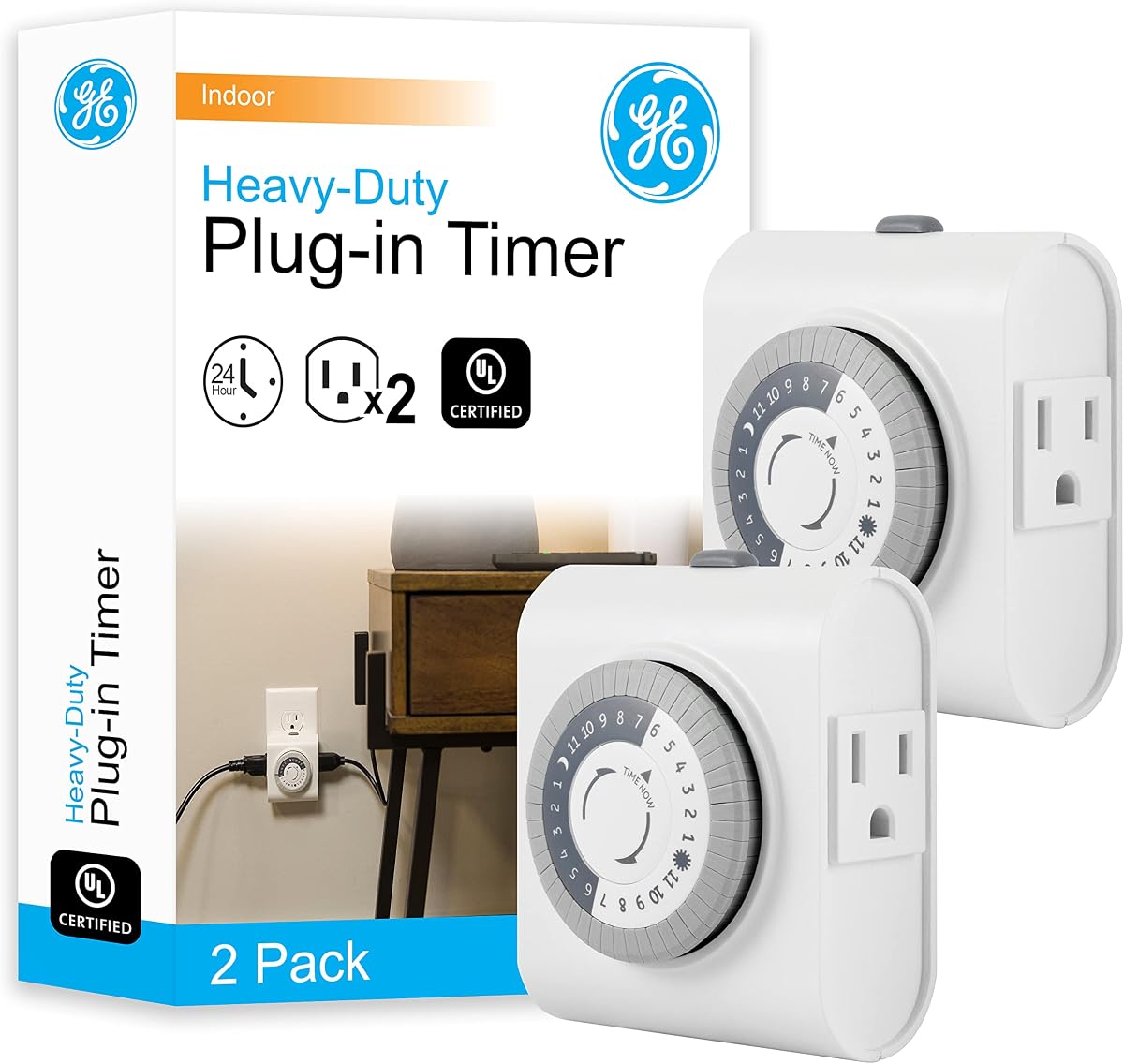
GE is a trusted name in home electricals and this timer reflects that reputation with a 4.6 rating. It offers a robust mechanical solution for automating plug-in lights and small appliances. The dual outlet design is a significant advantage for users needing to control multiple devices.
We may earn a commission when you buy through this link, at no additional cost to you.
Setting up schedules is quick with the 30-minute interval pushpins that allow for varied daily routines. A convenient override switch lets you pause the timer cycle anytime without unplugging the device. This is useful if you need a light on unexpectedly during the programmed off time.
While it lacks smart features like Wi-Fi the simplicity ensures it works consistently without connectivity issues. The compact design blends well into indoor spaces without blocking adjacent outlets. Users find it dependable for seasonal decor or standard room lighting automation.
We recommend this timer for those who want a reliable brand name and dual outlet functionality. It is an excellent choice for living rooms or entryways where multiple devices need control. Its ease of use makes it accessible for all family members.
Control two three-prong devices simultaneously from a single receptacle. This saves outlet space and simplifies wiring for holiday lights or fans.
The override switch provides immediate control over the timer cycle. This ensures you can turn lights on or off manually when needed.
We may earn a commission when you buy through this link, at no additional cost to you.
The GHome Smart Plug brings modern connectivity to automatic lighting control. With a 4.4 rating it offers robust features like voice control and remote app access. This device transforms standard lamps into smart devices that you can manage effortlessly.
We may earn a commission when you buy through this link, at no additional cost to you.
You can set schedules and timers directly through the app allowing for random or circular settings that mimic presence when you are away. The voice control support means you can turn lights on or off just by speaking to Alexa or Google Assistant. This adds a layer of convenience beyond simple timers.
Setup requires a stable 2.4GHz Wi-Fi connection which may be a hurdle for some users. The price is higher than basic mechanical timers but the added functionality often justifies the cost. It is ideal for tech-savvy users who want centralized home automation.
If you want to automate lights without installing new wiring this smart plug is the best option. It is perfect for bedrooms where you might want to turn off lights via phone or voice. We suggest this for those investing in a broader smart home ecosystem.
Control your connected devices from anywhere using your smartphone. This ensures lights are off even if you leave home unexpectedly.
Compatible with major voice assistants for hands-free operation. This enhances accessibility and convenience for daily routines.
We may earn a commission when you buy through this link, at no additional cost to you.
This digital timer offers more control than its mechanical counterparts with a 7-day programmable schedule. It scores a 4.4 rating from users who need specific lighting patterns for different days. The dual outlets allow simultaneous control of multiple devices in one spot.
We may earn a commission when you buy through this link, at no additional cost to you.
You can set up to 8 on/off programs and choose specific days for each schedule. A backup battery ensures your settings are saved even during power outages. The random vacation mode is particularly useful for security when you are away for extended periods.
The programming interface is digital which can be slightly less intuitive than mechanical pins. Some users might find navigating the buttons requires a bit of patience. However the precision it offers is worth the effort for those with varied weekly routines.
We recommend this model for households with complex lighting needs like business offices or specific daily routines. It provides the flexibility to adjust lights on weekdays versus weekends easily. The security features make it a strong choice for peace of mind.
Randomizes light schedules to make your home look occupied. This deters potential intruders during your absence.
Maintains your programmed settings during power outages. This ensures your schedule resumes correctly after power is restored.
We may earn a commission when you buy through this link, at no additional cost to you.
This two-pack option provides the same advanced digital features as the single unit but in double quantity. It has a 4.4 rating reflecting consistent performance across both timers. You can automate different rooms or areas without buying separate units individually.
We may earn a commission when you buy through this link, at no additional cost to you.
Each timer allows settings as short as one minute which offers precise control over lighting cycles. The red LED indicator clearly shows when the outlets are on providing visual feedback. Daylight savings mode lets you adjust schedules easily with a button press.
Programming two devices takes time but once set they operate independently and reliably. The precision of one-minute intervals allows for fine-tuned energy saving strategies. However the physical size may block adjacent outlets in tight spaces.
We suggest this pack for users needing automation in multiple locations like hallways and living rooms. It is cost-effective for covering larger areas with smart scheduling. The shared features ensure consistent performance across your home.
Program lights in one-minute intervals for exact timing. This helps in reducing unnecessary power consumption significantly.
The red LED lights up to show active status. This prevents guesswork about whether the timer is currently controlling the device.
We may earn a commission when you buy through this link, at no additional cost to you.
This mechanical timer stands out for its compact design which minimizes space usage on crowded outlets. It holds a 4.4 rating for its reliable daily automation capabilities. The two-pack ensures you have spare units for different rooms in your home.
We may earn a commission when you buy through this link, at no additional cost to you.
The dial features 48 on/off settings allowing for frequent adjustments throughout the day. ETL listing ensures it meets safety standards for electrical devices. It is ideal for simple daily routines like controlling Christmas lights or indoor fans.
The dial can be somewhat small which might be difficult for those with limited dexterity. Mechanical dials rely on physical pins which can sometimes get stuck if not handled gently. But for basic needs it performs its function well.
We recommend this timer for those needing a discreet and affordable solution. It fits well behind furniture or in tight electrical panels. Its simplicity makes it accessible for any household member to use.
Minimizes the physical footprint on your outlet. This allows other devices to plug in nearby without obstruction.
ETL listed to ensure electrical safety compliance. This gives you confidence in using it with valuable electronics.
We may earn a commission when you buy through this link, at no additional cost to you.
This digital timer is designed with bedroom automation in mind due to its silent operation. It rates highly at 4.5 for its reliability and user-friendly interface. The two-pack option makes it easy to automate multiple rooms simultaneously.
We may earn a commission when you buy through this link, at no additional cost to you.
You can program three distinct groups of daily schedules offering flexibility for different times of day. The memory function retains settings for up to three months after power loss. The frosted front adds a touch of style to any room decor.
The lack of a mechanical click sound makes it preferable for quiet environments. However the setup buttons are small and might require patience to press accurately. The single outlet design means you cannot control two devices from one timer.
We recommend this timer for nightstand lamps or living room electronics where noise is a concern. The elegant design ensures it does not look out of place in modern homes. It is a solid choice for those valuing aesthetics and quiet performance.
Operates without audible clicks or hums. This prevents noise disturbances in quiet rooms like bedrooms.
Stores settings for months without power. This ensures your schedule is not lost during temporary outages.
We may earn a commission when you buy through this link, at no additional cost to you.
Designed specifically for outdoor use this timer features a waterproof casing to withstand rain and dust. It has a 4.5 rating for its durability in harsh environments. The dual outlets allow you to manage both lights and pumps effectively.
We may earn a commission when you buy through this link, at no additional cost to you.
The 48-pin control system lets you set precise schedules for outdoor decor. It retains settings even if power fails which is crucial for outdoor consistency. The included mounting hardware helps secure it upright to prevent water damage.
In extreme cold the mechanical dial might be harder to turn due to freezing. Proper mounting above ground level is essential to maintain its weatherproof integrity. Despite this it remains a reliable tool for landscape lighting control.
We suggest this timer for patio lights garden decorations or security lighting. It is built to last outdoors and requires minimal maintenance once installed. Its robustness makes it a top choice for exterior automation.
Protects internal mechanisms from rain and debris. This ensures long-lasting performance in various weather conditions.
Includes brackets for secure vertical installation. This positioning helps prevent water from pooling on the unit.
We may earn a commission when you buy through this link, at no additional cost to you.
This mechanical timer offers a no-fuss approach to lighting automation. It carries a 4.4 rating for its consistent performance in indoor settings. The design is straightforward with 48 pins allowing for flexible daily scheduling.
We may earn a commission when you buy through this link, at no additional cost to you.
You can set times for lamps and holiday lights without needing batteries or software. The dual grounded outlets are helpful for plugging in multiple devices simultaneously. It is an ideal solution for basic daily automation needs.
It lacks advanced features like digital screens or backup batteries. The build quality is basic but sufficient for typical household use. Some users might find the dial stiff initially but it loosens with use.
We recommend this timer for temporary setups or low-budget projects. It is great for renters who need a simple solution without drilling holes. Its simplicity ensures anyone can use it immediately.
Uses mechanical winding for operation. This eliminates the need for replacing batteries regularly.
Allows two devices to run on one timer schedule. This maximizes utility from a single plug.
We may earn a commission when you buy through this link, at no additional cost to you.
This timer combines mechanical control with a photocell light sensor for automatic dusk to dawn operation. It has a 4.3 rating for its versatility in outdoor lighting. The waterproof construction ensures it survives rain and cold weather.
We may earn a commission when you buy through this link, at no additional cost to you.
You can choose from eight countdown functions allowing devices to stay on for specific hours after dusk. The sensor detects light levels to turn devices on and off naturally. This saves energy by not running lights when not needed.
The sensor needs a clear view of the sky to work accurately. Shadows from trees or buildings might affect its performance. Programming requires rotating a dial which can be less intuitive than digital buttons.
We recommend this timer for security lights or garden path lighting. It is a smart choice for those who want automated operation without complex programming. The sensor feature is particularly valuable for energy efficiency.
Turns lights on at dusk and off at dawn automatically. This removes the need for manual scheduling entirely.
Offers specific run times after sunset. This allows you to choose how long lights stay on for safety.
We may earn a commission when you buy through this link, at no additional cost to you.
Selecting the right automatic light timer involves understanding your specific needs and the environment where it will be installed. This guide breaks down the essential factors to consider for a perfect fit.
Mechanical timers use physical pins and dials which are simple and do not require batteries. They are durable but offer less precision. Digital timers use electronic buttons and displays which allow for complex schedules and backup memory. They are more versatile but may require battery changes.
Choose mechanical for simplicity and digital for flexibility.
Indoor timers are designed for dry environments and usually have plastic casing. Outdoor timers feature waterproof ratings and rugged materials to withstand rain and dust. Using an indoor timer outside can lead to electrical hazards or failure.
Ensure you select a timer rated for the specific location.
Check if your timer matches your outlet type. Most standard timers use grounded three-prong outlets. Ensure the timer does not block adjacent outlets if space is limited. Some compact models are designed specifically to save space.
Verify physical dimensions before purchasing to avoid obstruction.
Every timer has a maximum wattage it can handle safely. High wattage devices like heaters require high load capacity timers. Exceeding the load limit can cause overheating or fire. Always check the specifications for wattage ratings.
Match the device wattage to the timer's maximum rating.
Some timers offer daily repeating schedules while others allow weekly programming. If you have different routines on weekdays and weekends a 7-day programmable timer is better. Simpler models are sufficient for consistent daily needs.
Assess your daily routine to choose the right schedule type.
Smart plugs allow control via apps and voice assistants. They are ideal if you want remote access or integration with other smart devices. Traditional timers lack these features but are often more reliable if internet is down.
Decide if you need remote access or simple automation.
Consider who will be using the timer. Some elderly users may find digital interfaces difficult. Mechanical pins are often more intuitive. Look for clear displays or large buttons for better accessibility.
Prioritize interface clarity based on user capability.
Look for certifications like ETL or UL listing which indicate safety testing. This ensures the device meets electrical safety standards. Certified products reduce the risk of fire or electrical shock.
Always check for recognized safety marks on the packaging.
To set up a mechanical timer first plug it into the outlet and then plug your device into the timer. Align the dial to the current time by rotating it until the indicator matches your clock. Push pins down for the times you want the light on and pull them up for off times.
For digital timers plug them in and set the current time using the hour and minute buttons. Program your schedule by selecting the day and time for on and off events. Ensure the timer is in auto mode so it follows the schedule instead of manual override.
To maintain your timer keep it dry and avoid overloading it with high wattage devices. Check mechanical dials occasionally to ensure pins move freely without sticking. For digital models replace batteries as needed to ensure settings are saved during power outages.
Yes most modern automatic light timers are compatible with LED bulbs. However always check the product specifications to ensure it supports low wattage loads. Some older mechanical timers might have issues with very low wattage LEDs.
Mechanical timers usually retain their physical settings during a power outage. Digital timers may lose time if they lack a backup battery. If your timer has a battery it will remember settings and resume the schedule after power returns.
Only if it is specifically rated for outdoor use. Indoor timers are not waterproof and can be dangerous in rain. Always choose a model with a weatherproof rating for exterior applications.
No timers generally save energy by ensuring lights are off when not needed. They prevent lights from being left on accidentally. This automated control can reduce overall electricity usage significantly.
Most digital timers can be reset by unplugging them or pressing a specific reset button. If it uses batteries removing them for a few minutes often clears all settings. Refer to the manual for model specific reset instructions.
Only if the timer has dual outlets. Single outlet timers can only control one device. Dual outlet timers are available for controlling lamps and other small appliances simultaneously.
We hope this guide helped you find the ideal automatic light timer for your home. Whether you chose the budget-friendly BN-LINK or the smart GHome plug each option offers unique benefits for automation.
Prioritize your needs like indoor versus outdoor use and digital features versus simplicity when deciding. The right timer can save energy and improve security without complicating your daily routine.
Always check current availability and specifications before buying. Product details may change so verify ratings and features on the official product page for the most accurate information.