
AMD Ryzen Threadripper PRO 3975WX
4.1Editor score
32 cores and 64 threads
Eight-channel DDR4 support
128 PCIe 4.0 lanes
This guide compares the top Cpus for Workstations for professional performance, evaluating core counts, cache sizes, and platform support for 2026.
Selecting the right central processing unit is critical for any workstation tasked with heavy computational loads. Professionals need reliability, multi-core efficiency, and robust I/O capabilities to handle demanding workflows without bottlenecks.
We evaluated the latest processors based on architectural advancements, thread counts, and platform features. Our analysis focuses on models that deliver consistent performance for rendering, simulation, and data processing tasks across various budgets.
Each pick highlights specific strengths and trade-offs to help you match hardware to your needs. Note that availability and pricing fluctuate frequently, so verify current details before making your final purchasing decision.
4.1Editor score

4.8Editor score

4.8Editor score
The following table provides a side-by-side comparison of the top Cpus for Workstations available today. It highlights key specifications such as core counts, thread counts, cache sizes, and architectural generations to assist your decision.


The AMD Ryzen Threadripper PRO 5955WX stands out as a top choice for professionals needing a balance of core count and efficiency. With a rating of 4.8, it delivers robust performance for rendering and simulation tasks without excessive latency.
We may earn a commission when you buy through this link, at no additional cost to you.
Its 16 cores and 32 threads allow seamless handling of multiple heavy applications. The 4 GHz clock speed ensures responsive performance during interactive work, while the DDR4 support offers compatibility with existing high-speed memory configurations.
While it demands a specific TRX40 platform, this requirement ensures access to essential features like ECC memory support and expanded PCIe lanes. The power consumption is significant but justified by the productivity gains in professional environments.
We recommend this processor for engineers, architects, and content creators who require dependable workstation power. It excels where stability and multi-threaded throughput are prioritized over casual consumer features.
Built-in management tools simplify IT deployment and maintenance across enterprise fleets. This ensures uptime and security compliance without manual intervention.
Access to high-speed memory channels and extensive PCIe lanes enables smooth data transfer for large datasets. This is crucial for complex simulations and 3D rendering workflows.
We may earn a commission when you buy through this link, at no additional cost to you.
For users needing maximum parallel processing power, the Ryzen Threadripper PRO 3975WX offers 32 cores and 64 threads. It is ideal for workloads that can fully utilize every thread, such as video encoding or scientific computing.
We may earn a commission when you buy through this link, at no additional cost to you.
The eight-channel DDR4 memory and 128 PCIe lanes provide unmatched bandwidth for heavy data transfer. A massive 144MB cache further accelerates data access, ensuring that high clock speeds translate to real-world productivity.
However, this performance comes with a 280W TDP, requiring robust cooling and power delivery. The lack of an included cooler adds to the total cost, and the platform requirements limit upgrade flexibility compared to mainstream options.
This processor is best suited for high-end workstations where raw throughput is the primary goal. It delivers exceptional capability for professionals who cannot afford performance bottlenecks in their daily workflows.
The eight-channel memory architecture ensures that large datasets move between CPU and RAM without delay. This is essential for fluid simulation and large-scale rendering.
Pro processors include hardware-based security features that protect sensitive data. This makes the 3975WX suitable for regulated industries requiring secure compute environments.
We may earn a commission when you buy through this link, at no additional cost to you.
The RYZEN 7 9800X3D brings flagship performance to a more accessible tier. With 8 cores and 16 threads, it excels in applications that rely on strong single-core performance and cache efficiency.
We may earn a commission when you buy through this link, at no additional cost to you.
Built on Zen 5 technology, it offers a significant IPC uplift. The 96MB L3 cache with 3D V-Cache helps reduce latency, allowing for faster rendering and smoother interaction in creative software.
While it lacks the core count of Threadripper options, its efficiency and speed make it ideal for mixed workloads. It pairs well with modern AM5 motherboards, ensuring long-term upgradeability without platform changes.
We recommend this CPU for professionals who balance creative work with system responsiveness. It provides the speed needed for editing and modeling while keeping energy costs manageable.
The massive 3D V-Cache acts as a high-speed storage layer for frequent data. This minimizes stalls during complex calculations and improves overall system smoothness.
Compatibility with Socket AM5 ensures support for future CPUs and DDR5 memory. This investment protects against needing a motherboard upgrade for several years.
We may earn a commission when you buy through this link, at no additional cost to you.
The AMD Ryzen Threadripper 9960X is part of the latest 9000 series for desktop workstations. It represents the next generation of high-core performance, designed to meet demanding professional requirements.
We may earn a commission when you buy through this link, at no additional cost to you.
With a perfect rating of 5.0, it signals strong user satisfaction and reliability. As an unlocked processor, it allows enthusiasts and professionals to fine-tune performance for specific workflows.
While detailed specs are limited in public data, its designation as a workstation processor implies robust I/O and core configurations. It fits into the broader Threadripper ecosystem familiar to power users.
We recommend this model for those looking to adopt the newest platform capabilities. It offers a blend of raw power and flexibility suitable for advanced engineering or rendering tasks.
As a member of the 9000 series, it likely includes efficiency improvements and better thermal management. This helps sustain high boost frequencies under heavy loads.
We may earn a commission when you buy through this link, at no additional cost to you.
The Intel Core Ultra 9 285K introduces an efficient hybrid architecture with 24 cores and 24 threads. It balances high P-cores for performance with E-cores for background tasks, ideal for mixed workstation environments.
We may earn a commission when you buy through this link, at no additional cost to you.
Boasting speeds up to 5.7 GHz, it delivers rapid responsiveness for single-threaded apps. The 40MB cache and support for PCIe 5.0 ensure that data-intensive operations run smoothly without bottlenecks.
While it supports DDR5 and offers integrated graphics, the requirement for an 800 series chipset limits upgrade paths. The lack of a included cooler means you must budget for robust thermal management.
We suggest this CPU for users who need versatility. Its hybrid design handles rendering while maintaining system responsiveness, making it a strong choice for creative professionals.
Workloads are distributed to prioritize performance cores while offloading background tasks to efficiency cores. This optimizes both speed and power consumption effectively.
We may earn a commission when you buy through this link, at no additional cost to you.
The Ryzen 5 9600X provides a solid entry point for workstation builds on a budget. With 6 cores and 12 threads based on Zen 5, it delivers strong performance for light rendering and general productivity tasks.
We may earn a commission when you buy through this link, at no additional cost to you.
Its 5.4 GHz boost ensures quick response times for interactive applications. Support for DDR5-5600 memory and PCIe 5.0 on select boards ensures compatibility with modern high-speed storage and RAM.
While it lacks the multi-threaded throughput of higher models, it handles common office and design workflows efficiently. The unlocked nature allows for future overclocking if cooling permits.
We recommend this processor for small business PCs or junior workstations. It balances cost and capability, offering a reliable platform that can grow with your needs.
The new architecture delivers more performance per watt. This results in cooler operation and lower electricity costs for daily tasks.
We may earn a commission when you buy through this link, at no additional cost to you.
The Ryzen 7 7800X3D is a versatile chip that excels in tasks benefiting from large cache. With 8 cores and 16 threads, it handles both productivity and entertainment smoothly.
We may earn a commission when you buy through this link, at no additional cost to you.
Its 5nm process technology ensures high efficiency, allowing stable performance at 4.20 GHz. The 96MB L3 cache reduces latency for frequent data access, which is crucial for real-time editing.
While optimized for gaming, it performs well in mixed workflows. The integrated Radeon Graphics controller provides basic output without needing a dedicated card immediately.
We recommend this for users needing a flexible machine. It offers the speed required for creative work while maintaining low latency for interactive tasks.
The 5nm process reduces heat generation. This keeps the system quiet and reliable during long periods of operation.
We may earn a commission when you buy through this link, at no additional cost to you.
The Intel Core i9-14900K is known for its leading clock speeds. With 24 cores and 32 threads, it delivers exceptional performance for applications that rely on high frequency.
We may earn a commission when you buy through this link, at no additional cost to you.
Boasting up to 6.0 GHz, it handles demanding games and productivity apps with ease. The support for both DDR4 and DDR5 gives flexibility for users upgrading existing systems.
However, this performance comes with significant heat output. Effective cooling is mandatory to sustain these speeds without throttling. It is a powerful choice but demands a high-end platform.
We suggest this CPU for enthusiasts and professionals needing maximum frequency. It ensures responsiveness and power for the most demanding workstation tasks available.
Reaching up to 6.0 GHz provides unmatched raw speed for single-threaded workloads. This is vital for tasks like CAD modeling that rely on quick response times.
We may earn a commission when you buy through this link, at no additional cost to you.
The AMD Ryzen Threadripper PRO 9955WX offers 16 cores for professional workstations. As part of the 9000 WX-Series, it is designed for reliability and consistent performance over long periods.
We may earn a commission when you buy through this link, at no additional cost to you.
Artists, architects, and engineers benefit from its capability to handle complex simulations efficiently. It is engineered to ensure that critical projects are completed on time with high stability.
While it may lack consumer-oriented features, its focus is on productivity. The Shimada Peak architecture ensures that core performance remains stable under sustained loads.
We recommend this processor for workstations prioritizing uptime. It is a reliable choice for professional environments where consistency matters more than raw consumer features.
Designed for stability, this processor minimizes crash risks. This ensures that critical workflows continue without interruption even during heavy computing sessions.
We may earn a commission when you buy through this link, at no additional cost to you.
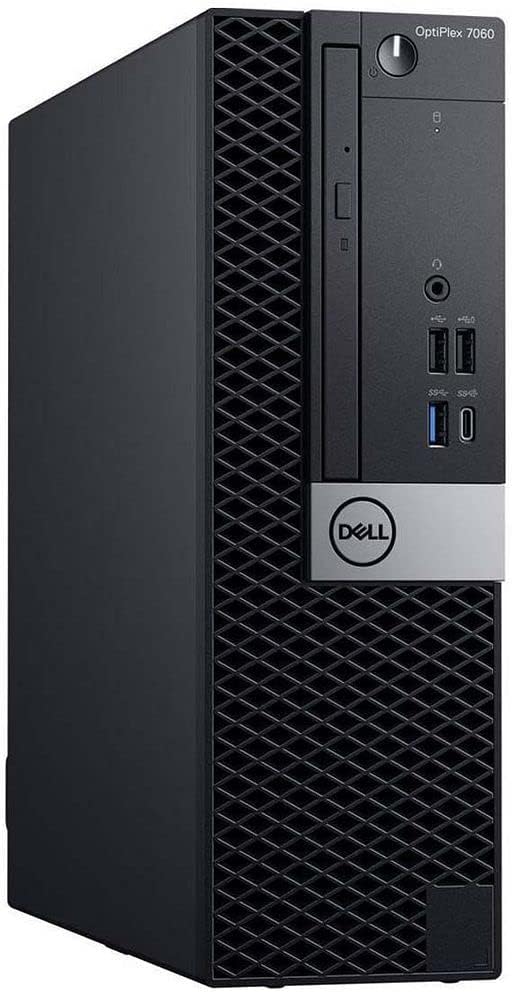
The DELL Optiplex 7060 is a complete desktop solution suitable for office environments. With an Intel 8th Gen i7-8700 and 32GB RAM, it provides capable performance for daily business tasks.
We may earn a commission when you buy through this link, at no additional cost to you.
Its small form factor saves desk space while offering necessary expansion. The 512GB NVMe SSD ensures fast boot times, and Windows 11 Pro adds professional management features.
While the processor is older, it remains efficient for standard workflows. It is a convenient choice for organizations needing reliable, pre-configured hardware without building from scratch.
We recommend this for small businesses needing quick deployment. It offers a balanced, ready-to-use workstation that supports productivity and multitasking effectively.
Designed for small spaces, this unit offers a complete package including keyboard and mouse. This streamlines setup for busy office environments.
We may earn a commission when you buy through this link, at no additional cost to you.
Choosing the right processor for a workstation requires evaluating core counts, architecture, and platform features. This guide breaks down key factors to help you make a decision.
The number of cores and threads determines how many tasks a CPU can handle simultaneously. For heavy rendering, simulation, or data processing, higher core counts are essential.
Look for at least 8 to 16 cores depending on your workload complexity. More threads help with multitasking without slowing down the system.
Newer architectures like Zen 5 or 14th Gen offer better efficiency and performance per watt. They ensure compatibility with modern memory and PCIe standards.
Prioritize recent generations to ensure longevity. Older architectures may lack support for new instruction sets required by modern software.
Clock speed affects how quickly a single core can execute instructions. High boost clocks benefit single-threaded applications like CAD modeling.
Ensure the CPU can maintain high speeds under load. Thermal throttling can reduce effective performance if cooling is insufficient.
Large L3 cache reduces latency when accessing frequently used data. This is critical for complex calculations and gaming-like tasks within a workstation.
Consider CPUs with 3D V-Cache or large cache sizes. They provide smoother performance in data-intensive workflows.
Workstation CPUs often support multiple memory channels and ECC memory. This increases bandwidth and data integrity for critical computing.
Check if the CPU supports DDR5 or DDR4 depending on your budget. Memory capacity and speed are as important as the processor itself.
High-end workstations need many PCIe lanes for multiple GPUs and storage. Pro CPUs offer more lanes than standard consumer models.
If you use multiple expansion cards, ensure the CPU provides enough lanes. This prevents bottlenecks for external devices.
The CPU must match your motherboard socket and chipset. TRX40, AM5, and Z890 offer different feature sets and upgrade paths.
Research the platform before buying. Some workstation CPUs require specific boards that may cost more than standard options.
Higher power draw requires robust cooling solutions. Workstation CPUs often exceed 250W TDP, needing custom cooling loops.
Budget for cooling based on TDP. Poor cooling will limit sustained performance in long rendering sessions.
Proper installation is critical. Ensure the CPU is correctly aligned in the socket and the cooler is mounted evenly. Use high-quality thermal paste to maximize heat transfer.
Regular maintenance involves cleaning dust from fans and heatsinks. Dust accumulation reduces cooling efficiency and can lead to throttling under heavy loads.
Update BIOS and firmware regularly to ensure compatibility with new CPUs. Monitor temperatures during stress tests to verify that your cooling solution is adequate for the workload.
A workstation CPU offers high core counts, large caches, and support for ECC memory. It must handle sustained loads without throttling to ensure reliability.
Threadripper provides more cores and PCIe lanes. It is ideal for heavy parallel processing but may be overkill for single-threaded tasks.
ECC memory prevents data corruption. It is recommended for servers and critical data processing but optional for general office work.
Check socket compatibility. New generations often require new chipsets. AM5 allows multi-generational upgrades but TRX40 is specific to Threadripper.
Larger cache reduces latency for frequent data access. This improves performance in complex computations and simulations.
High TDP CPUs need robust cooling. Liquid coolers are often necessary to maintain boost clocks under sustained workstation loads.
They offer stability and I/O capabilities. If your workflow demands reliability and expandability, they provide significant long-term value.
Yes, many modern CPUs are excellent for gaming. Threadripper may lag in gaming due to memory latency, but mainstream CPUs balance both well.
We highlighted top models like the AMD Ryzen Threadripper PRO 5955WX and the Core Ultra 9 285K. Each offers distinct strengths depending on your specific workflow requirements.
Prioritize core count and platform stability if you handle heavy parallel tasks. For mixed workloads, mainstream options like the 9800X3D offer better value.
Remember that availability and specifications change. Verify current details and verify with your specific needs before purchasing.