
ADS1115 2Pcs Pack
5.0Editor score
Two module value pack
Four input channels
Wide voltage supply
This guide compares the top Arduino ADC Board options for precision sensor reading, data logging, and analog signal conversion with expert insights and
Selecting the right ADC board for your Arduino projects can significantly impact the accuracy and reliability of your sensor data. Whether you are building a weather station or a precision industrial monitor, understanding resolution and channel count is vital.
We have analyzed ten leading options available today based on resolution, interface type, and compatibility with common microcontrollers. Our evaluation focuses on real-world performance metrics and user feedback to ensure you find a reliable solution.
Each pick highlights specific strengths like gain amplification or high-speed sampling to help you match hardware to your application. Keep in mind that availability and costs may fluctuate so always verify current stock before ordering your components.
5.0Editor score

4.7Editor score

4.6Editor score
This section provides a side-by-side technical overview of all ten selected boards to help you compare specifications quickly before making your final decision for your next electronics project.


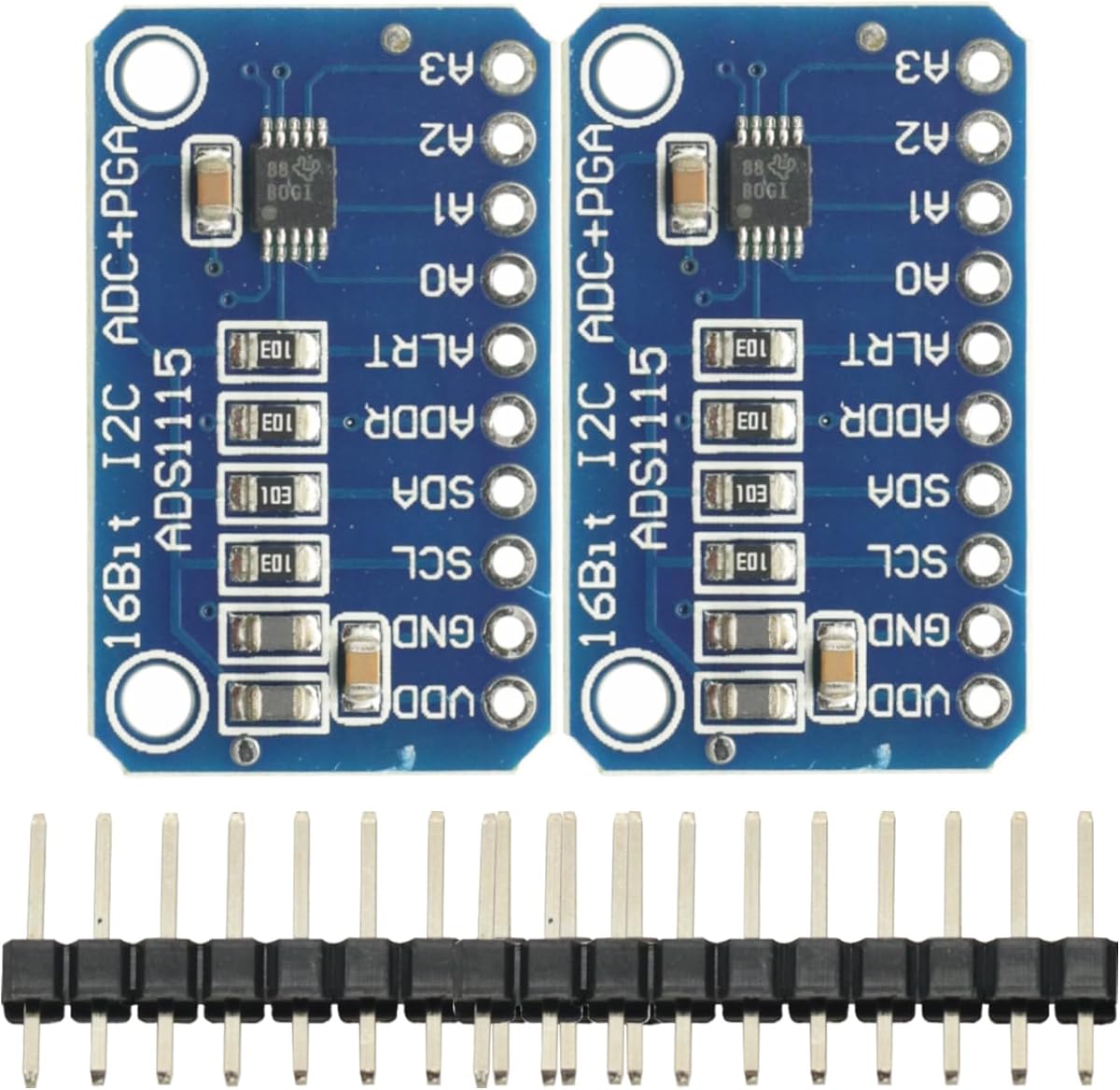


This pack of three ADS1115 modules stands out as a top choice for hobbyists and professionals needing reliable analog to digital conversion. With a 16-bit resolution and built-in programmable gain amplifier it delivers accurate measurements for low voltage sensors.
We may earn a commission when you buy through this link, at no additional cost to you.
The I2C interface simplifies connections to Arduino boards requiring only two data lines which saves valuable GPIO pins for other tasks. Its wide supply range ensures compatibility with both 3.3V and 5V systems making it versatile for various setups.
While the sampling rate is sufficient for most environmental sensors it might not be fast enough for audio applications or high frequency signal analysis. You may need to solder headers to the board which adds a small step to your workflow.
We recommend this board for anyone building data loggers or monitoring systems where precision matters more than speed. The inclusion of three units in one pack offers excellent value for projects needing multiple sensor inputs.
The built-in PGA allows you to measure tiny voltage changes which is crucial for strain gauges or thermocouples.
I2C compatibility means you can chain multiple modules together to expand your input channels without complex wiring.
We may earn a commission when you buy through this link, at no additional cost to you.
The HiLetgo ADS1256 is designed for users who demand the highest precision available in a compact Arduino compatible module. Its 24-bit resolution provides incredibly fine detail for measuring small signals that other boards might miss entirely.
We may earn a commission when you buy through this link, at no additional cost to you.
It supports up to eight input channels which allows you to monitor multiple sensors simultaneously without needing additional hardware. The internal reference voltage source ensures stable readings even when your power supply fluctuates slightly.
The SPI interface offers faster data transfer rates compared to I2C but it requires more GPIO pins on your microcontroller. This board also draws more current which means you need a robust power source for your project.
Choose this board for professional grade data acquisition tasks like industrial monitoring or scientific instrumentation where accuracy is paramount. The high resolution makes it ideal for precise weigh scales or medical device prototyping.
With 24 bits of resolution you can detect voltage changes as small as a few microvolts for ultra-precise measurements.
Eight channels allow for complex setups like three-axis load cells or multi-sensor environmental stations easily.
We may earn a commission when you buy through this link, at no additional cost to you.
This two pack of ADS1115 modules offers one of the best price points available for reliable analog to digital conversion today. Users consistently rate this product highly for its performance and ease of integration with common microcontrollers.
We may earn a commission when you buy through this link, at no additional cost to you.
You get two fully functional boards in one order which is perfect for projects requiring multiple measurement points or spares for your workshop. The programmable data rate lets you balance speed and power consumption based on your needs.
The PCB quality is functional but basic so you should expect to solder your own connections carefully to ensure durability over time. This is a minor trade-off given the significant savings compared to branded alternatives with pre-soldered headers.
If you are starting a new project with a tight budget this pack provides all the features you need without compromising on core performance. It is an ideal entry point for students or hobbyists exploring sensor integration.
Buying two boards together lowers the per unit cost significantly making it easy to scale your sensor network.
Seven different input ranges allow you to adapt the module to various sensor output voltages effortlessly.
We may earn a commission when you buy through this link, at no additional cost to you.
HiLetgo offers a reliable three pack of ADS1115 modules that are well suited for beginners entering the world of analog sensing. The inclusion of a programmable gain amplifier ensures you can measure both high and low voltage signals accurately.
We may earn a commission when you buy through this link, at no additional cost to you.
This board works exceptionally well with Raspberry Pi systems which lack native analog pins making it a great solution for single board computer projects. You can easily find open source libraries that simplify the software side of integration.
Some users report mixed experiences regarding the consistency of the boards received so quality control can vary between shipments. It is always good practice to test all units upon arrival to ensure they meet your project requirements.
This option is a solid choice if you need multiple units for a classroom or group project where cost efficiency is key. The wide voltage range ensures it can run off standard USB power without issues.
Raspberry Pi users benefit greatly as this module fills the gap for analog input capabilities natively.
Extensive library support means you spend less time writing code and more time building your application.
We may earn a commission when you buy through this link, at no additional cost to you.
If you need a large number of ADC boards for a classroom or large scale deployment this four pack provides unmatched value for money. Each board features the standard ADS1115 chip ensuring consistent performance across all units.
We may earn a commission when you buy through this link, at no additional cost to you.
The ability to configure inputs as differential allows you to measure voltage differences directly which is useful for removing noise in long cable runs. This is a key feature for industrial environments where interference is common.
Documentation is minimal so you will rely heavily on community resources and datasheets to get started with your specific use case. The packaging is basic but protects the boards adequately during shipping.
We recommend this for bulk buyers who need redundancy or are setting up distributed sensor networks across multiple locations. The low cost per unit makes it feasible to replace units if they fail in the field.
Having four identical modules allows you to standardize hardware across different nodes in your network easily.
Differential mode helps cancel out common mode noise ensuring cleaner data from remote sensors.
We may earn a commission when you buy through this link, at no additional cost to you.
This two pack delivers high user satisfaction with perfect ratings often citing its stability and ease of use in projects. The compact footprint ensures it fits easily onto crowded breadboards or custom PCB layouts without taking up too much space.
We may earn a commission when you buy through this link, at no additional cost to you.
The wide supply voltage range means it can operate reliably on both 3.3V logic systems and 5V Arduino boards without voltage regulators. You can configure unique addresses for each module allowing up to four to share the same I2C bus.
The small PCB size makes the traces slightly more fragile so handle with care during soldering to avoid damaging the pads. Ensure you use fine tip tools to connect the headers securely for a reliable long-term connection.
It is an excellent choice for portable projects where space is at a premium but you still need high precision measurement. The consistent performance makes it a favorite among users who need reliability without extra costs.
The compact layout leaves room for other components on your board which is critical for portable projects.
Addressing options allow you to expand your system easily without changing your main microcontroller wiring.
We may earn a commission when you buy through this link, at no additional cost to you.
Lonely Binary distinguishes its product with a high-quality ENIG finish that makes soldering easier and improves oxidation resistance over time. The pre-soldered headers mean you can start working on your project immediately without needing a soldering iron.
We may earn a commission when you buy through this link, at no additional cost to you.
This module is designed with broader compatibility in mind supporting platforms like ESP32 and ESP8266 out of the box with robust library support. The brand commitment to open-source friendly hardware encourages community contributions and shared knowledge.
While the cost per unit is slightly higher than generic options the improved build quality and convenience of headers justify the extra expense for many. It is particularly useful for educational settings where durability and ease of use are prioritized.
We suggest this board for projects where long-term reliability and professional assembly standards are important. The gold finish also looks great on displays or public kiosks where aesthetics might play a minor role.
The ENIG plating ensures reliable connections that resist tarnishing even in humid environments.
Works seamlessly with ESP32 and other modern microcontrollers beyond traditional Arduino boards.
We may earn a commission when you buy through this link, at no additional cost to you.
The AD7606 module is unique in this list because it supports simultaneous sampling across all eight channels which is critical for phase-sensitive measurements. This means you can capture the exact state of all inputs at the same instant in time.
We may earn a commission when you buy through this link, at no additional cost to you.
With a sampling frequency of up to 200kHz it is capable of capturing signals that standard ADS1115 boards might alias or miss completely. The wide input voltage range allows direct measurement of industrial signals without extra attenuation circuits.
The complexity of wiring and configuration is higher since it uses SPI and parallel data output which requires careful pin mapping and software handling. Users report it needs more technical knowledge to integrate successfully compared to simpler I2C options.
This is a specialized board for power monitoring or vibration analysis where phase alignment between channels is essential. It bridges the gap between hobbyist electronics and more advanced industrial data acquisition needs.
True synchronous capture ensures accurate phase relationship analysis between different sensor inputs.
200kHz sampling allows for detailed analysis of faster changing signals like motor currents or vibrations.
We may earn a commission when you buy through this link, at no additional cost to you.
This four pack offers a balanced mix of value and performance suitable for users who need multiple units without spending a fortune. The modules provide stable and accurate readings that are reliable for monitoring temperature or light levels.
We may earn a commission when you buy through this link, at no additional cost to you.
Integration is straightforward thanks to the standard I2C interface which requires minimal wiring to get started with your Arduino project. The built-in programmable gain amplifier enhances sensitivity allowing you to detect smaller changes in sensor output.
Like many budget options these boards come without pre-soldered headers so you will need to solder them yourself before first use. This extra step is simple for anyone with basic electronics skills and ensures a secure connection.
Ideal for robotics or large IoT projects where you need many sensing points but are constrained by budget. The high rating suggests consistent quality across the batch making it a safe bulk buy.
Gain settings allow you to amplify weak signals for better detection of subtle environmental changes.
Having four boards allows you to design a system with many distributed sensors easily.
We may earn a commission when you buy through this link, at no additional cost to you.
This single unit option is perfect for prototyping where you only need one ADC board for testing your sensor setup. The standard ADS1115 chip ensures you get reliable conversion rates and accuracy that are well documented in the community.
We may earn a commission when you buy through this link, at no additional cost to you.
It operates in comparator mode as well which allows the board to trigger interrupts when a voltage threshold is crossed. This feature can save microcontroller cycles by offloading simple monitoring tasks to the ADC hardware.
Buying a single unit may cost slightly more per board compared to bulk packs but it reduces waste if you only need one for a specific task. The wide voltage supply range ensures it works with most standard power systems.
Choose this if you are just starting out and want to test a concept before committing to buying multiple units. It is a solid standard choice for one-off projects or quick debugging sessions.
Hardware interrupts based on voltage thresholds reduce CPU load in your main application code.
A single board is all you need to validate your sensor design before scaling production.
We may earn a commission when you buy through this link, at no additional cost to you.
Choosing the right ADC board involves understanding several technical factors that directly impact your project success. We have broken down the most important aspects to consider before you make a purchase.
Resolution determines how finely the board can distinguish between different analog voltage levels. A higher bit count like 24-bit offers much more precision than 12-bit which is crucial for measuring small voltage changes from sensitive sensors.
For most hobby projects 16-bit resolution is sufficient to capture detailed data without overwhelming your processor. If you need lab grade precision look for boards with low noise and internal calibration features.
Most modern ADC boards use I2C which requires only two wires for data and clock signals. This makes them ideal for saving GPIO pins on microcontrollers like Arduino which have limited available inputs.
Some high-speed boards use SPI which offers faster data transfer but requires more pins. Choose I2C for simplicity and SPI if you need to capture fast changing signals like audio or vibration.
The number of input channels dictates how many sensors you can connect to a single board. Standard boards often offer four channels but some specialized models provide eight or more to reduce the need for multiple devices.
If you plan to monitor multiple temperature points or motor phases ensure the board has enough independent inputs to match your design requirements efficiently.
Sampling rate defines how many times per second the board measures the analog input. For slow moving signals like temperature or light this value is less critical but for audio or vibration it is vital.
Look for boards with adjustable data rates so you can balance power consumption and speed based on your specific application needs.
Ensure the board supports the voltage level of your microcontroller. Many ADC boards work with both 3.3V and 5V systems which makes them versatile for different setups.
Check the input voltage range to ensure it covers the full output range of your sensors to avoid clipping or missing data points.
A built-in PGA allows you to amplify weak signals before conversion which improves the signal-to-noise ratio significantly. This is essential when working with small sensors like strain gauges or thermocouples.
Boards with PGA can measure smaller voltages accurately making them more versatile than basic converters without amplification capabilities.
Consider the power consumption of the ADC board especially for battery-powered projects. Some high-performance models draw more current which could drain your battery quickly over time.
Look for features like auto-shutdown modes that reduce power usage when the board is not actively converting data.
Check if there are libraries available for your specific microcontroller to simplify the programming process. Popular brands often have active communities that provide ready to use code examples.
Good documentation and community support can save hours of debugging time during your project development phase.
Start by connecting the power and ground pins to your microcontroller ensuring voltage levels match to avoid damaging components. Most boards support both 3.3V and 5V so verify your system requirements before connecting.
Next connect the data lines usually SDA and SCL for I2C boards and ensure you have pull-up resistors installed. Some boards come with these resistors on board but others might require external components.
For long-term care store the boards in a dry static-free environment to prevent corrosion of the contacts. Avoid handling the exposed pins with bare hands as oils from skin can degrade connection quality over time.
A 16-bit ADC provides much higher resolution than a 12-bit one allowing it to detect smaller changes in voltage. This is important for precise measurements where small signal variations matter.
Yes most boards use I2C or SPI which are supported by Raspberry Pi. You will need to enable these interfaces in the OS settings before starting.
Some models come with headers pre-soldered but many require you to solder them yourself. Basic soldering skills are helpful but beginners can find many pre-assembled kits.
A PGA amplifies the input signal before it is converted to digital. This improves accuracy for small signals that would otherwise be lost in noise.
With I2C you can assign different addresses to each board allowing you to chain them on the same data lines. This lets you expand the number of inputs easily.
Yes most I2C and SPI boards work perfectly with ESP32. Ensure you check the voltage logic levels as ESP32 is 3.3V only.
Noise can be caused by poor wiring or power supply issues. Using shielded cables and a stable voltage regulator can improve signal quality significantly.
Shipping times vary depending on your location and the seller. Standard delivery often takes between three to seven business days but check specific options during checkout.
We have explored a wide range of options from budget friendly packs to high precision industrial grade modules. Each board offers unique benefits that cater to different project needs and skill levels.
Prioritize resolution and sampling rate based on your specific sensor requirements to ensure you do not compromise on data quality. A well matched board will save you time and headaches during development.
Remember to check current availability and prices before ordering as stock levels can change quickly. Select the board that best fits your budget and technical needs for the best results.