
Omada AX3000 Wireless Access Point
4.5Editor score
Free cloud management included
Wi-Fi 6 speeds up to 2976 Mbps
Five year warranty coverage
This guide compares the top ten commercial wireless router models for businesses, covering security, speed, scalability, and management features to help you
Finding the right commercial wireless router is crucial for maintaining secure and reliable connectivity in any business environment. Modern enterprises need robust hardware that can handle multiple devices while providing advanced security features and easy management tools for IT staff.
We have analyzed ten leading commercial wireless router options based on their performance, security protocols, scalability, and ease of deployment. Our comparison focuses on real-world business needs including guest network support, VLAN capabilities, and enterprise-grade protection against threats.
Each selection in this guide highlights specific strengths and use cases to help you match hardware capabilities with your operational requirements. Keep in mind that product specifications and pricing may change over time so verify current details before making your final purchase decision.
4.5Editor score
4.2Editor score

4.6Editor score
The following table provides a side-by-side comparison of all ten commercial wireless router models evaluated in this guide to help you quickly identify key specifications and capabilities.




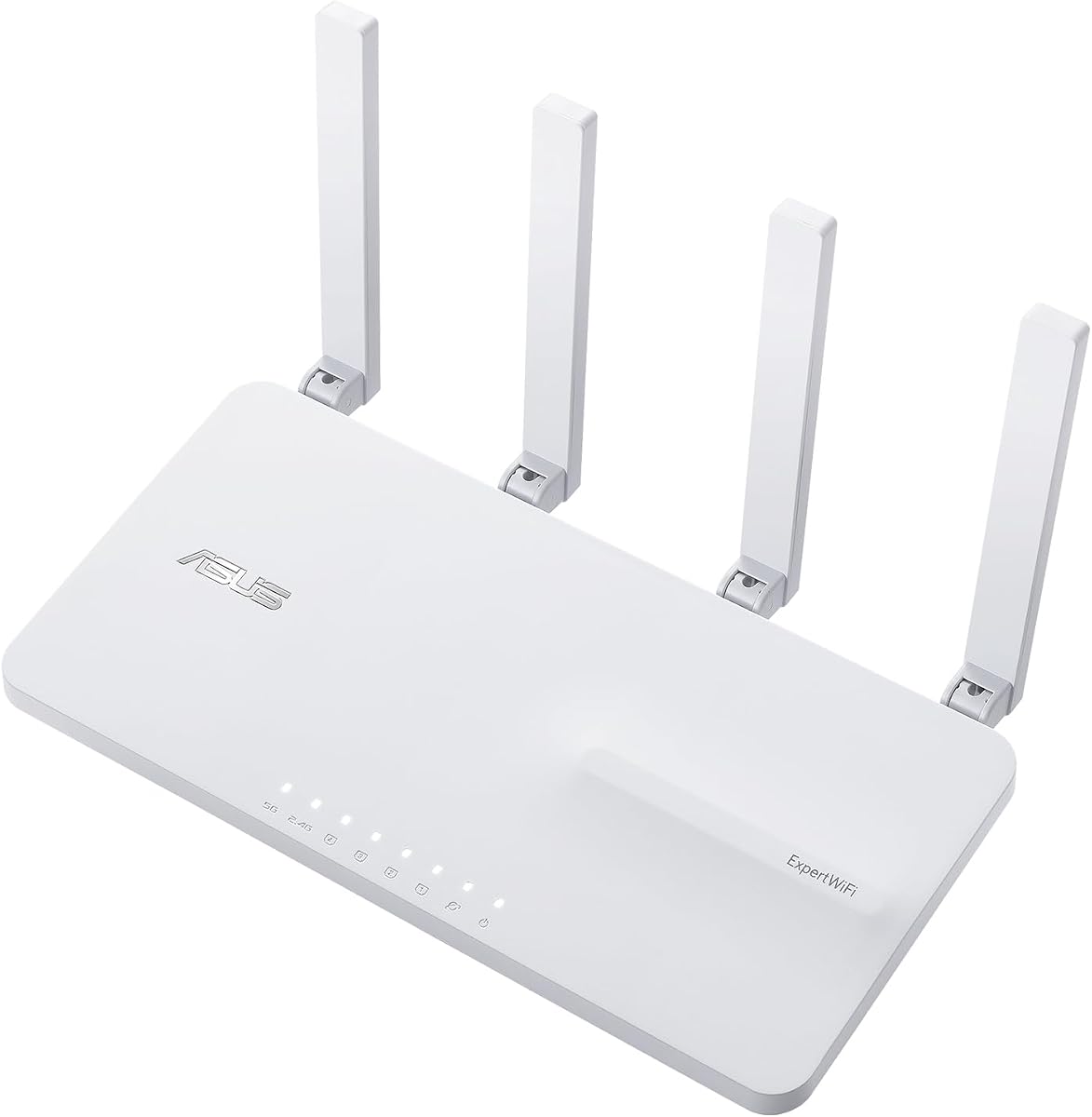
The ASUS ExpertWiFi EBR63 stands out as an excellent choice for small to medium businesses needing reliable connectivity. With a 4.2 rating it balances performance and affordability while offering enterprise features like VLAN support and free commercial-grade security through AiProtection Pro.
We may earn a commission when you buy through this link, at no additional cost to you.
Key strengths include the ability to create up to five separate SSIDs which helps prioritize devices for different business scenarios. The customizable guest portal lets you tailor network access to match your brand identity seamlessly. Setup is straightforward via the ExpertWiFi app and remote management simplifies ongoing IT tasks.
While it uses WiFi 6 rather than the newer WiFi 7 standard its performance is sufficient for most office environments. The backup WAN feature via USB is useful but requires a mobile hotspot device which may not be ideal for all setups. Still these trade-offs are acceptable for the value provided.
This router is best for businesses that need strong security and management tools without complex infrastructure. If you want easy setup branded guest networks and reliable protection at a reasonable price point this model is a highly recommended choice.
The five SSID support allows businesses to isolate guest traffic from internal operations reducing security risks and improving performance for critical devices.
Customizable guest portals let you control network names brand appearances and login flows to create a professional first impression for visitors.
We may earn a commission when you buy through this link, at no additional cost to you.
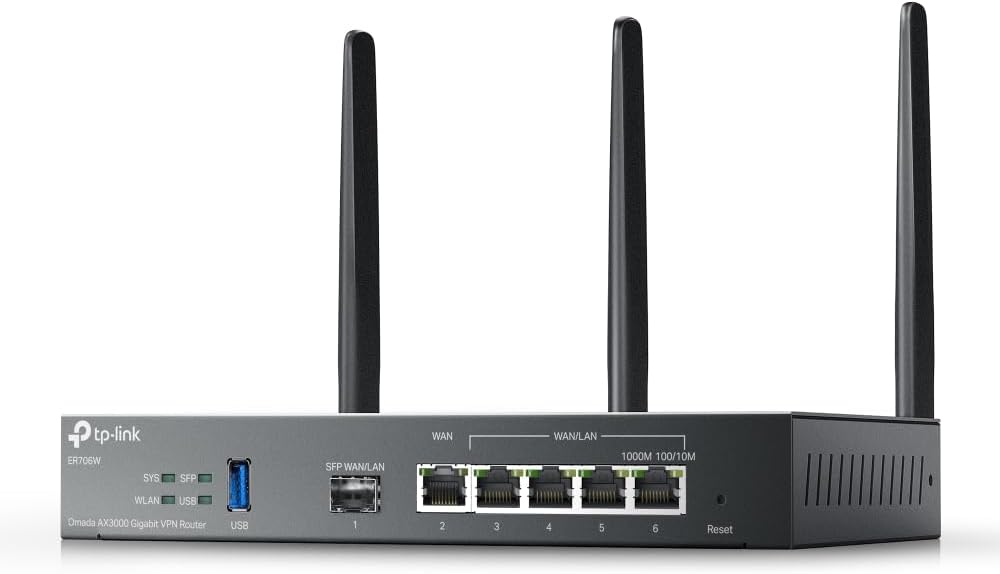
The Omada ER706W offers a compelling mix of features for budget focused businesses needing robust network capabilities. It includes an SFP slot for fiber connectivity and supports load balancing across multiple WAN lines to maximize broadband utilization without extra costs.
We may earn a commission when you buy through this link, at no additional cost to you.
Its AX3000 WiFi 6 performance ensures fast wireless speeds for connected devices while the mesh compatibility with Omada access points allows easy network expansion. Multiple secure protocols like WireGuard and OpenVPN provide flexibility for secure remote access to business resources and internal tools.
The main limitation is the reliance on Omada controller software which can be a hurdle for users preferring standalone router management. The web interface is functional but less intuitive than consumer grade alternatives. However for IT teams familiar with enterprise systems this is a minor drawback.
Choose this router if you need fiber connectivity and multi-line broadband support at an affordable price. It is ideal for growing businesses that plan to expand with Omada access points and need solid VPN capabilities.
Load balancing across five WAN ports increases internet reliability and utilization by distributing traffic across multiple ISP connections efficiently.
Compatible with Omada access points the ER706W allows you to extend wireless coverage without extra cabling using existing network infrastructure.
We may earn a commission when you buy through this link, at no additional cost to you.
The Ruckus R750 is specifically engineered for ultra-dense environments such as conference centers or large office floors. With a 4.3 rating it delivers consistent connectivity even when hundreds of devices connect simultaneously making it a strong candidate for high demand business settings.
We may earn a commission when you buy through this link, at no additional cost to you.
Its hardware prioritizes signal stability and throughput under heavy load ensuring users experience minimal interruptions during peak usage times. The indoor form factor blends into professional spaces while maintaining robust coverage. Performance remains steady across multiple connected devices without degradation.
The primary trade-off is the higher price compared to standard routers which may not be justified for small offices with low device counts. It also typically requires integration with Ruckus controllers for full functionality adding complexity to initial setup. These factors may limit appeal for simpler needs.
Invest in this access point if your business operates in crowded spaces where connection reliability is critical. It excels where standard consumer routers would struggle and ensures smooth performance for all connected users.
Designed for ultra-dense environments the R750 maintains high throughput even when many users connect at once preventing slowdowns and dropped signals.
Indoor specific engineering ensures signal reaches through walls and obstacles consistently keeping connections stable throughout office zones.
We may earn a commission when you buy through this link, at no additional cost to you.
The Ruckus R670 represents cutting-edge technology with Wi-Fi 7 capabilities delivering up to 9.34 Gbps data rates for future-proof business networks. Its advanced BeamFlex+ antenna technology maximizes signal coverage and throughput ensuring optimal performance across diverse client devices in demanding scenarios.
We may earn a commission when you buy through this link, at no additional cost to you.
Security is enhanced with WPA3 and DPSK features protecting against modern threats while maintaining ease of use. The built-in BLE and Zigbee support allows unification of IoT and non-WiFi wireless tech into a single network simplifying management and reducing hardware silos.
The most significant drawback is the price which places it out of reach for many small businesses. Additionally the specialized features may be unnecessary for standard office workloads where less expensive options suffice. It is best reserved for high performance requirements.
This access point is ideal for organizations needing maximum speed and advanced wireless integration. If budget allows and you require future-proof technology with superior range and security the R670 is a top-tier investment.
BeamFlex+ technology intelligently directs signal beams to clients improving speed and reducing errors across various wireless environments.
Support for Matter and Thread via built-in radios enables unified management of diverse wireless IoT devices alongside standard Wi-Fi.
We may earn a commission when you buy through this link, at no additional cost to you.
The NETGEAR Orbi 970 system offers exceptional coverage for large campuses spanning up to 10000 square feet with consistent high-speed Wi-Fi. Its 4.6 rating reflects strong user satisfaction and the quad-band technology ensures dedicated backhaul channels keep satellite traffic fast and uninterrupted.
We may earn a commission when you buy through this link, at no additional cost to you.
With support for over 200 devices and multi-gigabit wired ports it handles heavy workloads without bottlenecks. The guided setup and Orbi app simplify network management for staff without deep technical expertise. Performance remains stable even with dozens of simultaneous connections.
The cost is significant and the system requires multiple units for full coverage which may be impractical for smaller setups. It is also designed primarily for residential or campus environments rather than traditional office racks. These limitations reduce its fit for compact business needs.
Opt for this system if you need whole-site coverage and support for high bandwidth applications. It delivers reliable performance for large spaces and future-ready speeds that meet evolving business demands.
Quad-Band technology reserves a dedicated band for satellite traffic preventing slowdowns when multiple devices connect simultaneously.
10 Gig internet and LAN ports enable ultra-fast wired connections for servers and workstations without sacrificing wireless performance.
We may earn a commission when you buy through this link, at no additional cost to you.
The Omada EAP650 provides reliable wireless coverage with the convenience of free cloud management and no additional fees. Its 4.5 rating highlights user confidence and the slim design allows it to blend into modern office or hotel settings without drawing attention.
We may earn a commission when you buy through this link, at no additional cost to you.
Advanced features include seamless roaming and load balancing which improve user experience across multiple access points. The five year warranty offers peace of mind and support from TP-Link adds value. PoE options simplify installation in ceiling or wall locations.
Full functionality requires an Omada SDN controller which adds complexity for standalone deployments. Standalone mode lacks some cloud features limiting flexibility. While the cloud access is great centralized management is necessary for advanced use cases.
Choose this access point for businesses needing centralized cloud control without extra costs. It works well in multi-location setups where remote management and long-term reliability are priorities.
Free cloud management allows you to manage multiple sites from a single interface without purchasing extra controllers or software.
The compact design ensures the access point fits neatly into modern interiors while maintaining strong wireless performance.
We may earn a commission when you buy through this link, at no additional cost to you.
The Ubiquiti U6+ delivers dependable performance within the UniFi ecosystem and a 4.6 rating reflects its consistent reliability and ease of integration with other Ubiquiti devices. It offers 3 Gbit/s speeds which are sufficient for most business applications without excess cost.
We may earn a commission when you buy through this link, at no additional cost to you.
Wall mounting and PoE+ simplify installation in spaces where outlets are scarce. Data encryption protects valuable information from unauthorized access and the design ensures comfort and stability. It functions seamlessly with existing UniFi controllers.
Its value is limited if you do not already use Ubiquiti gear since integration is the primary benefit. Security features are basic compared to dedicated enterprise routers. Also it lacks advanced VLAN or guest portal capabilities found in other models.
Select this access point if you already operate a UniFi network. It provides efficient coverage and smooth integration at a moderate price without unnecessary complexity.
Works seamlessly with other Ubiquiti devices ensuring consistent performance and centralized management across your network infrastructure.
PoE+ support reduces cabling needs while the wall mount design simplifies placement in professional environments.
We may earn a commission when you buy through this link, at no additional cost to you.
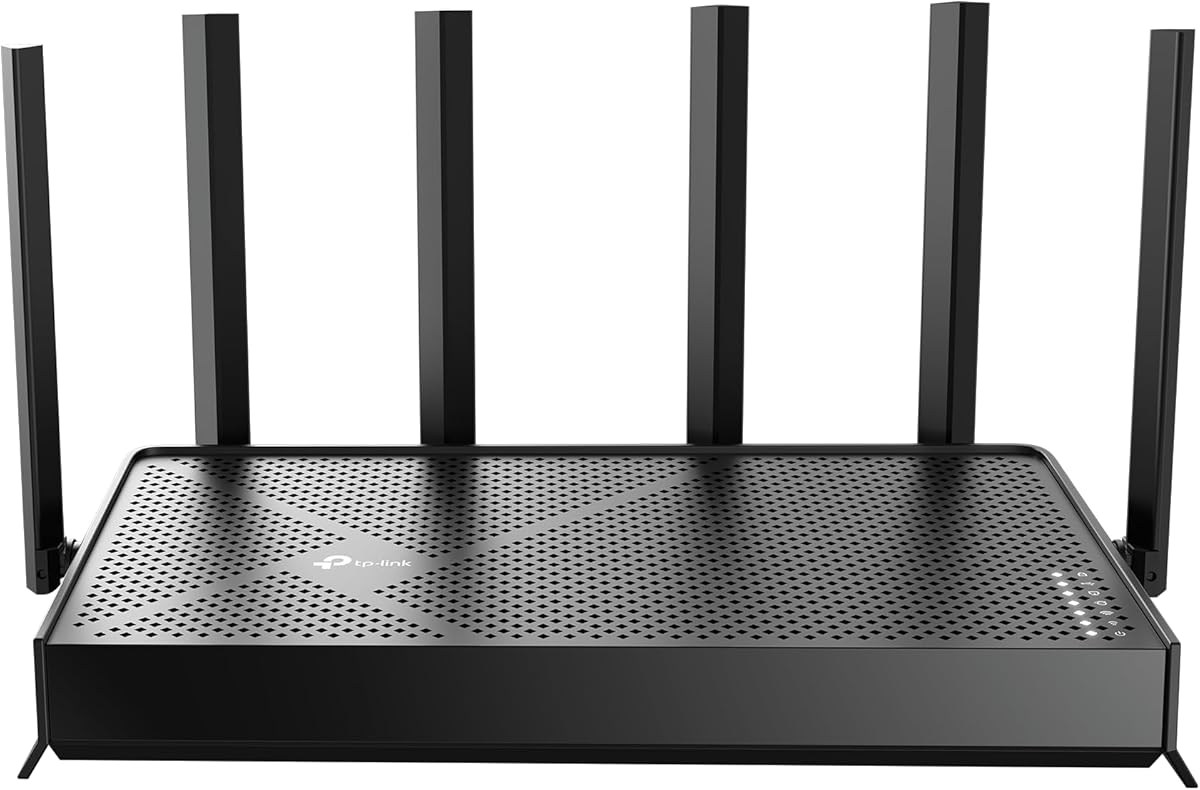
The TP-Link BE6500 brings modern Wi-Fi 7 technology at a competitive price supporting up to 5.764 Gbps speeds on the 5 GHz band. A 4.3 rating indicates solid performance and it features Multi-Link Operation for improved throughput and reliability.
We may earn a commission when you buy through this link, at no additional cost to you.
Built with a secure-by-design pledge from CISA the router includes advanced protections like WPA3 and HomeShield for comprehensive security. Two 2.5 Gig ports support multi-gigabit internet and internal transfers while EasyMesh allows expansion with other compatible devices.
It does not work with TP-Link Deco mesh systems limiting ecosystem flexibility. Also a separate modem is required which adds to setup complexity. These constraints may affect users deeply invested in existing mesh solutions.
This router is ideal for businesses adopting Wi-Fi 7 early or needing multi-gigabit wired connections. It balances future technology with practical security and speed at a reasonable cost.
Following CISA Secure-by-Design pledge the router is built with core security requirements to protect against modern cyber threats.
Multi-Link Operation transfers data across bands simultaneously improving speed and reliability for high-demand tasks.
We may earn a commission when you buy through this link, at no additional cost to you.
The NETGEAR Nighthawk WiFi 7 router offers impressive speeds up to 9.3 Gbps across tri-bands and a 4.3 rating highlights strong user satisfaction. It supports up to 100 devices and provides robust security features enabled out of the box.
We may earn a commission when you buy through this link, at no additional cost to you.
Multi-gig wired connections via the 2.5 Gig WAN port ensure compatibility with fast internet plans while the Nighthawk app simplifies management tasks. Performance is fast for gaming and streaming making it suitable for mixed-use business environments.
Coverage is limited to 2500 square feet which may not suit large offices. The high cost might be hard to justify if you do not need Wi-Fi 7 speeds. It is best suited for concentrated workspaces.
Choose this router if you need extreme speed and security for a smaller business area. It delivers reliable performance and modern features that support demanding applications without compromise.
Three bands prevent congestion by giving high-demand devices a dedicated lane to maintain consistent speeds.
Comprehensive home network protection and parental controls secure your environment against threats while managing device access.
We may earn a commission when you buy through this link, at no additional cost to you.
The ASUS RT-BE88U delivers top-tier performance with dual 10G ports and Wi-Fi 7 speeds up to 7.2 Gbps. A 4.3 rating reflects its capability for demanding networks and the AI WAN detection ensures always-on internet for critical operations.
We may earn a commission when you buy through this link, at no additional cost to you.
A powerful quad-core processor supports heavy network applications and AiMesh allows whole-home or office expansion easily. Guest network Pro simplifies IoT device setup and VPN options provide secure remote access for distributed teams.
The price is high and the device may be overkill for standard office needs. Its complex feature set requires technical knowledge to fully utilize. These factors limit its appeal to specialized or high-bandwidth environments.
Select this router if you need 10G wired connections and high-speed wireless. It is ideal for data-intensive workflows where maximum throughput and flexibility are essential.
Dual 10G SFP+ and WAN/LAN ports eliminate wired bottlenecks supporting ultra-fast data transfer across your network.
AI WAN detection ensures continuous internet by automatically selecting best available connection options for reliability.
We may earn a commission when you buy through this link, at no additional cost to you.
Choosing the right commercial wireless router requires understanding specific business needs and matching them with hardware capabilities to ensure reliable secure and scalable connectivity.
Modern business networks benefit from Wi-Fi 6 and Wi-Fi 7 standards which offer faster speeds and better capacity for multiple devices. Look for routers supporting AX3000 or BE6500 speeds to handle high demand applications without latency issues.
Prioritize models with sufficient throughput for your staff and devices to avoid bottlenecks during peak hours.
Enterprise grade security is critical for protecting sensitive business data from unauthorized access. Ensure the router supports WPA3 encryption firewall features and subscription free protection like AiProtection Pro or HomeShield.
Check for regular firmware updates and built-in threat detection to maintain strong defenses against evolving cyber threats.
The ability to create separate SSIDs helps isolate guest traffic from internal business operations improving both security and performance. Look for routers that support at least three to five distinct networks for different user groups.
Effective segmentation simplifies access management and reduces risk by containing breaches within isolated network zones.
Business routers should offer flexible WAN options including fiber SFP slots and multi-gigabit ports to connect with modern ISPs. Additional LAN ports support wired devices without needing switches.
Select a router with enough high-speed ports to match your internet plan and internal wired network requirements.
Easy management through apps or cloud interfaces reduces IT workload and allows remote troubleshooting. Mesh compatibility lets you expand coverage as your business grows without replacing core hardware.
Choose systems with intuitive interfaces and centralized control to streamline ongoing maintenance and support.
Balance cost against needed features to avoid overspending on capabilities you will not use. Entry level routers offer basic security and speed while premium models include advanced features like 10G ports.
Consider long-term warranty and support costs to ensure the total investment remains affordable over the system lifecycle.
Commercial routers often require features for managing guest access and IoT devices through captive portals or guest network tools. Look for options allowing branding and customizable login flows for a professional experience.
These features improve customer engagement while keeping guest traffic separated from internal business data securely.
Begin by connecting the router to your modem using the appropriate WAN port and power it on following the manufacturer setup guide. Ensure all firmware is updated immediately after initial setup to secure your network against known vulnerabilities and improve performance.
Configure SSID names and passwords for both internal and guest networks through the admin interface. Enable WPA3 or WPA2 encryption and set up VLANs if available to segment traffic and protect sensitive business data from unauthorized access.
Place the router in a central location away from interference sources to maximize wireless coverage and signal strength. Monitor connected devices regularly through the management app and restart the router periodically to clear cache and maintain optimal performance.
Commercial grade routers offer enterprise features like VLAN support advanced security and guest network management. They provide better performance under high device loads and include business-focused tools like SDN integration and remote access capabilities.
Most commercial routers require a separate modem unless they include a built-in modem. Check the WAN ports to ensure compatibility with your ISP connection type whether cable fiber or DSL.
High-end commercial routers support hundreds of devices but performance depends on throughput and memory. Look for models with high client capacity ratings and efficient load balancing for reliable performance.
Multiple SSIDs let you create separate networks for guests employees and IoT devices. This improves security by isolating traffic and ensures critical business devices maintain priority access to bandwidth.
Cloud management simplifies remote control and updates but may not be essential for small setups. If you need centralized multi-site management cloud features add significant value.
Firmware should be updated at least monthly or whenever security patches are released. Automatic updates help maintain protection without manual oversight and ensure stable performance.
Mesh systems provide wider coverage for large spaces but standalone routers work well for smaller offices. Choose based on your facility size and need for seamless roaming.
Most business routers offer 2 to 5 year warranties with technical support. Look for extended coverage options to ensure long-term reliability and cost-effective maintenance.
This guide covered ten top commercial wireless routers ranging from budget friendly options to high performance systems. The ASUS ExpertWiFi EBR63 leads for balanced features while the Omada EAP650 offers excellent value and the Orbi 970 covers large areas effectively.
When selecting prioritize security protocols network segmentation and scalability to meet current and future business demands. Choose models that simplify management and provide reliable performance across connected devices.
Product availability and pricing change frequently so verify current specifications and deals before purchasing. These recommendations serve as a strong starting point for building a secure and efficient business network infrastructure.