
Rokinon Cine DS DS85M-C 85mm T1.5
4.5Editor score
Full Frame Coverage
T1.5 to T22 Aperture
Unified Gear Positions
This guide compares the top 10 Cine Lens options for filmmakers, covering aperture, mounts, optical quality, and build to help you choose the right lens.
Cine lenses are specialized optical tools designed for professional video production. They offer smooth focus pulls, consistent aperture blades, and robust construction for demanding shoots.
We evaluated ten top-rated Cine Lens models based on optical performance, build quality, mount compatibility, and value. Our analysis covers full-frame and APS-C options for various camera systems.
Each pick highlights key strengths, trade-offs, and ideal use cases for your workflow. Note that availability and pricing may vary over time, so verify current details before purchasing.
4.5Editor score
5.0Editor score

5.0Editor score
This table compares all ten Cine Lens options side by side, highlighting key specifications like focal length, aperture range, mount type, and optical elements to help you find the best match.


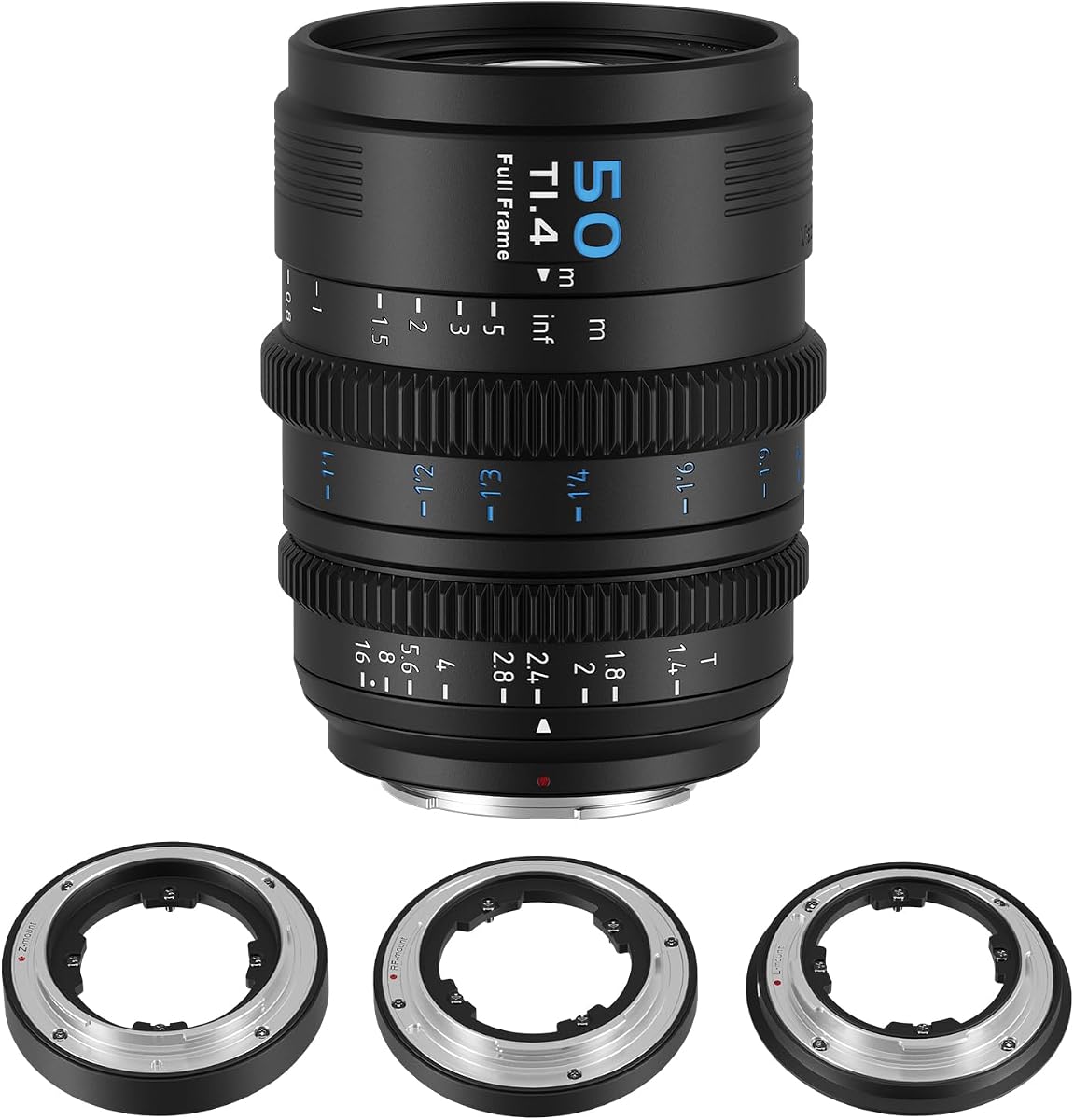


This SIRUI VP-1 50mm T1.4 delivers exceptional optical quality with a versatile interchangeable mount system for full-frame cameras. It ranks highest for its ability to switch between E, RF, Z, and L mounts easily.
We may earn a commission when you buy through this link, at no additional cost to you.
Engineered for 8K storytelling, it uses aspherical and ED elements to minimize distortion and aberrations. The fast T1.4 aperture ensures excellent low-light performance and dreamy bokeh separation.
Its compact aluminum body weighs only 600g, making it ideal for gimbals and handheld travel work. However, it is a prime lens, so you cannot zoom during shots.
Best for filmmakers needing one consistent lens across multiple camera systems without sacrificing image quality. Prioritize this if you value optical sharpness and mount flexibility.
The pre-installed E mount with user-interchangeable RF, Z, and L mounts lets you switch cameras quickly without buying new lenses.
Advanced glass elements deliver edge-to-edge sharpness while minimizing chromatic aberrations for high-resolution 8K storytelling.
We may earn a commission when you buy through this link, at no additional cost to you.
The Rokinon Cine DS 85mm T1.5 offers professional features at an accessible price point for Canon EF users. It provides full-frame coverage with a unified gear position matching other DS lenses.
We may earn a commission when you buy through this link, at no additional cost to you.
Its T1.5 to T22 aperture range delivers strong low-light capability and beautiful bokeh. The new DS line ensures color matching and consistent gear alignment for efficient workflow.
At 3.6 ft minimum focus distance, it's great for portraits but requires more space for close-ups. The 72mm filter size is standard but adds bulk.
Choose this if you need reliable full-frame performance without breaking the budget. Ideal for entry-level cinematographers building a prime lens kit.
Gear and aperture positions are unified across all Rokinon Cine DS lenses, simplifying rigging and lens swapping.
An 8-blade iris creates attractive bokeh for pleasing background separation in portraits and narrative shots.
We may earn a commission when you buy through this link, at no additional cost to you.
The DZOFILM Pictor 50-125mm T2.8 is a high-end parfocal zoom lens for Super35 and full-frame needs. It maintains focus across the entire zoom range, a rare feature at this price.
We may earn a commission when you buy through this link, at no additional cost to you.
Its 16-slat iris offers smooth exposure control and beautiful bokeh. Minimal breathing ensures focus shifts remain stable during zooms, critical for professional video production.
Compatible with standard Cine accessories, it adapts to PL or EF mounts. The investment is justified for productions requiring reliable zoom performance and consistent focus.
Best for serious filmmakers needing a versatile zoom without focus pull adjustments. Choose this if optical precision and parfocal performance are top priorities.
Maintains focus across the entire zoom range, eliminating the need for refocusing when changing focal lengths.
Focus breathing is minimized, ensuring that framing remains consistent during zoom movements for smooth cinematic shots.
We may earn a commission when you buy through this link, at no additional cost to you.
This ROKINON CINE DS kit includes 24mm, 35mm, 50mm, and 85mm lenses, all color matched and gear aligned. It's a complete package for Canon EF full-frame shooters.
We may earn a commission when you buy through this link, at no additional cost to you.
All lenses feature T1.5 to T22 apertures and dual-side focus scales. The de-clicked aperture rings allow for smooth exposure transitions during video recording.
Managing four lenses adds weight and storage requirements. Manual focus requires practice, but the consistent ergonomics help streamline the workflow.
Best for productions needing multiple focal lengths without buying separately. Choose this kit for a cohesive set with professional cinema features.
All lenses are color matched to each other, ensuring consistent look and color reproduction across different focal lengths.
Aperture rings are de-clicked for smooth manual adjustments during exposure changes, essential for professional cinematography.
We may earn a commission when you buy through this link, at no additional cost to you.
The Rokinon 35mm T1.5 is a versatile standard lens with 63.1 degrees angle of view. It fits Canon EF full-frame sensors with unified gear alignment.
We may earn a commission when you buy through this link, at no additional cost to you.
T1.5 to T22 aperture allows for strong low-light work and controlled depth of field. The 12-inch minimum focus is great for details.
The 77mm filter size is larger than some other options, requiring bigger filters. Manual focus suits cinematic control but needs precision.
Best for general-purpose filming needing wide yet stable framing. Choose this for a reliable standard prime with professional features.
63.1 degrees on full-frame provides a natural perspective ideal for storytelling, documentary, and narrative shots.
Minimum focusing distance of 12 inches allows for detailed close-ups without needing extension tubes.
We may earn a commission when you buy through this link, at no additional cost to you.
The SIRUI Night Walker 35mm T1.2 is built for low-light filming on S35 and APS-C cameras. Its massive aperture allows shooting in dark conditions without excessive ISO noise.
We may earn a commission when you buy through this link, at no additional cost to you.
12 aperture blades create pleasing bokeh. The aluminum housing is sturdy yet light at 500g, ideal for travel and gimbal use.
Designed for S35 coverage, it may show vignetting on full frame. Manual focus requires practice but offers precise creative control.
Best for documentarians or event shooters in dim environments. Choose this for fast aperture performance in lightweight form.
T1.2 aperture captures more light, reducing ISO noise and improving image quality in dark scenes.
12 blades deliver soft, round bokeh for flattering background blur in portraits and storytelling.
We may earn a commission when you buy through this link, at no additional cost to you.
The SIRUI Night Walker 24mm T1.2 provides a wide perspective for landscapes and environmental shots. Its RF mount fits Canon cameras and S35 sensors.
We may earn a commission when you buy through this link, at no additional cost to you.
T1.2 aperture and 0.3m close focus enable intimate compositions. The 270-degree rotation ensures smooth manual control for video.
It balances a broad field of view with natural-looking composition. The S35 crop may limit full-frame shooters.
Best for travel or documentary footage needing wide views in low light. Choose this for RF mount versatility and fast aperture.
24mm focal length delivers a versatile perspective ideal for landscapes, interiors, and environmental storytelling.
0.3m minimum focus allows capturing subjects with greater depth and visual impact for immersive shots.
We may earn a commission when you buy through this link, at no additional cost to you.
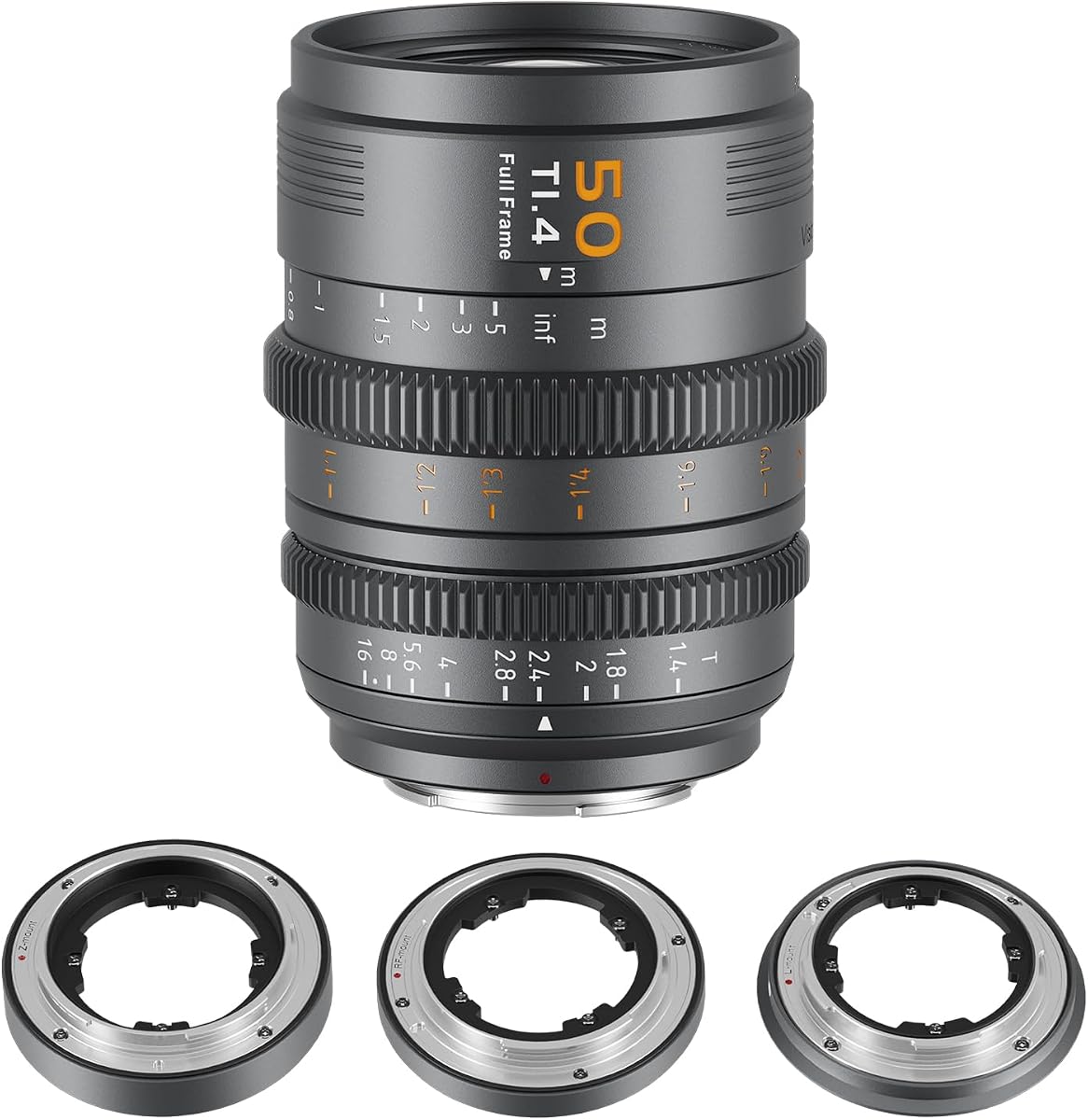
The SIRUI VP-1 50mm T1.4 shares a uniform design across its set, ensuring consistent size and color tone. Mounts are interchangeable for flexibility.
We may earn a commission when you buy through this link, at no additional cost to you.
At 600g, it's lightweight for handheld work. T1.4 aperture suits low-light storytelling with soft bokeh. Aluminum body adds durability.
This variant has a lower user rating than other VP-1 listings, suggesting possible batch differences. Still a strong choice for consistency.
Best for crews needing uniform lens sizes across multiple primes. Choose this if matching gear position and color matters.
Shared design across the lineup ensures consistent size, weight, and gear position for easy lens swaps.
Durable aluminum alloy body keeps weight around 600g, aiding stabilization and travel use.
We may earn a commission when you buy through this link, at no additional cost to you.
The SIRUI Night Walker 24mm T1.2 is built for M4/3 cameras, offering 12 blades and lightweight aluminum construction. Ideal for BMPCC and GH5 users.
We may earn a commission when you buy through this link, at no additional cost to you.
T1.2 aperture delivers clean night scenes with pleasing bokeh. S35 coverage means full-frame equivalent of 34mm. 0.3m focus distance helps.
High user rating reflects strong performance. It balances wide-angle utility with fast aperture capabilities for low-light work.
Best for Micro Four Thirds cinematographers needing wide, fast lenses. Choose this for affordability and optical quality.
Optimized for M4/3 cameras like BMPCC4K, GH5II, and Z Cam, fitting popular mirrorless bodies.
12 blades create round, soft bokeh for attractive background blur in cinematic shots.
We may earn a commission when you buy through this link, at no additional cost to you.
The Rokinon DSX85 85mm T1.5 offers portrait-friendly framing with 28.4 degrees view on full frame. It features 9-element construction and 9 blades.
We may earn a commission when you buy through this link, at no additional cost to you.
T1.5 to T34 aperture provides strong light gathering and smooth transitions. Ultra multi-coated glass reduces flare and improves clarity.
The 72mm filter size is standard. Manual focus gives creative control. Its optics are tailored for clean image quality.
Best for portrait or interview work needing smooth background. Choose this for reliable optical quality at a solid price.
85mm focal length provides flattering perspective and strong subject isolation for portraits and interviews.
Advanced coating reduces flare and enhances clarity, ensuring high-quality images in varied lighting conditions.
We may earn a commission when you buy through this link, at no additional cost to you.
Selecting the right Cine Lens depends on mount compatibility, sensor coverage, optical needs, and budget constraints for your specific production workflow.
Ensure the lens matches your camera's mount (EF, RF, E, Z, L, PL, or M4/3). Interchangeable mounts offer flexibility but add cost and complexity.
Prioritize native or interchangeable mount options to avoid adapters that may cause vignetting or autofocus issues.
Choose between full-frame and APS-C/S35 coverage. Full-frame lenses cover larger sensors and offer wider angles, while S35 lenses are lighter and more compact.
Match the lens coverage to your sensor size to avoid cropping or vignetting issues in your final footage.
Wider apertures like T1.2 to T1.5 allow better low-light performance and shallower depth of field. T-stop ratings ensure consistent exposure across lenses.
Select T1.2 or T1.5 for low-light shooting, or T2.8+ if depth-of-field is less critical.
Look for aspherical and ED elements to reduce aberrations and distortion. Multi-coating minimizes flare and improves color fidelity.
Prioritize optical quality if your work involves high-resolution capture like 4K or 8K.
Aluminum bodies offer durability, while weight affects handheld or gimbal use. Lighter lenses are better for run-and-gun travel.
Consider total kit weight if you plan to swap multiple lenses on a rig.
Professional Cine Lenses feature precise focus rings with 270-degree rotation. This enables smooth pulls and repeatability.
Ensure the focus ring has adequate length and smoothness for your style of operation.
Unified gear positions allow seamless integration with follow-focus systems. Standard filter sizes simplify accessory purchases.
Check if your current rig supports the lens's filter thread and gear diameter.
Kit options offer better value for multiple focal lengths. Single primes are cheaper but less flexible.
Assess if a kit or individual lens fits your production scale and financial constraints.
Clean optics with microfiber cloths and air blower; avoid direct contact with glass to prevent scratches.
Store in a dry, dust-free case with silica packs to prevent fogging and mold.
Use a proper rig for support, ensuring the gear matches focus and aperture rings for smooth operation.
Cine Lenses feature manual focus with 270-degree rotation, T-stop ratings for consistent exposure, de-clicked apertures, and robust gear positions for accessories. They prioritize video workflow over autofocus.
Yes, many Cine Lenses come with EF, RF, E, Z, or L mounts. Interchangeable mount systems also allow adapting primes across multiple mirrorless systems without buying new lenses.
For professional video work, yes. Their optical consistency, build quality, and ergonomics streamline production and deliver higher quality footage than typical still photography lenses.
T1.2 to T1.5 is ideal for low-light and shallow depth of field. T2.8+ is suitable for well-lit environments or when you need more depth of field.
Most professional Cine Lenses are manual focus to maintain precise control. Some newer designs may offer hybrid systems but prioritize manual focus for cinematic use.
Keep it clean with microfiber cloths and air blower. Store in a dry case with silica packs. Avoid humidity, dust, and direct contact with optics.
Check coverage: Full-frame lenses cover full-frame and APS-C. APS-C lenses may vignette on full-frame. Always match lens coverage to your sensor size.
Parfocal lenses maintain focus across the zoom range. This allows zooming without refocusing, essential for smooth video shots without focus shifts.
Our top picks include the SIRUI VP-1 for versatility, Rokinon DS85 for budget, and DZOFILM Pictor for premium zoom performance.
Prioritize mount compatibility, optical quality, and build weight based on your specific shooting needs and camera system.
Check current availability and pricing before purchasing to ensure the best value and match for your workflow.