
ESP32-S3-Nano Microcontroller
5.0Editor score
ESP32-S3R8 chip support
Arduino and MicroPython switching
Integrated Wi-Fi and Bluetooth
This guide compares the top Arduino Nano ESP32 boards for IoT, wireless projects, and embedded development based on performance, connectivity, and features.
The Arduino Nano ESP32 represents a significant leap in embedded development. It combines powerful processing with seamless wireless connectivity for modern projects.
We compared ten top boards focusing on performance, connectivity options, and ease of use. Our analysis covers specs, features, and real-world application suitability.
Each pick highlights key strengths and trade-offs to help you choose wisely. Prices and availability may change so verify details before purchasing your next board.
5.0Editor score

4.6Editor score

4.8Editor score
This table provides a side-by-side comparison of the ten best Arduino Nano ESP32 compatible boards available this month. Review key specifications and connectivity options to find the right fit.


The Arduino Nano ESP32 stands out as the top choice for serious developers. It offers a powerful ESP32-S3 chip with dual core processing and modern connectivity options.
We may earn a commission when you buy through this link, at no additional cost to you.
Its standout qualities include support for MicroPython and HID profiles which allow for versatile project types ranging from smart home hubs to custom input devices.
While the price is higher than generic boards the official support and quality make it worth the investment. You get reliable hardware that matches the Arduino ecosystem standards.
This board is ideal for engineers and makers who need robust performance without sacrificing ease of use. It is the definitive pick for professional and advanced hobbyist projects.
The ESP32-S3 dual core processor runs at up to 240 MHz. This power enables real-time data processing and machine learning tasks directly on the device.
Built-in Wi-Fi and Bluetooth 5.0 allow seamless communication with networks and other devices. You can connect to cloud platforms or local devices easily.
We may earn a commission when you buy through this link, at no additional cost to you.
This board delivers exceptional value by packing the ESP32-S3R8 chip into a compact form factor. It supports both Arduino IDE and MicroPython for flexible programming options.
We may earn a commission when you buy through this link, at no additional cost to you.
The high rating reflects its reliable performance and robust wireless capabilities. It offers integrated SRAM and Flash memory that handle complex projects without external components.
While it lacks the official Arduino branding the specs match or exceed many branded boards. The trade-off is slightly less documentation but the community support is strong.
Buy this if you need a powerful ESP32-S3 board on a tight budget. It is perfect for students and hobbyists who want top tier performance without the premium cost.
Seamlessly switch between Arduino and MicroPython programming environments. This flexibility allows developers to choose the language that suits their project needs best.
Compatible with Arduino IoT Cloud for remote monitoring. You can control your project from anywhere using the official IoT Cloud app with ease.
We may earn a commission when you buy through this link, at no additional cost to you.
This development board is a powerhouse designed for applications requiring heavy media processing. It uses the ESP32-P4 chip with a RISC-V dual core processor.
We may earn a commission when you buy through this link, at no additional cost to you.
Its standout features include MIPI-CSI and MIPI-DSI interfaces which connect directly to cameras and high resolution displays. This makes it ideal for vision projects.
While it costs more than standard boards the unique hardware acceleration justifies the price for specific use cases. It is not for simple blinking lights but for serious media applications.
Choose this board if you need to process images or video at the edge. It is the best premium option for industrial and advanced robotics applications.
Supports MIPI-CSI and MIPI-DSI for direct camera and display connections. This allows high bandwidth data transfer essential for real-time video processing.
Includes secure boot and flash encryption to protect your intellectual property. Combined with cryptographic accelerators it ensures your device remains secure.
We may earn a commission when you buy through this link, at no additional cost to you.
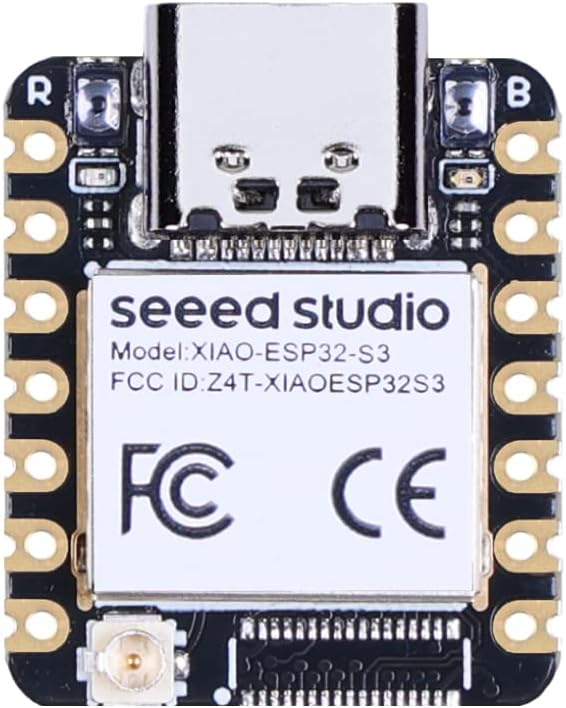
The Seeed Studio XIAO ESP32S3 is designed for space constrained projects. It fits on a palm and includes battery management which is rare for ESP32 boards.
We may earn a commission when you buy through this link, at no additional cost to you.
Its standout feature is the power efficiency allowing deep sleep modes that consume as little as 14 microamps. This is crucial for battery powered wearables.
The small footprint means you may need adapters to connect to breadboards easily. However the performance and RF range are excellent for its size.
Buy this if you are building wearable tech or small sensors. It balances power and size better than almost any other board in this list.
Offers four power consumption models including deep sleep modes. This design ensures maximum battery life for portable and remote IoT devices.
Despite its thumb-sized footprint it runs at 240MHz with dual core processing. You get high performance in a package small enough for wrist bands.
We may earn a commission when you buy through this link, at no additional cost to you.
This mini board is excellent for production environments where you need to integrate the module into custom PCBs. The castellated edges allow direct soldering onto carrier boards.
We may earn a commission when you buy through this link, at no additional cost to you.
Its standout feature is the inclusion of a ceramic antenna which provides stable connectivity without external components. The low power modes are also well implemented.
However it lacks an onboard USB port so you will need an external programmer for flashing code. This adds complexity for prototyping but simplifies production.
Choose this for batch projects where you need multiple units. The value of getting three boards makes it a smart choice for manufacturers or teams.
Castellated module design allows soldering direct to carrier boards. This makes it ideal for embedding into custom hardware designs seamlessly.
Supports flexible clock and independent power supply settings. This allows optimization for different scenarios ranging from high performance to low energy.
We may earn a commission when you buy through this link, at no additional cost to you.
This kit is perfect for those new to electronics who want everything in one box. It includes over 35 modules and detailed tutorials to guide you through 30 projects.
We may earn a commission when you buy through this link, at no additional cost to you.
The standout quality is the educational focus with clear circuit diagrams and refined code. You can learn electronics and IoT concepts without hunting for parts.
It does use the older ESP-32 which lacks Wi-Fi 6 and USB-C but it is fully capable for learning. The volume of included components makes it a great starting point.
Buy this if you want a complete learning experience. It removes the friction of gathering parts and lets you focus on learning to code and build.
Access 30+ projects with code and instructions in the included tutorial. This structured approach ensures you learn fundamentals and advanced concepts effectively.
The kit contains everything from sensors to motors in one box. You can start building weather stations and smart controllers immediately.
We may earn a commission when you buy through this link, at no additional cost to you.
The Arduino Nano 33 IoT is a compact board optimized for secure cloud connections. It features a Secure Element that provides hardware level encryption for your data.
We may earn a commission when you buy through this link, at no additional cost to you.
Its standout feature is the u-blox module which offers reliable connectivity and seamless cloud integration. This is essential for commercial IoT applications where privacy matters.
While it lacks the newer USB-C port and S3 chip it remains a solid choice for security focused projects. The secure boot and encryption are valuable for sensitive data.
Choose this if security is your top priority. It is a reliable workhorse for industrial or commercial IoT deployments needing verified connections.
The u-blox ATECC608A Secure Element ensures hardware level encryption. This guarantees secure cloud communication and protects data privacy effectively.
Built for IoT with seamless connection to cloud platforms. You can manage devices remotely with trusted connectivity right out of the box.
We may earn a commission when you buy through this link, at no additional cost to you.
This is a classic development board that has been used in millions of projects. It features the original ESP32 with dual core processing and dual mode connectivity.
We may earn a commission when you buy through this link, at no additional cost to you.
Its standout quality is stability and widespread support. Since it has been around so long libraries and guides are plentiful for any project idea.
The Bluetooth standard is older which may limit some connections but it is sufficient for most basic tasks. The 3 pack offers great value for teams.
Buy this if you need reliable parts for a large scale project. It is a safe bet for applications where you need proven hardware.
Supports AP STA and AP plus STA modes. This flexibility allows you to use the board as an access point or connect to a router.
The ESP32 is known for being safe and scalable to many applications. It handles a variety of tasks from simple sensors to complex network nodes.
We may earn a commission when you buy through this link, at no additional cost to you.
This bundle offers three dev boards with the modern convenience of a USB-C port. It is a great value for groups who need multiple units for testing.
We may earn a commission when you buy through this link, at no additional cost to you.
Its standout feature is the support for Over-the-Air updates which lets you update deployed firmware over Wi-Fi. This saves you from physically reconnecting USB cables.
The Bluetooth version is still 4.2 which is a trade-off for the USB-C convenience. But the dynamic power saving modes help make it efficient.
Choose this if you want a modern connector on the classic ESP32. It is practical for teams or educators needing multiple boards.
OTA functionality allows firmware updates via Wi-Fi without USB. This ensures you can patch devices remotely and maintain them easily.
Supports dynamic clock scaling to reduce energy use. This makes the boards suitable for battery powered IoT devices.
We may earn a commission when you buy through this link, at no additional cost to you.
The UNO R4 WiFi is unique because it combines a Renesas microcontroller with an ESP32-S3. This dual core setup provides high speed control plus advanced wireless capabilities.
We may earn a commission when you buy through this link, at no additional cost to you.
Its standout features include a built-in LED matrix and support for CAN bus which is rare for Arduino boards. It is perfect for automotive or industrial control.
While it is larger and more expensive the unique combo of features justifies the cost. You get a display and high precision DACs built right into the board.
Buy this if you need complex I/O capabilities. It is the most versatile Arduino board for advanced applications needing both logic and comms.
Includes a 12-bit DAC and integrated operational amplifier. This allows precise analog signal generation ideal for audio or sensor interfacing.
CAN support allows real-time communication in industrial systems. Combined with Qwiic it simplifies adding sensors without complex wiring.
We may earn a commission when you buy through this link, at no additional cost to you.
Selecting the right board depends on your specific project needs. Consider processor speed, connectivity, and ease of use when comparing models.
Modern ESP32-S3 boards offer dual core 240 MHz processing. This is essential for machine learning and complex data tasks at the edge.
Choose a board with higher clock speeds if you plan to run intensive applications like voice recognition or image processing.
Look for Wi-Fi 6 or Bluetooth 5.0 for better range and speed. Newer chips support these standards while older ones use 4.2.
Higher standards ensure faster data transfer and better battery efficiency in your IoT projects.
Modern USB-C ports are easier to use than Micro-USB. They support faster data transfer and better power delivery for stable development.
Ensure the board supports MicroPython if you prefer it over C++ for rapid prototyping.
Some boards are designed for wearables and offer compact sizes. Others are larger and provide more header pins for prototyping.
Select a size that fits your enclosure and mechanical constraints.
Deep sleep modes are vital for battery powered devices. Boards with lithium battery support or low consumption modes last longer.
Check the current draw in sleep mode before buying for remote sensor applications.
Look for extra hardware like CAN bus for automotive or DACs for audio. These features save you from adding external modules.
Decide if you need these extras to keep your design simple and cost effective.
Official boards come with documentation and tutorials. Third party boards rely more on community forums and guides.
If you need quick help choose a board with official backing or a large user base.
Prices range significantly depending on the features and brand. Consider if you need a premium board or a generic one will do.
Buying in packs often saves money if you need multiple units.
Install the Arduino IDE on your computer and add the ESP32 board support. This allows you to upload code using the USB or USB-C connection.
Keep the board in a static free environment when not in use. Moisture and dust can damage the microcontroller so store it in a dry place.
Use the appropriate power supply to avoid damage. Most boards support 5V or USB power so avoid higher voltage sources.
Yes it is significantly better for modern projects. It includes Wi-Fi and Bluetooth built-in and has a much faster processor than the classic ATmega chips.
Many of the newer ESP32-S3 boards support MicroPython. Check the product details to confirm if the specific board supports it before purchasing.
No most of these boards have Wi-Fi and Bluetooth integrated. You do not need external modules for wireless connections unless you need long range protocols.
The S3 model has a faster processor and supports Bluetooth 5.0 and Wi-Fi 6. It also has more memory and better security features for modern use.
Yes many have low power sleep modes. Boards designed for wearables like the XIAO include specific battery management features.
Not necessarily the boards expose standard GPIO pins. You can connect sensors directly via breadboards or cables if the pins match.
You can update firmware using the Arduino IDE or via Over-the-Air updates on some boards. This lets you upgrade without reconnecting the USB cable.
Mostly yes the pinout is similar. But since it has two cores some libraries may need adjustment.
We found the Arduino Nano ESP32 with Headers to be the overall best choice. It balances performance and connectivity perfectly for most developers.
Prioritize connectivity and ease of use when picking your next board. If you need multimedia features look to the ESP32-P4-NANO for advanced options.
Remember that prices and stock change frequently. Check the current availability before finalizing your purchase to ensure you get the best deal.